
“The short – term outlook for trade in services is far better than that for trade in goods, and the digital delivery model is becoming the core engine for the global trade recovery.” This is the judgment of Ngozi Okonjo – Iweala, the Director – General of the WTO, in the “Global Trade Outlook and Statistics” in 2024. Now, this judgment has been confirmed by data: In Zhejiang alone, the import and export volume of digital trade from January to August 2025 reached 553.08 billion yuan, a year – on – year increase of 13.3%.
Against the backdrop of global capital’s attention to the “Chinese opportunities” in digital trade, Zhejiang has taken practical actions, forming a complete digital trade chain covering digital technology, digital services, data transactions, digital products, etc., and a number of innovative enterprises and projects have emerged.
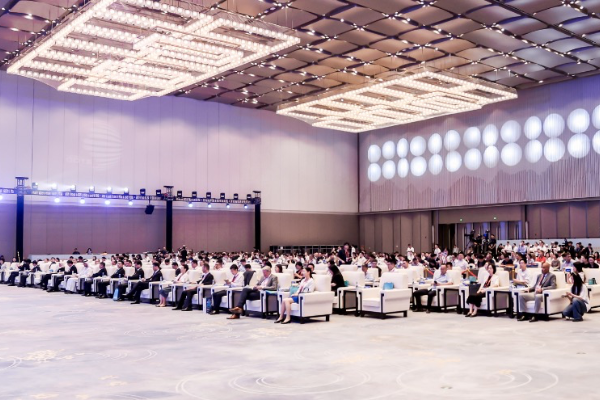
On September 25th, the 4th Global Digital Trade Expo (hereinafter referred to as the “Digital Trade Expo”) opened at the Hangzhou International Expo Center. As the only national – level, international, and professional exhibition in China themed on digital trade, this year’s Digital Trade Expo innovatively launched the “Digital Trade Venture Capital Day” event. Aiming at “promoting the efficient connection between innovation and capital in the digital trade field”, it is committed to building an international and practical exchange platform integrating policy communication, capital flow, and industrial collaboration. A total of more than 500 global guests from government departments, investment institutions, industrial platforms, and science – and – technology innovation enterprises participated.
This is also why the 4th Global Digital Trade Expo specially launched the “Digital Trade Venture Capital Day” this year. Aiming at “promoting the efficient connection between innovation and capital in the digital trade field”, it precisely matched 100 science – and – technology innovation projects with 100 funds across the country to jointly explore new paths for digital trade. A number of cooperation projects covering multiple fields such as biotechnology, intelligent technology, and educational technology were launched on – site at the event. According to incomplete statistics, the total cooperation amount exceeded 50 million yuan, and it is expected to drive investment of over 200 million yuan.
As the only national – level exhibition in China themed on digital trade, the Digital Trade Expo has always played the role of a window – showing trends, connecting resources, and linking the world. However, just showing is not enough. The misalignment between capital and industry has left many innovations at the conceptual level. The establishment of the Venture Capital Day is to bridge the last mile: putting policies, capital, and industry into a closed – loop scenario to truly turn innovation into reality.
I. The Zhejiang Background of Digital Trade
Why did Zhejiang become the starting point for the Digital Trade Venture Capital Day? The answer lies in the long – term accumulation of the digital trade foundation in this region.
In 2024, Forbes China evaluated in the series of reports “Digital Trade: China’s New Global Calling Card” that the core competitiveness of Zhejiang’s digital trade lies in the three – dimensional linkage of “policy setting the direction, capital providing strong support, and the ecosystem building barriers”.
This development path, regarded as a “replicable model”, was vividly confirmed in the opening speech of the Digital Trade Venture Capital Day. At the meeting, representatives from Chinese and foreign governments and institutions outlined the complete link from concept to practice of digital trade from four dimensions: policy guidance, financial empowerment, international cooperation, and national strategy.
Good policies that meet real – world needs are the “precise navigators” for digital trade to break through the fog and avoid hidden reefs. Zhejiang aims at the new track of “artificial intelligence + digital trade”, promoting triple innovation in scenarios, models, and business forms; targeting the new goal of becoming a global digital trade center, it attracts high – quality capital such as the UAE Sovereign Wealth Fund and the second – phase Service Trade Fund; it creates a business environment of “the best service, the lowest cost, and the highest efficiency” and makes the commitment of “not letting any enterprise feel lonely”.
Behind the implementation of policies is the in – depth collaboration of capital. In the first half of this year, the balance of technology loans of the Industrial and Commercial Bank of China (ICBC) exceeded 6 trillion yuan, serving more than 110,000 technology – based enterprises with loans. Different from traditional credit, ICBC builds an ecosystem through “investment – loan linkage + cross – border service package”, helping enterprises make up for their short – comings with R & D loans and talent loans. Branches in 69 countries and regions assist enterprises in solving cross – border settlement, exchange – rate risk – avoidance and other problems when going global.
Meanwhile, the “borderless” nature of digital trade makes it possible for this local practice to extend globally. Dr. Ali Mohammed Al – Khouri, Secretary – General of the Office of the Deputy Prime Minister and Minister of Interior of the UAE and Chairman of the Arab Digital Economy Alliance brought an “olive branch” from the Middle East market at the meeting.
He revealed that the Arab region is accelerating the construction of digital infrastructure, and the investment in data centers will reach 6 billion US dollars by 2030. The “Arab Digital Economy Vision” is expected to create an economic value of 1 trillion US dollars. The alliance has not only set up an office in Hong Kong but also plans to add more footholds in the Chinese mainland to ensure the smooth flow of Chinese – Arab goods, services, and data in a trusted ecosystem.
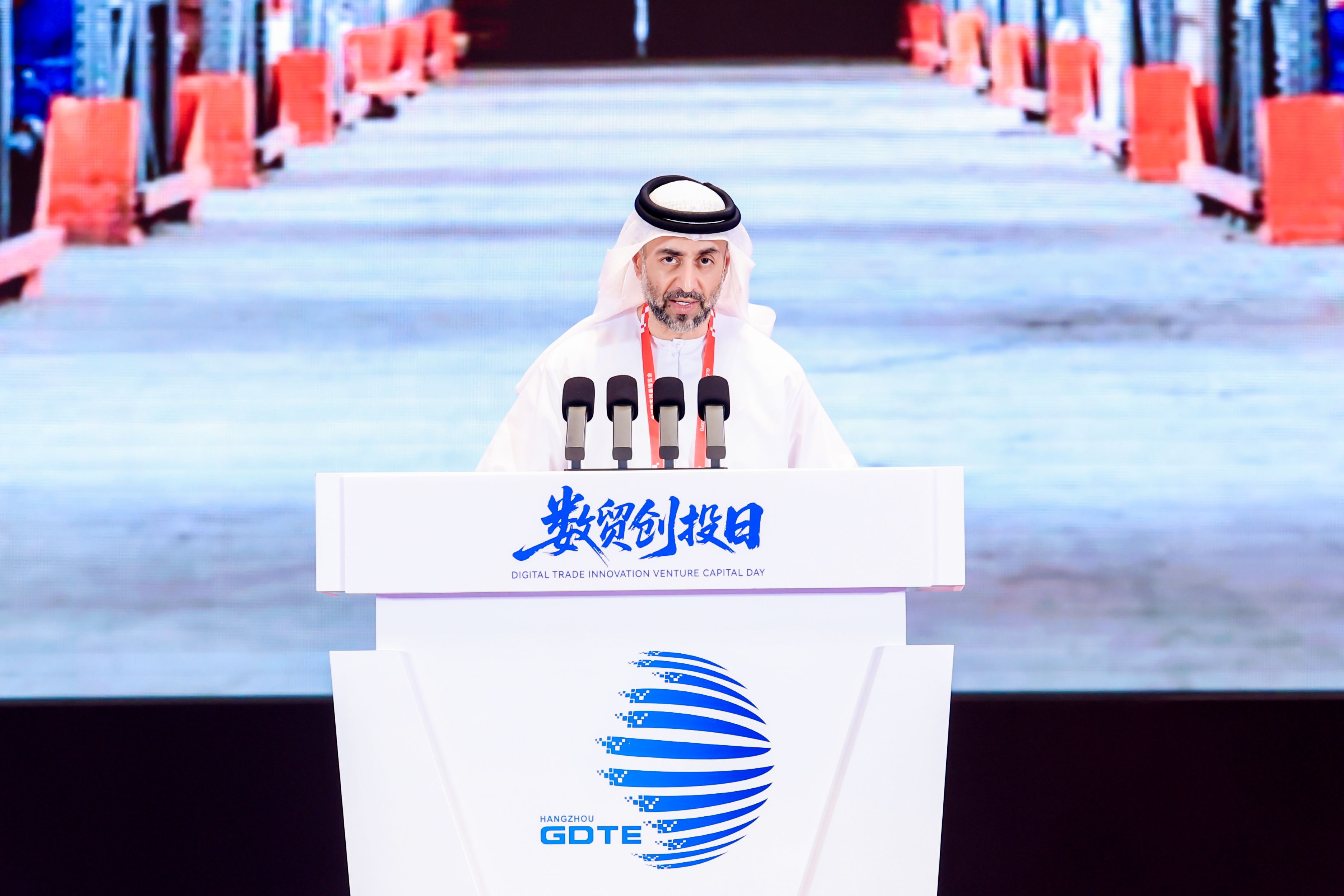
Dr. Ali Mohammed Al – Khouri, Secretary – General of the Office of the Deputy Prime Minister and Minister of Interior of the UAE and Chairman of the Arab Digital Economy Alliance
From the local to the national level, the exploration value of Zhejiang is becoming more and more prominent. In 2024, the scale of China’s digital service trade exceeded 3 trillion yuan, a year – on – year increase of 10.2%, becoming an important engine for stabilizing foreign trade. Zhejiang played the role of a “pioneer” in it and provided valuable “Zhejiang experience” for the whole country.
II. The Concentrated Outburst of Hard – Core Achievements
Different from the concept output of regular conferences, the achievements released on the “Digital Trade Venture Capital Day” focus on “pragmatism”. This can be seen from the preparation stage.
As early as May this year, the “Digital Trade Venture Capital Day” started cross – city preparations. It successively delved into three innovation high – grounds of Beijing, Shenzhen, and Xi’an, pre – connecting with regional capital and science – and – technology innovation projects, and focusing on core digital trade tracks such as artificial intelligence, biomedicine, and future networks. In other words, the Venture Capital Day is not a hastily organized display but a concentrated release of long – term incubation.
The concentrated outburst of achievements is first reflected in the awards. The “Pioneer Award (DT Award) of the 4th Global Digital Trade Expo”, as the core award of the Digital Trade Expo, saw particularly fierce competition this year. The scale of participating projects increased from more than a hundred in the first session to 277, and finally 64 projects stood out. The jury led by academicians adhered to the principle of “selecting the best from the best”, not only awarding gold, silver, and bronze prizes but also setting up the Newcomer Award, the Most Investment – worthy Award, and the Best Organization Award. Hangzhou Unitree Technology and Zhejiang Xunshi Technology won the gold award, becoming representatives of hard technology and gradually forming a benchmark matrix for digital trade covering different growth stages for the DT Award.
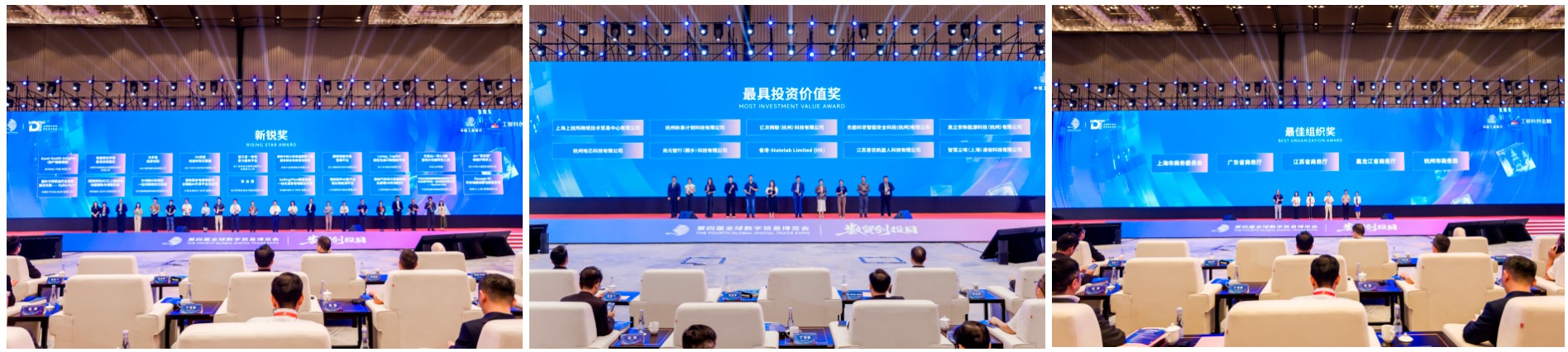
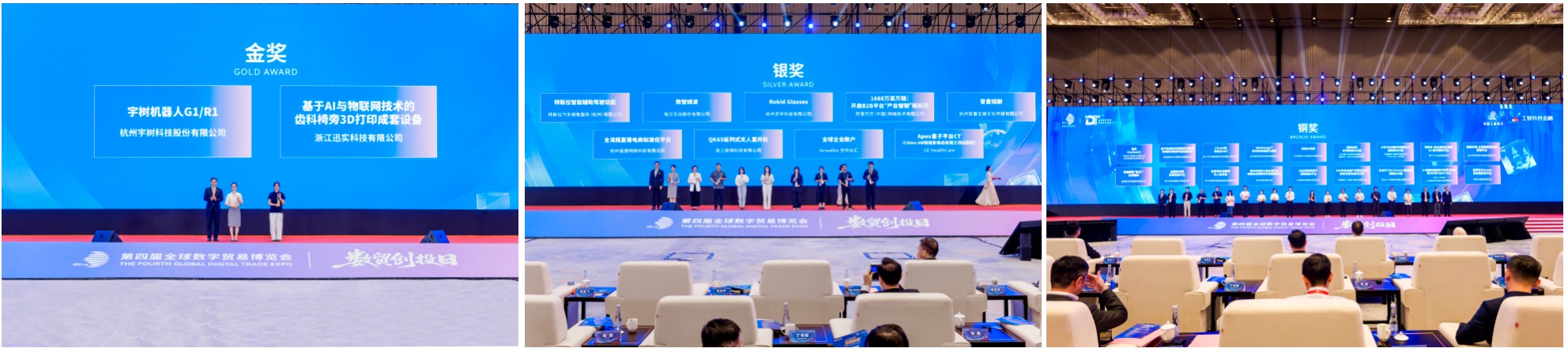
In addition to the awards, the release of “navigation tools” and “financial solutions” is also important. The Top 100 List of Zhejiang’s Digital Trade, the 2025 Zhejiang Openness Index, the investment matrix of Zhejiang’s venture capital funds, and the achievements in boosting the cultivation of new productive forces were concentratedly released, providing a direction reference for local governments and enterprises; The “Future Industry” comprehensive financial solution launched by the Science and Technology Finance Center of ICBC tailored financing channels for science – and – technology innovation enterprises at different stages; The “Five – in – One” service model demonstrated by the “Hangzhou Innovation E – Station” provided full – life – cycle financial support for enterprises from the seed stage to the growth stage; The State – owned Assets Supervision and Administration Commission of Zhejiang Province presented 20 “Artificial Intelligence +” application cases, covering key scenarios such as energy dispatching, intelligent transportation, and medical image diagnosis, making the integration path of digital and real economies more concrete.
The combination of capital and industry was also rapidly promoted on – site. ICBC signed strategic agreements with science – and – technology innovation enterprises such as Rokid Technology on – site, with a total credit line exceeding 10 billion yuan; Institutions such as Zhejiang Innovation Investment Group, Binjiang High – tech Zone, and Anji Economic Development Zone also reached multiple cooperation intentions. The preliminary estimate of the total cooperation amount exceeded 10 million yuan, further opening up the link from capital to industrial implementation. More structurally significant is that the Professional Committee for Science and Technology Innovation, Entrepreneurship, and Investment of the Global Digital Trade Expo was established on – site, aiming to integrate scattered capital, technology, and scenario resources into a joint force, avoid “going it alone”, and promote systematic collaboration.
The awards, lists, financial solutions, signings, and the professional committee together form the “achievement closed – loop” of the Venture Capital Day. They do not exist in isolation but are progressive: awards discover potential projects, lists and indexes provide direction coordinates, finance and cooperation solve implementation problems, and the professional committee promotes long – term resource collaboration.
III. How Can Capital and Industry Be in Sync?
As digital trade enters the deep – water area driven by technology, despite the remarkable achievements, an unavoidable contradiction still exists: on the capital side, investors hold funds and want to invest early and in small projects, but they are afraid of the inflated technology in early – stage projects and the difficulty in implementation; on the industrial side, enterprises hold core technologies and want to bring them to the market, but they lack mass – production resources, supply – chain support, and cross – border channels.
How can capital and projects, technology and the market be in sync? Two round – table discussions on the Venture Capital Day were in – depth explorations of this contradiction.
The first round – table was hosted by Huang Jinping, the founding partner and chairman of Rongyi Investment. Representatives from leading institutions such as Li Xiao, the deputy general manager of Zhejiang Financial Holding Investment Management Co., Ltd., Lu Shengdong, the chairman of ICBC Capital, and Zong Peimin, the chairman of Huarui Investment, gathered with Zhang Min, the overseas general manager of Unitree Technology, and Mi Qun, the secretary of the board of directors and senior vice – president of Rokid Technology. They dissected the co – construction logic of the hard – technology ecosystem from “capital supply” to “industrial implementation”.
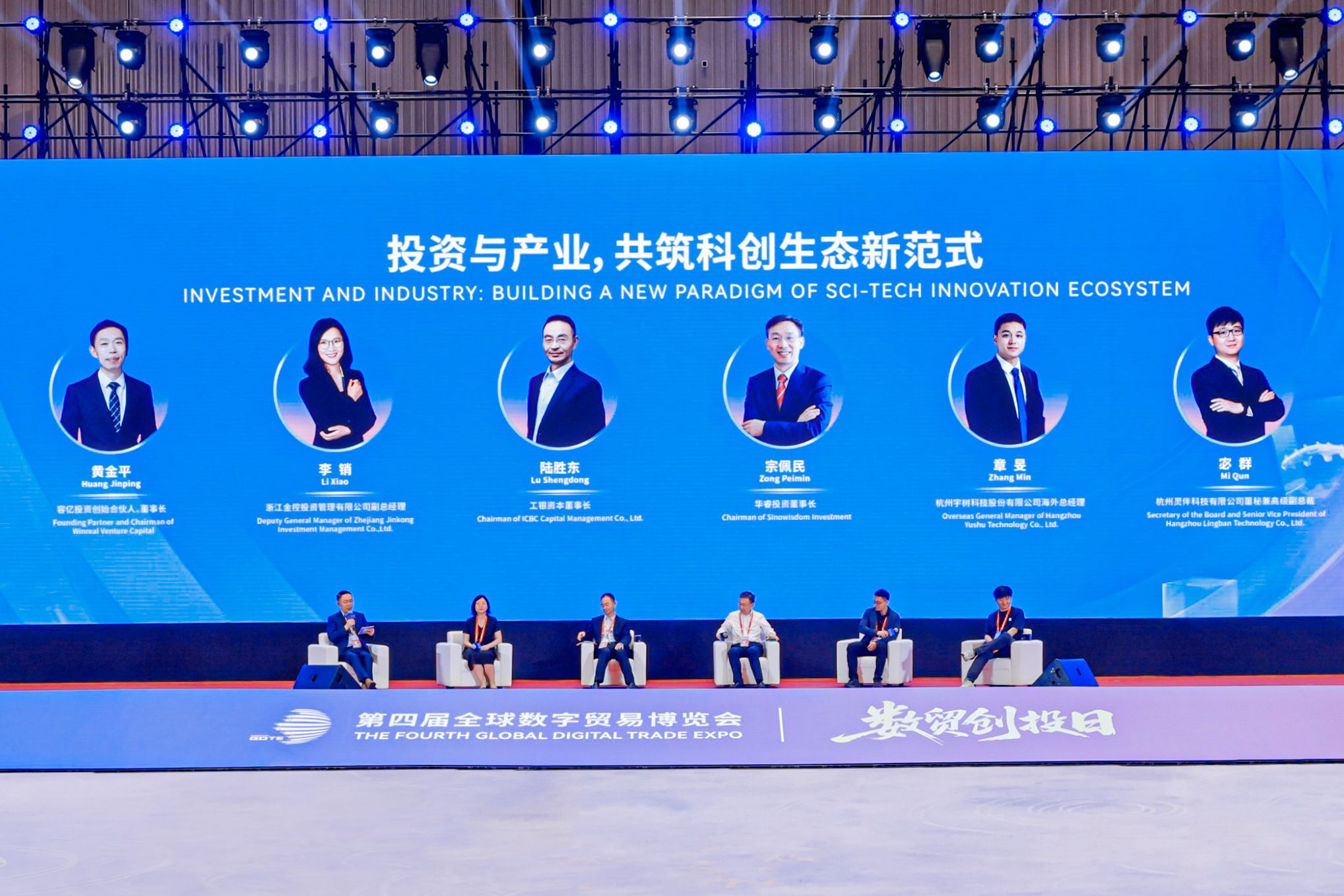
Li Xiao said that against the backdrop of the country’s encouragement to invest early, in small projects, and in technology, Zhejiang Financial Holding focuses on the transformation of achievements from “0 to 1” and cooperates with provincial laboratories and technology innovation centers to help scientists turn technologies into products one – on – one.
Although “investing early and in small projects” conforms to the trend, early – stage technology projects have high risks and great uncertainties. How to balance investment enthusiasm and risk control?
Lu Shengdong dissected in detail ICBC Capital’s “risk – control balancing technique”. On the one hand, it builds a mechanism of “six special measures”, and on the other hand, it conducts due diligence with “one card, one form, and one meeting”. “For example, a medical AI enterprise invested last year passed the evaluation quickly with this mechanism and has now entered the clinical verification stage.” Lu Shengdong added.
Zong Peimin, who has been deeply involved in the investment field for 23 years, returned to the essence of investment and proposed the core standard of “evaluating people”: “When investing early and in small projects, the key is to look at the ‘five characteristics’ of the entrepreneurial team – the wisdom to make concessions during negotiations, the learning ability to take in suggestions, the cooperative spirit of tolerance towards shareholders and employees, the execution ability to take action on the same day when contacting customers, and the diligence of starting work as soon as they open their eyes.”
Compared with the strategy sharing on the capital side, the practice on the enterprise side can more intuitively reflect the binding value of capital and industry. Zhang Min recalled Unitree’s “comeback journey” and admitted that the enterprise would have been difficult to move forward without capital injection. With capital support, it achieved mass production of robotic dogs in 2016 and entered the humanoid robot track with the help of the big – model trend in 2023… Behind this is that capital helped make up for the short – comings in mass – production equipment and the supply chain.
Mi Qun took the AR track as an example to emphasize the significance of capital as a “timely help”. He said that the value of capital is far more than just funds: “When we lacked engineers, the investor helped recruit the core team from Goertek; when we lacked a supply chain, it connected us with a contract manufacturer in Shandong. Now our AR glasses can be used as teleprompters and even auxiliary terminals to replace mobile phones. These breakthroughs are all inseparable from the support of capital at the ‘problem points’.”
The second round – table was hosted by Feng Dagang, the CEO of 36Kr. Five guests, including Xia Lin, a partner of Zhongke Chuangxing, Deng Zelin, an executive member of the Service Trade Innovation and Development Guidance Fund, Cao Guoxiong, the chairman of Puhua Capital, the innovation and development director of the Hong Kong Science and Technology Park, and Wassim Naif Musallam Al – Kalaleh, the market director of the UAE Legend Holdings Group, dissected the core capabilities of “industrial partners” from the perspectives of hard – technology investment, national – level funds, market – oriented VCs, cross – border incubation, and international cooperation respectively.
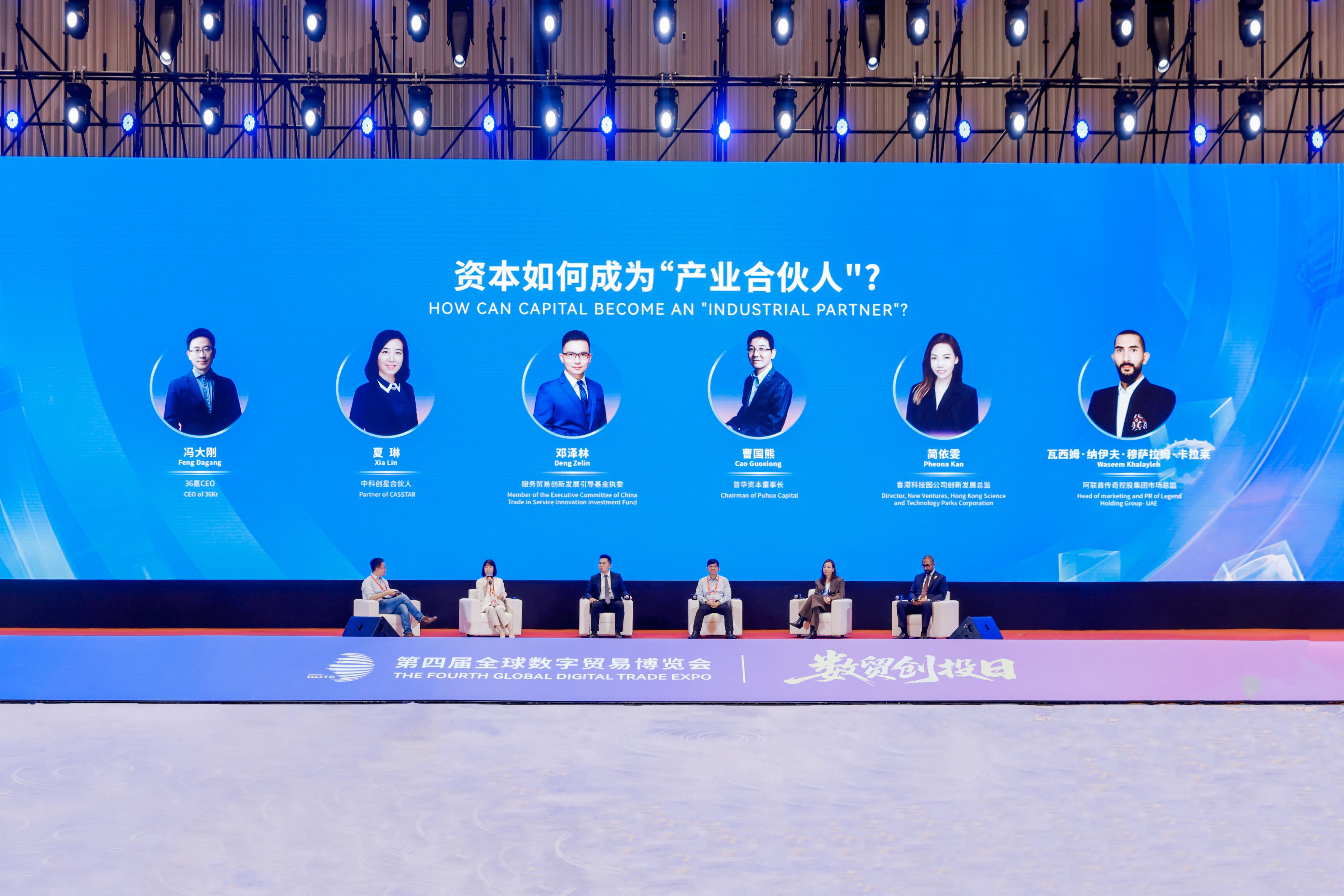
Xia Lin believes that to be an industrial partner, one needs to have three capabilities: cognitive synchronization, resource connection, and long – termism. Specifically in project selection, Zhongke Chuangxing focuses on domestic substitution and disruptive innovation. “Although it is difficult to implement cutting – edge fields such as controlled nuclear fusion, original innovation based on scientific principles is worthy of long – term layout.”
D