A collaboration between six Alberta First Nations and a financial adviser is being hailed as a model economic driver in reconciliation with Indigenous communities.
On Tuesday, First Nations Financial Markets will officially launch into the high-stakes fray of capital markets.
“It is trail-blazing . . . if your goals are to have economic (progress) and reconciliation, this is a very clear opportunity,” said Rob Van Belle, managing partner with Agentis Capital, which is working alongside the First Nations entrepreneurs.
“We are capitalized by First Nations — it’s their risk capital we’re working with. It’s hard dollars on the barrel.”
The First Nations — the Sawridge, Cold Lake, Athabasca Chipewyan, Heart Lake, Fort McMurray 465 and Whitefish Lake 128 — will help capitalize various projects and ventures working with private firms and governments.
“The Alberta government could be a client, as could the Canada Pension Plan. It’s really broad in terms of application,” said Van Belle.
“We’ve done work with First Nations in the past and built relationships. It’s been a long journey to get where we are now, so we have a common vision and alignment.”

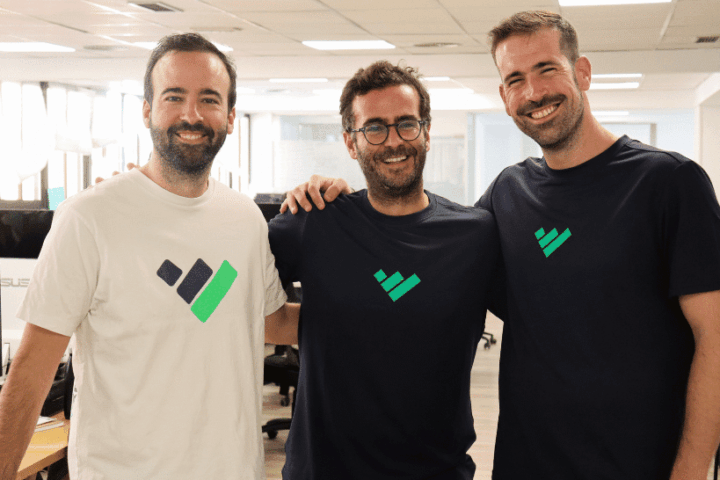
Rob Van Belle is managing partner for Agentis Capital, which is partnering with six Alberta First Nations to form investment dealer First Nations Financial Markets.
‘Pathways’ for meaningful participation in capital markets
The partnership presents an opportunity to cement prosperity for future generations, said the chief of one of the First Nations.
“First Nations Financial Markets is about creating direct pathways for First Nations to participate meaningfully in capital markets,” Chief Isaac Twinn of the Sawridge First Nation said in an email.
“By being majority First Nations-owned, we are placing ourselves in the driver’s seat in this economic development initiative. The firm is designed to broaden Indigenous participation, elevate First Nations leadership in finance and create commercial opportunities that flow back into communities.”
Twinn is no stranger to entrepreneurship. His community’s Sawridge Group of Companies has an extensive background in the hospitality, real estate and retail sectors, which Twinn says is vital in undertaking the collaborative venture with the other First Nations.
“My experience with Sawridge, both as a chief and in the business space, has shown me first-hand the importance of trust, stewardship and reciprocity in economic development,” he said.
“Sawridge’s participation in FNFM, alongside five other Nations, reflects the lessons we’ve learned about building partnerships that respect culture while unlocking opportunities.”
Some of the sectors FNFM will support directly affect Indigenous communities, making the partnership’s presence all the more meaningful, said Twinn.
“We see opportunities to expand into oil and gas, infrastructure, technology and diversified industries,” he said.
“By directing investment toward these areas, we can create high-quality jobs that further our capacity, long-term revenue streams and stronger, more resilient, First Nations.”
The initiative follows on the heels of the advent of Toronto-based Cedar Leaf Capital Inc., an Indigenous-owned and led partnership with Scotiabank.
Removing obstacles for Indigenous businesses
Twinn said the activity shows an unprecedented level of economic involvement on the part of First Nations.
But he said more needs to be done.
“A major challenge is moving from superficial consultation to true engagement and influence,” said Twinn.
“Decisions have long been made around us and about us, rather than with us.”
A lack of access to working capital has long been seen as a primary obstacle to Indigenous businesses in Canada.
“They often face institutional bias because, historically, they’re seen as higher risk — loan approval rates stand at about 90 per cent for Canadian companies, but drop to 58 per cent for Indigenous businesses,” Export Development Canada said on its website in 2023.
The agency also said at the time that Indigenous businesses contributed $50 billion to the Canadian economy.
Van Belle said he has confidence that the capital venture will succeed, calling his First Nations collaborators “savvy” businesspeople.
And he said the door remains open for more First Nations to join FNFM, adding he sees it as a model to encourage similar initiatives across the country that will provide invaluable experience for young Indigenous people.
“We can use the (FNFM) as a stepping-stone for First Nations youth to get capital market experience and give individuals a very clear path,” said Van Belle.