
If you’ve heard anyone talking about superannuation recently, it’s probably been in relation to a new tax that will soon be applied to some of the wealthiest accounts in the country.
The change to how balances of $3 million or more are taxed is one of several adjustments to the superannuation system that will come into effect on July 1, but at the same time, there’s a raft of misinformation spreading about some that are no more than pure fiction.
This is what you need to know about the changes, both real and fake.

What are the new changes to superannuation?
There’s a handful of changes coming for superannuation on July 1.
The guarantee rate – the percentage of a salary an employer must pay to their employees’ superannuation account – will increase from 11.5 to 12 per cent.
This is the fifth and final of a series of scheduled increases that have been taking place since 2021.
There are some other July 1 changes, including the general transfer balance cap and defined benefit income cap both increasing due to indexation, and people taking government paid parental leave earning superannuation entitlements.
But the main one everyone seems to be talking about is a new tax on super accounts with more than $3 million in them.

What is the $3 million super rule?
From July 1, earnings on superannuation accounts with balances of $3 million or more will be subject to a new 15 per cent concessional tax.
This was announced in 2023, and according to the government will only affect the wealthiest 0.5 per cent of Australians with a super account – about 80,000 people in total.
The new tax will only apply to the part of a balance over $3 million, and will go on top of the existing 15 per cent rate that already applies to all superannuation earnings – so in effect, those earning will be taxed at 30 per cent.
That all sounds a bit confusing, so here’s an example to show how it will work in practice.

Let’s say someone has $4 million in their super account and, over the course of a financial year, it grows to $4.5 million.
Because one-third of the total $4.5 million balance is above the $3 million threshold, one-third of the $500,000 in earnings will be subject to the new tax, leading to an extra $24,750 on that person’s tax bill.
Someone with less than $3 million in their super account won’t see any difference come tax time, no matter how high their earnings.
When does the change come into effect?
July 1. It’s a bit of an unusual one because the new tax hasn’t been passed into law yet, and parliament won’t sit again until after July 1.
However, with Labor holding a massive majority in the House of Representatives and the Greens signalling their intent to help pass the legislation in the Senate – although perhaps with some tweaks, such as indexation built into the $3 million threshold – it’s only a matter of time before it becomes law.
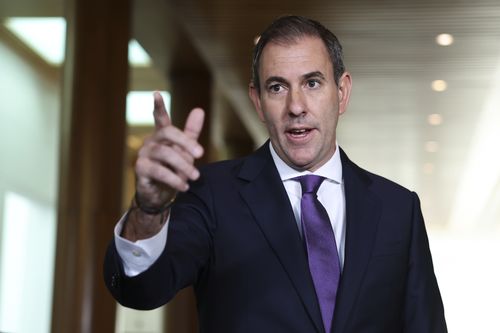
Treasurer Jim Chalmers signalled it will still start on July 1 regardless of when it gets through parliament, saying it’s “not unusual for tax changes to be legislated after a start date”.
What about changes to preservation and withdrawal rules?
This, to put it bluntly, is utter garbage.
There have been reports of people asking financial experts about major impending changes to superannuation such as withdrawal limits and raising the preservation age (the age that you can start withdrawing from your super account) from 60 to 70.
These changes are a scam – they’re completely fake, and just not happening.
The information provided on this website is general in nature only and does not constitute personal financial advice. The information has been prepared without taking into account your personal objectives, financial situation or needs. Before acting on any information on this website you should consider the appropriateness of the information having regard to your objectives, financial situation and needs.