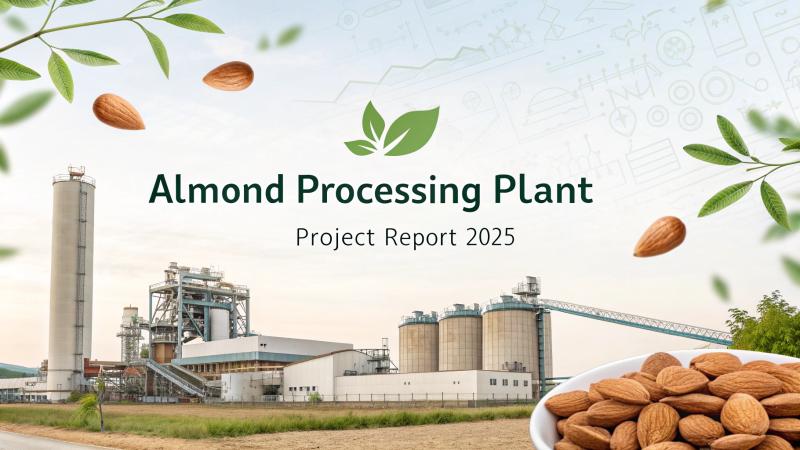

Almond is a nutritious tree nut produced through harvesting and processing methods. It is widely used across industries due to its high nutritional value, versatile nature, and excellent health benefits. Common applications include food products, snacks, beverages, cosmetics, pharmaceuticals, and as an ingredient in confectionery. Its nutritional and functional properties make it essential in both consumer and industrial applications.
Setting up an almond processing plant requires careful planning, investment in hulling, shelling, and sorting technology, and adherence to food safety standards. Key considerations include raw material procurement, equipment installation, quality control systems, environmental compliance, and establishing supply chain linkages.
Request a Sample Report: https://www.imarcgroup.com/almond-processing-plant-project-report/requestsample
IMARC Group’s “Almond Processing Plant Project Report 2025: Industry Trends, Plant Setup, Machinery, Raw Materials, Investment Opportunities, Cost and Revenue” offers a detailed and practical guide for entrepreneurs and businesses looking to enter the processing industry. The report includes in-depth analysis of capital investment requirements, project financing options, working capital needs, and projected returns.
This comprehensive business plan outlines every critical step involved in setting up a processing plant successful unit from understanding the industry landscape to planning for real-world challenges. It provides valuable insights into essential components such as Almond processing plant cost, machinery cost, operating cost, raw material requirements, utility needs, infrastructure setup, and packaging logistics.
Almond Industry Outlook 2025:
The almond industry outlook for 2025 indicates steady growth driven by rising demand in health-conscious consumer markets, plant-based nutrition, food and beverage innovation, and natural cosmetics applications. Increasing adoption in dairy alternatives and protein-rich snacks, coupled with expanding use in bakery products and confectionery, is expected to fuel market expansion. Technological advancements in processing methods and sustainable production practices are enhancing efficiency and product quality. Moreover, supportive government policies and infrastructure investments are fostering wider industrial applications, positioning the almond market for significant opportunities and competitive developments in the coming years.
Key Insights for Almond Processing Plant Setup:
Detailed Process Flow:
• Product Overview
• Unit Operations Involved
• Mass Balance and Raw Material Requirements
• Quality Assurance Criteria
• Technical Tests
Buy Full Report: https://www.imarcgroup.com/checkout?id=9398&method=1911
Project Details, Requirements and Costs Involved:
• Land, Location and Site Development
• Plant Layout
• Machinery Requirements and Costs
• Raw Material Requirements and Costs
• Packaging Requirements and Costs
• Transportation Requirements and Costs
• Utility Requirements and Costs
• Human Resource Requirements and Costs
Capital Expenditure (CapEx) and Operational Expenditure (OpEx) Analysis:
Project Economics:
• Capital Investments
• Operating Costs
• Expenditure Projections
• Revenue Projections
• Taxation and Depreciation
• Profit Projections
• Financial Analysis
Profitability Analysis:
• Total Income
• Total Expenditure
• Gross Profit
• Gross Margin
• Net Profit
• Net Margin
Key Cost Components of Setting Up an Almond Plant:
• Raw Material Costs – Procurement of high-quality raw almonds or almond kernels as the primary input material.
• Machinery and Equipment – Investment in hulling units, shelling machines, sorting systems, roasters, and quality control equipment.
• Infrastructure Development – Land acquisition, building construction, storage facilities, and utilities setup.
• Energy and Utilities – Power, fuel, compressed air, and water requirements for processing operations.
• Labor and Workforce – Skilled and unskilled labor wages, training, and administrative staff expenses.
• Safety and Environmental Compliance – Hygiene systems, waste management equipment, and regulatory certifications.
• Packaging and Logistics – Specialized containers, labeling, warehousing, and transportation costs.
• Maintenance and Repairs – Regular servicing and replacement of machinery and processing equipment.
• Overheads and Contingencies – Insurance, permits, licenses, and unforeseen operational expenses.
Economic Trends Influencing Almond Plant Setup Costs 2025:
• Rising Energy Prices – Higher electricity and fuel costs directly affecting hulling, shelling, and roasting operations.
• Volatility in Almond Prices – Fluctuations in raw material costs due to global supply-demand dynamics.
• Supply Chain Disruptions – Shipping delays and freight rate increase impacting machinery imports and raw material sourcing.
• Inflationary Pressures – Increased construction, labor, and equipment costs due to broader economic inflation.
• Technological Advancements – Adoption of advanced processing methods potentially reducing long-term costs but raising initial investment.
• Environmental Regulations – Stricter compliance standards requiring investment in waste management and sustainability systems.
• Government Incentives – Subsidies, tax benefits, and infrastructure support encouraging localized production.
• Global Demand Growth – Expanding use in food and beverage, health foods, and plant-based products driving capacity expansion needs.
Challenges and Considerations for Investors in Almond Plant Projects:
• High Capital Investment – Significant upfront costs for advanced hulling, shelling, or sorting technology and food safety systems.
• Raw Material Price Volatility – Dependence on almond market fluctuations impacting profitability.
• Stringent Safety Requirements – Food safety and contamination risks necessitating robust handling, storage, and quality control measures.
• Regulatory Compliance – Adherence to food safety, environmental, occupational safety, and quality standards.
• Technological Selection – Choosing between traditional processing, automated systems, or hybrid methods based on cost, efficiency, and end-use demand.
• Market Competition – Presence of established global players and price-sensitive buyers in multiple industries.
• Skilled Workforce Availability – Requirement for trained personnel in handling food-grade processing operations.
• Logistics and Supply Chain – Ensuring consistent raw material supply and efficient distribution networks.
• Return on Investment Timeline – Long payback periods influenced by market demand cycles and processing efficiency.
Speak to an Analyst for Customized Report: https://www.imarcgroup.com/request?type=report&id=9398&flag=C
Conclusion:
In conclusion, establishing an almond processing plant presents both significant opportunities and notable challenges. The industry is poised for growth in 2025, supported by rising demand across food and beverage, health foods, plant-based nutrition, and natural cosmetics sectors. However, the venture requires careful consideration of high capital investments, raw material volatility, food safety measures, and regulatory compliance. Investors must strategically evaluate technology options, operational efficiency, and supply chain resilience to ensure long-term competitiveness. With the right planning and risk management, almond processing can offer strong returns and position stakeholders within a steadily expanding global market.
About Us:
IMARC Group is a global management consulting firm that helps the world’s most ambitious changemakers to create a lasting impact. The company excel in understanding its client’s business priorities and delivering tailored solutions that drive meaningful outcomes. We provide a comprehensive suite of market entry and expansion services. Our offerings include thorough market assessment, feasibility studies, company incorporation assistance, factory setup support, regulatory approvals and licensing navigation, branding, marketing and sales strategies, competitive landscape, and benchmarking analyses, pricing and cost research, and procurement research.
Contact Us:
IMARC Group
134 N 4th St. Brooklyn, NY 11249, USA
Email: sales@imarcgroup.com
Tel No:(D) +91 120 433 0800
United States: (+1-201971-6302)
This release was published on openPR.