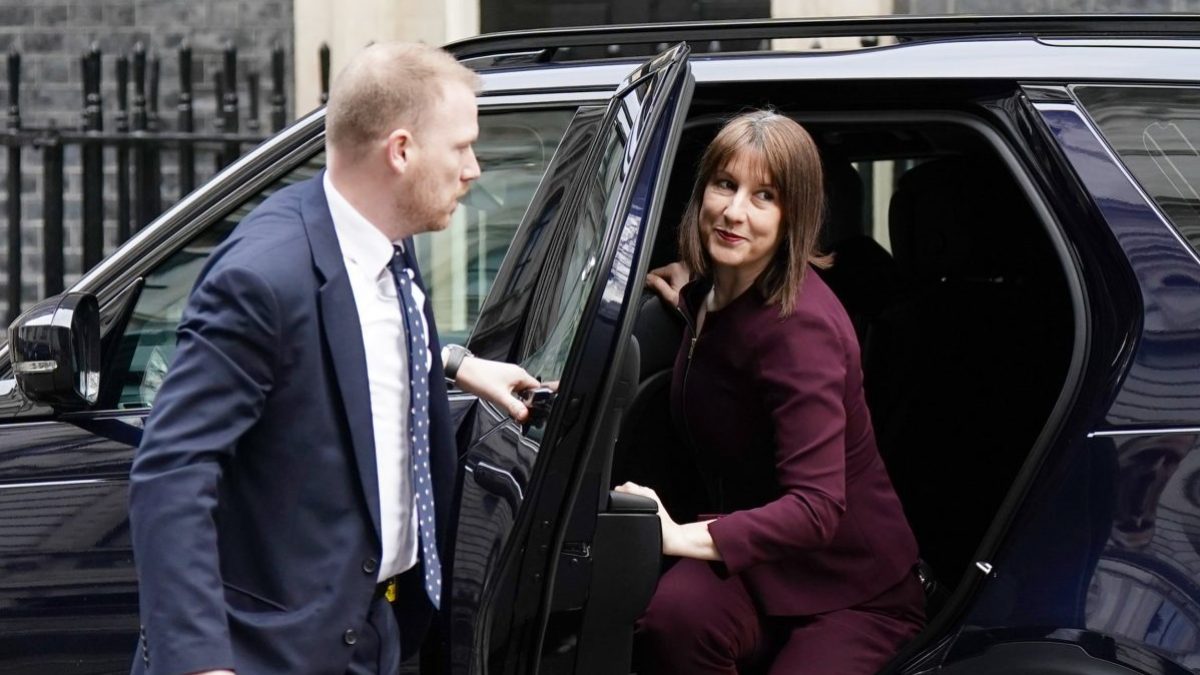

It is not expected that the full details of changes to cash ISAs will be confirmed before the autumn
The Chancellor is going ahead with plans to reform cash ISAs despite fears that the volatility of the global market could discourage investors.
It was widely speculated that the Chancellor’s changes to cash ISAs would be announced in the Spring Statement as part of Rachel Reeves’s push to boost Britain’s struggling stock market.
The reforms aim to encourage people to divert cash saved in tax-free cash ISAs into equities, such as stocks and shares ISAs.
Ideas reportedly under consideration include capping the tax-free cash ISA allowance, currently set at £20,000 per year, with some City firms advocating a reduction to £4,000 to encourage savers to invest in equities.
However, The i Paper understands that the Chancellor does not intend for ISA changes to be confirmed as part of her Spring Statement.
Government insiders have insisted that while reforms to cash ISAs are still under consideration, the decision not to announce them at the fiscal event does not delay the plans.
The Treasury is expected to consider a range of reform options to “get the balance right between cash and equities” and collect views from the industry before making a decision.
Some details for ISA changes are expected to be confirmed as part of the Financial Services Growth and Competitiveness Strategy, which was launched to find ideas to boost growth alongside industry insiders.
Cash ISAs
A cash ISA (individual savings account) is a type of savings account where you can earn tax-free interest on your cash savings, making it a tax-efficient way to save.
With a cash ISA:
- You’ll earn tax-free interest on your savings.
- You can pay into more than one cash ISA a year.
- You can transfer money from a cash or stocks and shares ISA to another ISA with a different provider as long as they are happy to accept the incoming transfer.
- If you withdraw money from your cash ISA, you don’t reset your annual limit unless you have a flexible cash ISA (see below). For example, say in one year you saved up to the cash ISA limit and withdrew £1,000. You can’t top up that £1,000 immediately – you’ll need to wait for the next tax year.
However, as reforms may require legislative changes to be implemented, the Treasury’s full package of ISA changes is unlikely to be laid out before the Autumn Budget.
It comes amid warnings from experts that pushing ahead with the changes in the spring, as many expect the Chancellor to do, could put investors off moving to equity products such as stocks and shares ISA.
Alper Kara, professor of banking and finance at Brunel University, told The i Paper: “It seems the Government aims to encourage greater investment in the stock market by redirecting part of the £300bn currently held in cash ISAs toward businesses and the economy.
“However, recent stock market volatility makes this approach counter-intuitive, as investors are more likely to seek safe assets.”
But Rachael Griffin, a tax and financial planning expert at Quilter, said this fit with Labour’s approach of consolidating major fiscal decisions such as reforming ISAs into a “single event each year”.
“Delaying any reforms allows Labour to potentially present a comprehensive package of changes to ISAs rather than making piecemeal adjustments,” she said.
“With other potential reforms, such as changes to the Lifetime ISA, still on the table, it’s possible the Government is considering a wider simplification or restructuring of the ISA system to be announced in the autumn.”
At a time when the cost of living remains high, and household finances are under strain, Labour will also be keen to ensure that any policy shifts do not inadvertently deter people from saving while also meeting its goal of funnelling more investment into UK equities.
The Treasury may be less likely to bring in ISA changes sooner amid increasing concerns over Donald Trump’s aggressive tariff policies, which have sent shockwaves through the international financial system.
Trump has reignited a trade war with Europe by imposing sweeping tariffs on imported steel and aluminium. The move, part of his long-standing protectionist agenda, means that businesses bringing these metals into the US must now pay a 25 per cent tax.
Stock markets have reacted sharply to Trump’s approach, with key indices experiencing heightened volatility as investors weigh the potential economic fallout.
The UK’s FTSE 100 has suffered declines amid fears that trade tensions could dampen economic growth and further weaken investment confidence, while in the US, the S&P 500 has also seen fluctuations as businesses brace for possible retaliatory tariffs from China and the EU.