
Stricter AI regulations in Europe have partially stunted growth for some of its local tech startups, causing them to trail behind competitors in the US who face fewer regulatory barriers, new data from trade group The App Association shows.
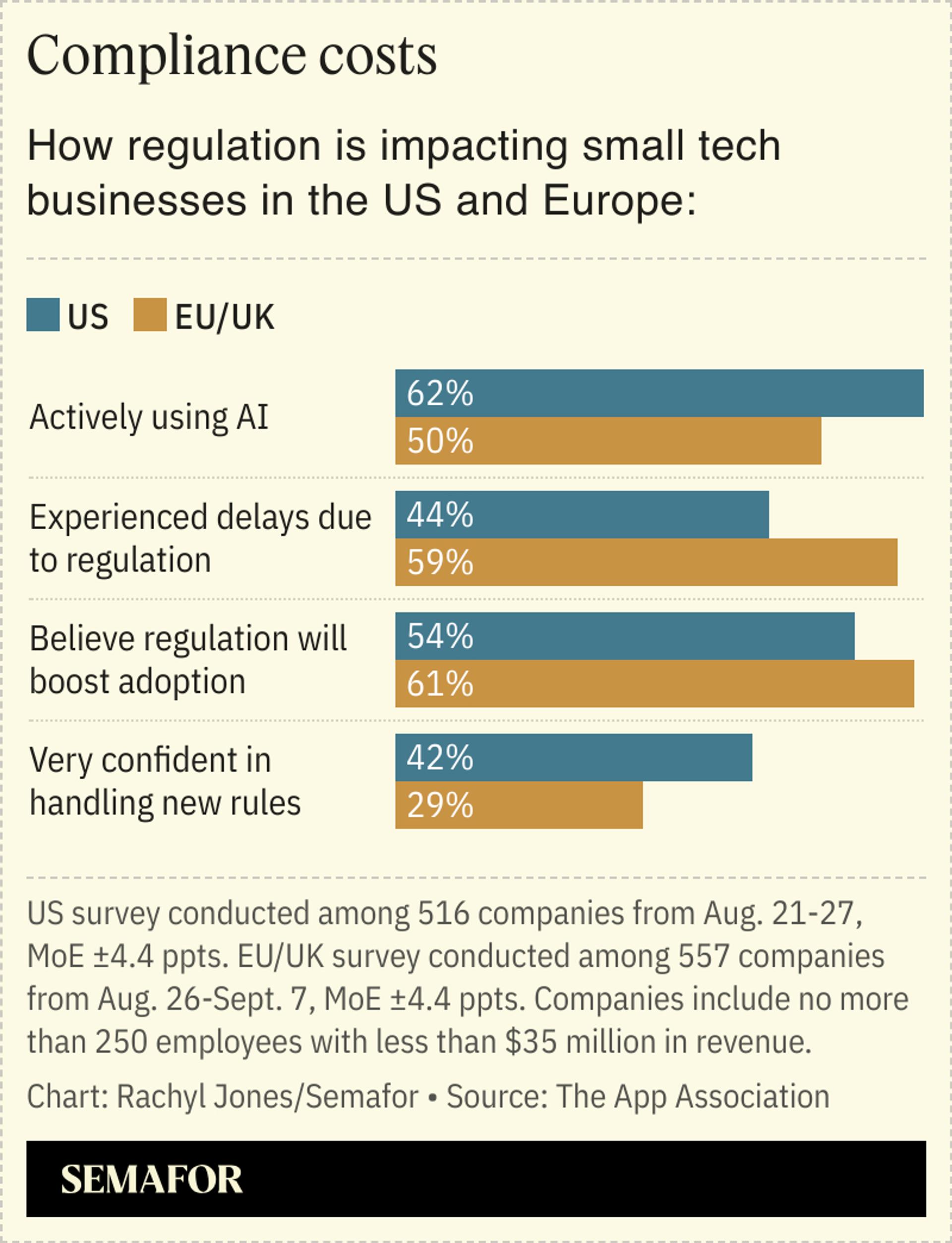
Nearly 60% of small European tech companies surveyed said they have experienced delays in product development due to regulations, compared to 44% of small US companies, according to reports published Thursday and shared exclusively with Semafor. The US does not have an expansive federal AI law comparable to the EU’s new AI Act — which polices general-purpose AI and its risks — but states have started issuing their own rules, and companies are taking other regulatory cues from agencies like the Federal Trade Commission.
The impact goes beyond delays. One-third of European developers at small tech companies had to remove or downgrade features to comply with requirements, largely due to data handling and safety checks, while another 60% said they haven’t made such adjustments. And they are less confident than US startups that they will be able to comply with new laws, the study shows.
Europe has traditionally held one of the strongest tech regulation frameworks globally, which critics say has stifled innovation. In recent years, the bloc has sought to compete more aggressively in AI, but it’s unclear whether it can balance its regulatory stance with the speed of growth required to catch up with the US and China.
“At the same time Europe is saying they want more competition, they’re creating an environment that makes it less likely,” said Morgan Reed, president of The App Association.
The App Association represents tech startups, but politicians and other groups have also raised concerns about the tough regulatory stance. Former Italian Prime Minister Mario Draghi said last month the AI Act should be paused until further AI risks are assessed. The Organisation for Economic Co-operation and Development, an intergovernmental body promoting economic growth, found that across Europe, companies “are too small and constrained by regulation” to benefit from new technologies.