

Geopolitics is no longer just a threat—it’s a strategic variable. From great-power competition to technological shifts and a fractured trade order, today’s volatility is reshaping global business. Oliver Jones, head of EY-Parthenon’s Geostrategic Business Group, tells Global Finance how forward-looking companies are embedding geopolitical thinking into their risk frameworks, investment decisions, and long-term planning.
Global Finance: What are some of the most pressing geostrategic risk factors that companies should be concerned about in the next few months?
Oliver Jones: I think I would start by saying that many of the issues that are affecting companies are global in nature. So the way that I often see it is to understand the trends that underpin both the risks and the opportunities across multiple regions.
If you look at the outlook for 2025, we identify three really big themes. One is the shift from this election super cycle of 2024 into new government, and therefore new policy making.
Underlying trend two is the kind of reemergence or the strengthening of geopolitical rivalries, almost a type of old-fashioned geopolitics around who has the most energy, and the active conflicts/wars that sadly still exist and continue.
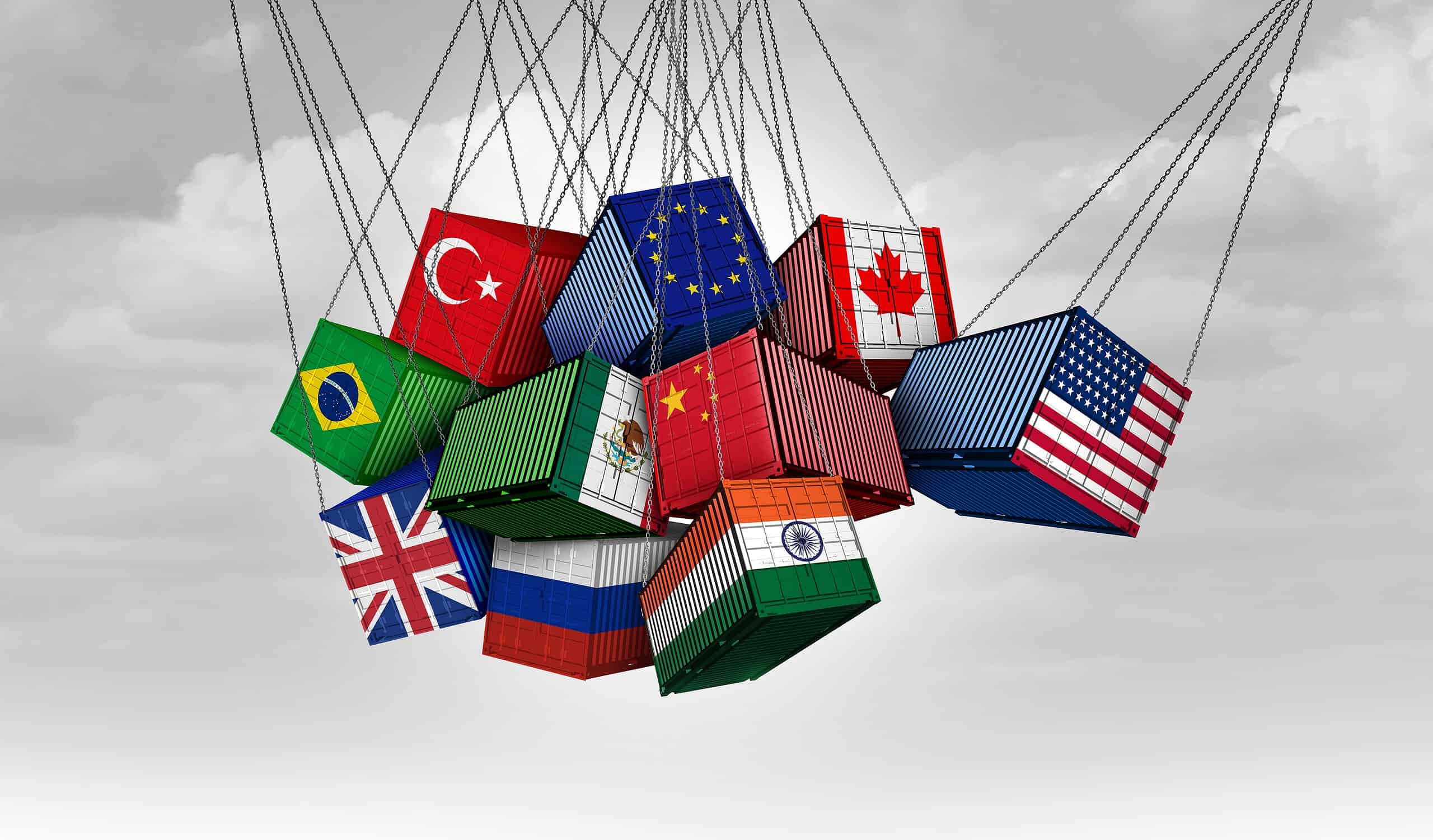
Thirdly, is a shift to economic competition. No longer is it just about near shoring, or friend shoring. There’s a real premium on industrial activity being onshore in one’s own domestic market. Now we see some of the more recent interventions, for instance, aimed at seeking to compete around things like the large language models and generative AI, and that’s seen as an area of economic competition.
GF: What does that mean for international business, and how they should plan for the future?
Jones: One of the features of this landscape is that geopolitical risk, but also geopolitical opportunity is to be found across almost all geographies at the moment. And so the interesting question for boardrooms and the C-suite is where the opportunities may lie. Where is the playing field becoming more level? How do I change my investment planning away from being almost in survival mode to being about thriving and taking the opportunities.
GF: So if we could think of geostrategic risk and opportunity analysis in terms of a framework. Where do we start?
Jones: It’s really important to professionalize your approach. The first thing to do is to scan the environment, and scan means to understand the outside world and understand the forces that are shaping your environment. It sounds very basic but we know that many companies really struggle to do this. It’s also really important to take a quantitative approach to this rather than simply a qualitative approach and to have a wide range of voices and evidence base in order to really understand what’s going on. The second is to focus, and what we mean by that is to focus on what it means for the business—the impact on future strategy. You have to really incorporate geopolitics into your existing risk management frameworks and it’s centrally important that those risk management frameworks have a voice at the Board.
GF: Who should have the responsibility for understanding geopolitical risk and opportunities?
Jones: The evidence we have at the moment is that there’s not one specific governance format. Sometimes it is one individual being given responsibility. Sometimes it’s a committee given responsibility. But there’s a couple of things that are absolutely crucial, one of which is that a specific person or a specific body must have lead responsibility. This can’t be something that is distributed between three or four parts of the company. There must be a single entity that has ultimate responsibility.
The second crucial thing is that that entity—whether it’s an individual or a group—will have to span across the whole of the company. They need to be able to automatically see the picture across all the different functions because geopolitics is affecting all parts of businesses.
GF: Where do you see the CFO and finance function best fitting in terms of the analysis of geostrategic risk?
Jones: I think the CFO and the finance function should be central to every stage, and the reason for that is coming back to the point that geopolitics is affecting so many different dimensions of your business. For someone like the CFO it’s crucial that they understand these issues, but that all the different aspects of the business are understanding these issues as well and are reacting in the right way.
I think the finance function, more generally can play an important role in quantitative modeling of these impacts—what happens to the cost base; what it does to potential revenues across all the different dimensions of the business and how to incorporate that into the strategic plan. Clearly that’s front and center of any CFO’s agenda.