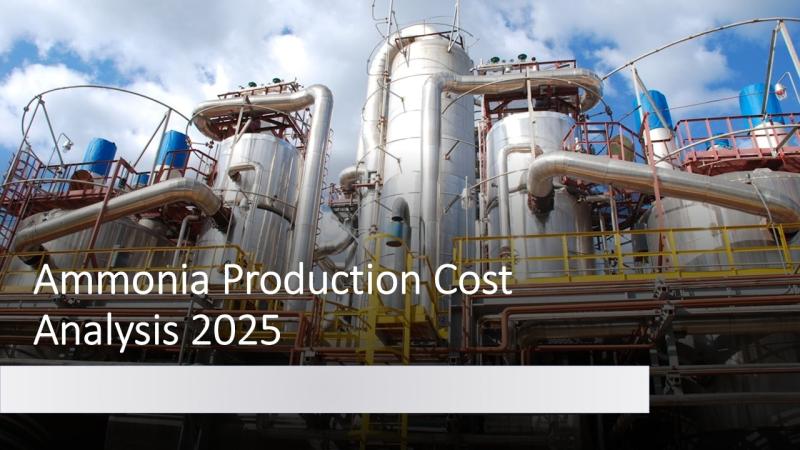
Ammonia is a colorless gas with a pungent odor, composed of nitrogen and hydrogen (NH3). It is widely used in the production of fertilizers, cleaning agents, and various industrial chemicals. As a key component in the nitrogen cycle, ammonia plays a critical role in agriculture and environmental systems, and is also being explored as a potential carbon-free fuel source due to its high hydrogen content.
Setting up an ammonia production plant requires access to natural gas or hydrogen, nitrogen sources, and energy-intensive Haber-Bosch process technology. Key considerations include site location, environmental regulations, capital investment, and operational safety protocols.
IMARC Group’s report, titled “Ammonia Production Cost Analysis 2025: Industry Trends, Plant Setup, Machinery, Raw Materials, Investment Opportunities, Cost and Revenue,” provides a complete roadmap for setting up a ammonia production plant. It covers a comprehensive market overview to micro-level information such as unit operations involved, raw material requirements, utility requirements, infrastructure requirements, machinery and technology requirements, manpower requirements, packaging requirements, transportation requirements, etc.
Request for a Sample Report: https://www.imarcgroup.com/ammonia-manufacturing-plant-project-report/requestsample
Ammonia Industry outlook 2025
The ammonia industry outlook for 2025 indicates steady growth driven by increasing demand for nitrogen-based fertilizers, particularly in emerging agricultural markets. Technological advancements and the push for green ammonia, produced using renewable energy, are reshaping production methods. Additionally, ammonia’s potential as a low-carbon energy carrier is gaining traction, especially in maritime fuel applications. Market expansion is supported by government initiatives targeting decarbonization and sustainable farming practices.
Key Insights for Ammonia Production Plant Setup
Detailed Process Flow:
• Product Overview
• Unit Operations Involved
• Mass Balance and Raw Material Requirements
• Quality Assurance Criteria
• Technical Tests
Project Details, Requirements and Costs Involved:
• Land, Location and Site Development
• Plant Layout
• Machinery Requirements and Costs
• Raw Material Requirements and Costs
• Packaging Requirements and Costs
• Transportation Requirements and Costs
• Utility Requirements and Costs
• Human Resource Requirements and Costs
Capital Expenditure (CapEx) and Operational Expenditure (OpEx) Analysis:
Project Economics:
• Capital Investments
• Operating Costs
• Expenditure Projections
• Revenue Projections
• Taxation and Depreciation
• Profit Projections
• Financial Analysis
Profitability Analysis:
• Total Income
• Total Expenditure
• Gross Profit
• Gross Margin
• Net Profit
• Net Margin
Key Cost Components of Setting Up an Ammonia Plant
• Feedstock Costs: Primarily natural gas or hydrogen, which are the main raw materials in ammonia production.
• Capital Expenditure (CAPEX): Investment in reactors, compressors, heat exchangers, and related infrastructure.
• Land and Site Development: Costs associated with land acquisition, site preparation, and utilities access.
• Engineering and Design: Expenses for process design, project planning, and detailed engineering.
• Construction and Installation: Labor, materials, and equipment costs for building the plant.
• Licensing and Permits: Regulatory approvals, environmental assessments, and safety certifications.
• Operating Expenditure (OPEX): Ongoing costs for maintenance, labor, energy, and utilities.
• Logistics and Distribution: Infrastructure for storage, handling, and transportation of ammonia.
• Environmental Compliance: Equipment and processes for emissions control and waste management.
Economic Trends Influencing Ammonia Plant Setup Costs 2025:
• Energy Price Volatility: Fluctuations in natural gas and electricity prices are significantly impacting feedstock and operational costs.
• Inflation and Interest Rates: Rising inflation and borrowing costs are increasing capital expenditure and financing burdens.
• Global Supply Chain Disruptions: Delays and cost escalations in sourcing equipment and materials due to geopolitical tensions and logistical bottlenecks.
• Push for Green Technologies: Demand for low-emission production methods is driving investment in renewable energy and electrolyzers, raising initial setup costs.
• Government Incentives and Regulations: Subsidies for clean ammonia production and stricter environmental standards are reshaping cost structures.
• Labor Market Conditions: Skilled labor shortages and wage increases are contributing to higher construction and operational expenses.
Speak to an Analyst for Customized Report: https://www.imarcgroup.com/request?type=report&id=7857&flag=C
Challenges and Considerations for Investors in Ammonia Plant Projects:
• High Capital Requirements: Significant upfront investment is needed for infrastructure, equipment, and technology implementation.
• Feedstock Dependency: Reliance on natural gas or green hydrogen exposes projects to supply risks and price fluctuations.
• Regulatory Compliance: Navigating complex environmental regulations and obtaining necessary permits can delay project timelines.
• Market Volatility: Ammonia prices are influenced by global demand, energy markets, and agricultural cycles, affecting profitability.
• Technological Complexity: Ensuring operational efficiency and safety in high-pressure, high-temperature processes requires advanced engineering.
• Sustainability Expectations: Growing emphasis on green ammonia production demands additional investments in renewable energy integration.
• Infrastructure and Logistics: Adequate transport, storage, and distribution systems must be established, especially in remote or underdeveloped regions.
• Geopolitical Risks: International trade policies and geopolitical tensions may impact supply chains and export opportunities.
Conclusion:
In conclusion, the ammonia industry is undergoing significant transformation driven by rising global demand, technological advancements, and sustainability goals. While opportunities in fertilizer production and green energy applications present strong investment potential, setting up an ammonia plant involves considerable financial, regulatory, and logistical challenges. Strategic planning, access to reliable feedstock, and adherence to evolving environmental standards are critical to ensuring long-term project viability and competitiveness in the global market.
Buy Now: https://www.imarcgroup.com/checkout?id=7857&method=1911
About Us:
IMARC Group is a global management consulting firm that helps the world’s most ambitious changemakers to create a lasting impact. The company excel in understanding its client’s business priorities and delivering tailored solutions that drive meaningful outcomes. We provide a comprehensive suite of market entry and expansion services. Our offerings include thorough market assessment, feasibility studies, company incorporation assistance, factory setup support, regulatory approvals and licensing navigation, branding, marketing and sales strategies, competitive landscape, and benchmarking analyses, pricing and cost research, and procurement research.
Contact Us:
IMARC Group
134 N 4th St. Brooklyn, NY 11249, USA
Email: sales@imarcgroup.com
Tel No:(D) +91 120 433 0800
United States: +1-631-791-1145
This release was published on openPR.