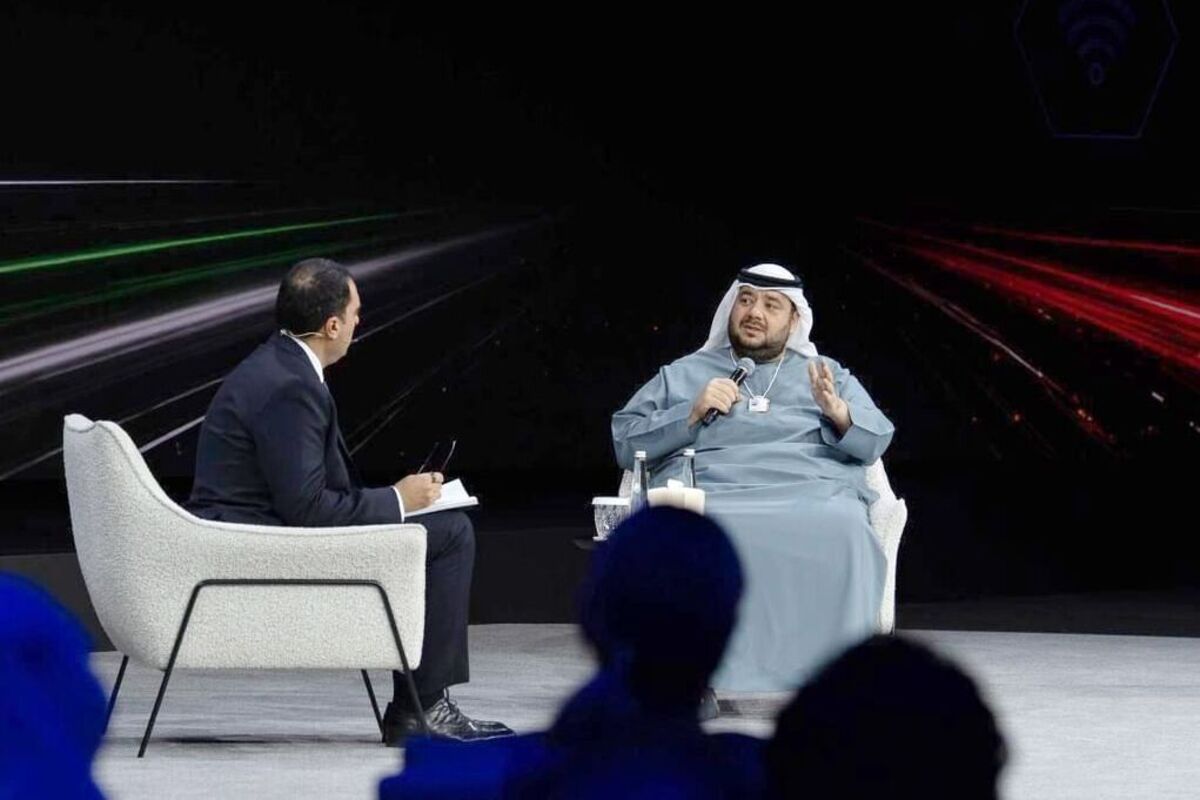

By turning complex data into investment insights, Atlas helps investors identify trends and uncover high-potential clusters across the seven Emirates
The UAE’s Ministry of Investment recently announced the launch of Atlas, a dynamic geospatial platform designed to unlock investment insights across the UAE.
This came during its participation in Make it in the Emirates (MIITE) 2026, where the ministry also launched a whitepaper titled “UAE: A snapshot of manufacturing excellence – Advancing into future industries,” in collaboration with the Ministry of Industry and Advanced Technology.
Atlas connects global capital with opportunities in the UAE
Atlas gives global investors real-time access to the UAE’s investment landscape through an interactive map and powerful analytics, enabling users to visualize investment projects, explore sectors and regions, apply filters by source country, project type, and free zone, and generate custom reports by country or sector.
The unveiling of Atlas at Make it in the Emirates demonstrates how advanced technology can be harnessed to enhance investment decision-making and deepen investor engagement with the UAE. By turning complex data into investment insights, Atlas helps investors identify trends and uncover high-potential clusters across the seven Emirates.
The platform also reinforces the ministry’s commitment to transparency, accessibility and investor enablement, connecting global capital with opportunities in the UAE through a single, intuitive interface.
Together, the launch of the advanced manufacturing whitepaper and the Atlas platform reinforce the Ministry’s mission to position the UAE as a leading destination for international investment and reaffirm its steadfast commitment to broadening opportunities for global investors, innovators and industrial partners.
UAE targets raising international capital in advanced manufacturing
The strategic announcement comes at a time when global supply chains are being rapidly reshaped, positioning the UAE as a compelling investment destination that offers investors a stable and supportive environment, alongside advanced industrial and technological readiness.
These strengths are embedded within the UAE’s industrial model, which is underpinned by forward-looking policies, an enabling business environment, incentives and enablers, robust regulatory frameworks, world-class infrastructure, highly efficient logistics networks, and national programs and initiatives such as Make it in the Emirates.
The whitepaper reflects on the UAE’s evolution from a traditional, resource-based industrial base into a diversified, high-value manufacturing hub spanning heavy industries, chemicals, machinery and equipment, food and beverage, pharmaceuticals, space sector, hydrogen and renewable energy, and extending to advanced and future industries, powered by Fourth Industrial Revolution technologies.
It outlines how an ambitious government vision, deliberate policy choices, world-class infrastructure and a forward-looking investment ecosystem have positioned the UAE as a strategic destination for international manufacturers seeking scale, innovation and access to global markets.
“The UAE’s manufacturing landscape today is defined by technology, innovation and a relentless focus on high-value production. Attracting international capital into advanced manufacturing is central to our long-term economic vision; it strengthens industrial capacity, accelerates the diversification of our economy, develops national talent, and deepens our integration into global value chains,” H.E. Mohamed Hassan Alsuwaidi, UAE Minister of Investment.
In the decade leading to 2024, he added, international investors committed close to $33 billion in manufacturing-related FDI into the UAE, and today manufacturing stands as the fifth-largest sector for FDI into the country, representing 7 percent of the nation’s total FDI stock.
“These are clear signals that global manufacturers recognize the depth of opportunity, the quality of talent and the pace of innovation that define the UAE’s investment and manufacturing ecosystems,” he added.
UAE enters new phase of sustainable industrial transformation
For his part, H.E. Dr. Sultan Ahmed Al Jaber, UAE Minister of Industry and Advanced Technology, said the UAE has entered a new phase of sustainable industrial transformation, transitioning towards a model focused on manufacturing, exports, value creation and strengthening industrial and technological competitiveness in global markets.
“Driven by a clear national vision, industry is no longer solely an economic option, but a strategic necessity to strengthen economic resilience, support supply chains, and drive sustainable growth. The Ministry of Industry and Advanced Technology continues to work towards developing an integrated national ecosystem in collaboration with strategic partners across government entities and the private sector,” he added.
The UAE’s industrial exports increased by 25 percent in 2025, reaching AED262 billion, while medium- and high-tech industrial exports increased to AED92 billion, surpassing the country’s 2031 target six years ahead of schedule. This reflects the UAE’s commitment to reinforcing its position as one of the world’s most competitive and future-ready destinations for investment in advanced manufacturing.
Read: TA’ZIZ, Alpha Dhabi ink deal for $10 billion chemicals investment in UAE at MIITE 2026
UAE targets raising manufacturing sector’s GDP contribution to AED300 billion by 2031
The report highlights the central role of foreign direct investment in the UAE’s industrial transformation. Between 2015 and 2024, the UAE attracted 251 manufacturing-related FDI projects, representing total capital investment commitments of $32.7 billion and generating an estimated 38,684 jobs.
The United States, the United Kingdom, and India emerged as the top source countries by number of projects over the decade, followed by Germany and China, reflecting the growing confidence of investors from across mature and emerging markets in the UAE’s industrial proposition. Advanced manufacturing is one of the priority investment sectors identified under the UAE’s National Investment Strategy 2031, positioning it a core pillar of the UAE’s long-term economic diversification agenda.
“In an increasingly fragmented global environment, investors are prioritizing resilience, stability and certainty of execution. These are the fundamentals on which the UAE’s investment ecosystem has been built – they remain unchanged, and they are the ones that will carry us forward. Investors are looking beyond short-term market cycles toward long-term clarity, and this is reflected in the UAE’s FDI inflows over the past decade, which have grown by more than 20 percent on average annually, underscoring the sustained confidence of global investors in our long-term trajectory,” said Alsuwaidi.
The whitepaper also underscores the scale of the UAE’s industrial ambition. Under Operation 300 Billion, the UAE aims to raise the manufacturing sector’s GDP contribution to AED300 billion by 2031, a target that is already 63 percent achieved.