
Carbon
Within the carbon sector, many startups are working on technologies to capture and sequester carbon dioxide from seawater or finding ways to safely store carbon in the ocean. These processes are collectively known as marine carbon dioxide removal (mCDR). Startups are developing methods to, for instance, use electrochemistry to extract carbon dioxide directly from ocean water to increase carbon sequestration. Another way startups are enhancing the oceans’ carbon sink capabilities is through accelerating limestone weathering, which stores carbon dioxide safely and stably as oceanic bicarbonate.
Industrials
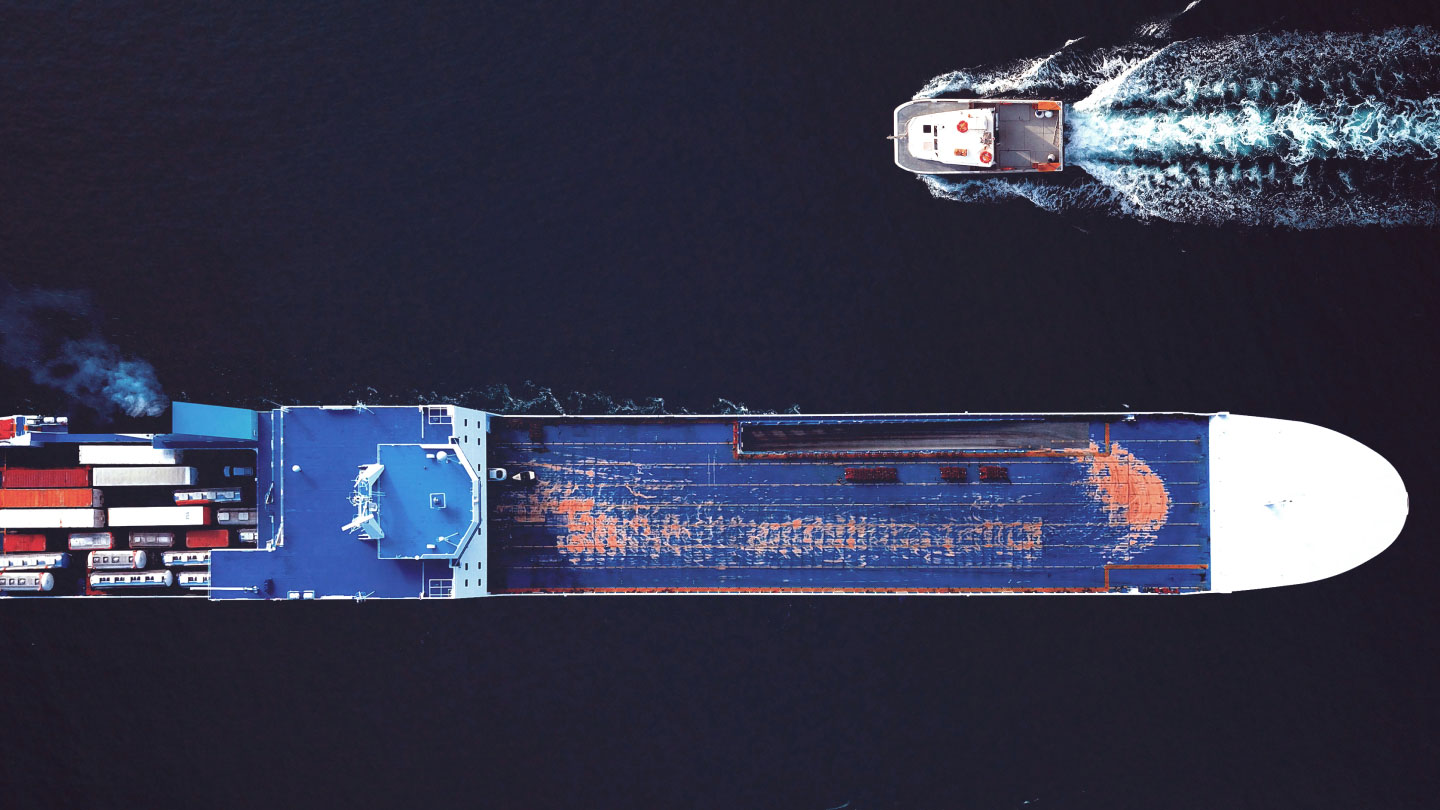
The industrials sector includes solutions that reduce water and energy use, improve efficiency and reduce the impact of heavy industries, like maritime and wastewater. It also includes underwater vehicles and robots for ocean-climate data collection and maritime security. For example, the shipping industry, which transported over $1.5 trillion in U.S. trade in 2020, contributes to 3% of global emissions annually and is under regulatory pressure to decarbonize. To reduce shipping’s carbon footprint, startups are developing electrification technology, carbon capture devices and alternative fuels.
The number of applications within the industrials sector has increased due to advancements in manufacturing, battery technology and autonomous technology. As a consequence, new solutions like dual use-technologies, autonomous underwater vehicles and oceans sensors have emerged. Dual-use technologies, including unmanned autonomous and underwater vehicles, are utilized for both civilian and military applications like surveillance and trade route monitoring. Ocean sensors have a wide range of uses, from helping scientists collect ocean-climate data to assisting in naval operations.
Organics
Organics refers to novel biological ingredients and technologies across several industries including food, agriculture and pharmaceuticals. Use cases include aquaculture technology, algae-based biotechnology, cell-based proteins and seaweed cultivation for food, skincare and compostable resins. The U.S. produces $11 billion of processed seafood annually and is one of the largest seafood markets in the world. Aquaculture startups are working to optimize fish, shrimp, and oyster feeding and harvesting to improve efficiency and scale production. Innovation in the aquaculture space also extends to supply management, traceability and compliance, as consumers and policymakers are increasingly interested in a sustainable and safe food supply.
The ocean-climate technology investment landscape
Given the breadth of opportunities, many startups have entered the space looking to solve problems with novel technologies. Investment has been rising to support the development of technologies like mCDR, autonomous underwater vehicles and enhanced aquaculture.