
Peru is heading toward new general elections in a scenario marked by strong political fragmentation, high levels of voter apathy and a Congress that in recent years has played a decisive role in the dynamics of power.
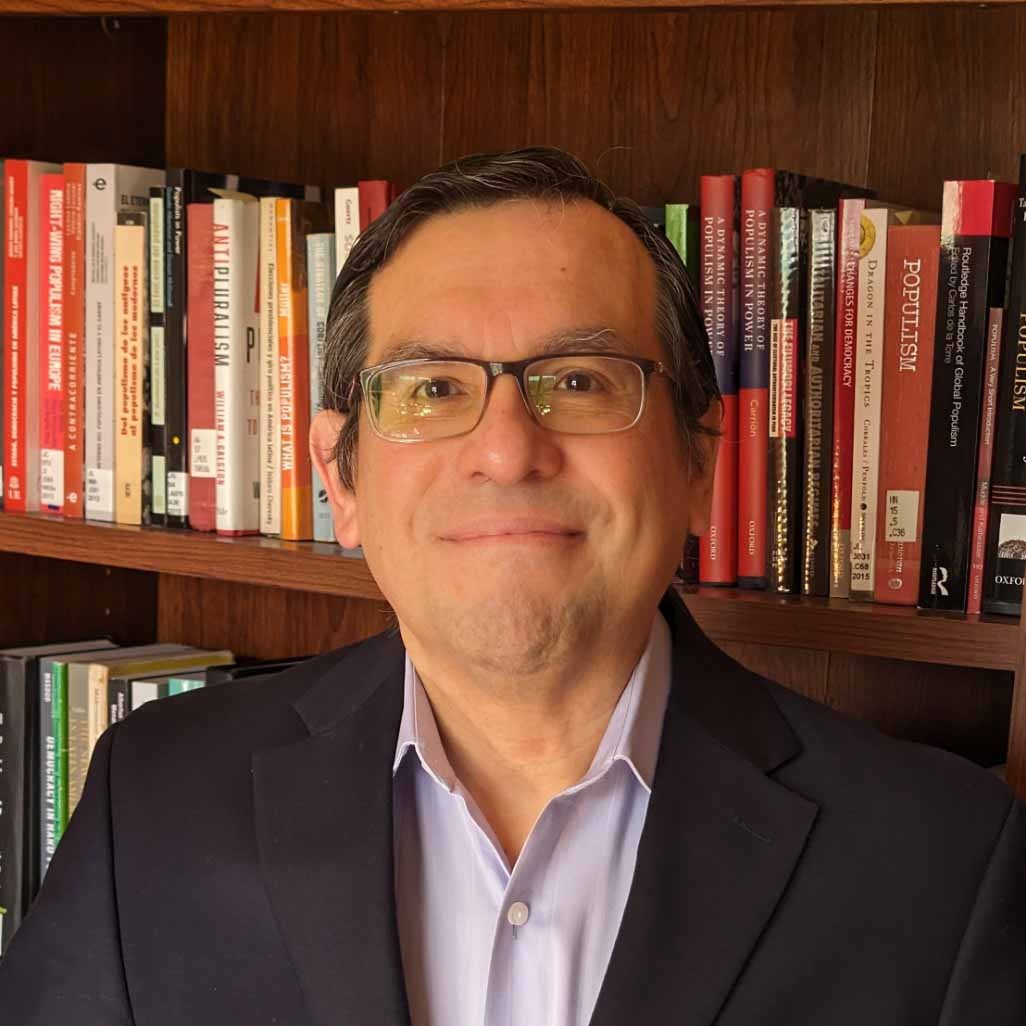
In a conversation with BNamericas, Julio Carrión, professor of political science and international relations at the University of Delaware, examines the political landscape ahead of the elections and its implications for strategic sectors such as mining, where political uncertainty and conflicts surrounding projects have contributed to slowing investment in recent years. He also addresses the structural challenges facing the country, from institutional weakness to the advance of illegal economies in different regions.
BNamericas: Amid the recent change of government and the upcoming general elections, does the country’s economy remain solid?
Carrión: Despite the uncertainty and political instability of recent years, the economy has remained in a relatively positive situation. If you look at the last decade, and in particular the last four or five years of deep political instability, you can see that Peru’s economic fundamentals are solid.
There is a debate: some argue that politics does not really affect the economy, while others believe that it could be much better if there were greater political stability. I lean toward this second view. The economic fundamentals are so strong that they would allow for greater growth if it were not for political instability and, above all, for the poor management of the public budget in the last two years, which has slowed growth. The economy continues to move forward, but it could be at a higher level.
Since the economy is not an acute issue for most of the population, the political debate is focused on other matters linked to the failures of the State: security and corruption. Added to this is a third factor, which is the great public disillusionment with the political system, which has generated marked apathy at this time.
BNamericas: Just over a month before the general elections, what does the political landscape look like?
Carrión: About 35% of Peruvians still do not have a defined candidate, which is unprecedented in the last 30 years. There is great political apathy that can bring negative consequences: a highly fragmented Parliament and a Senate —which is being reinstated this year— may be dominated by or under the influence of the parties that have been in power over the last five years.
That would imply more instability and a lack of strategic thinking about how to strengthen the economy and institutions. Those who believe that the political system is failing could choose to emigrate or support anti-system alternatives, which always represents a risk in Peru.
There is no clarity about who could be the next president; the only thing that seems agreed upon is that Keiko Fujimori will not be elected, despite this being her fourth candidacy. Beyond that, voters do not know who to vote for.
BNamericas: How can this environment affect the behavior of foreign investors or of strategic industries such as mining?
Carrión: It is precisely one of the reasons why I think that, with greater political stability, there would be more economic growth. The major mining companies have reduced their investments because of the uncertainty.
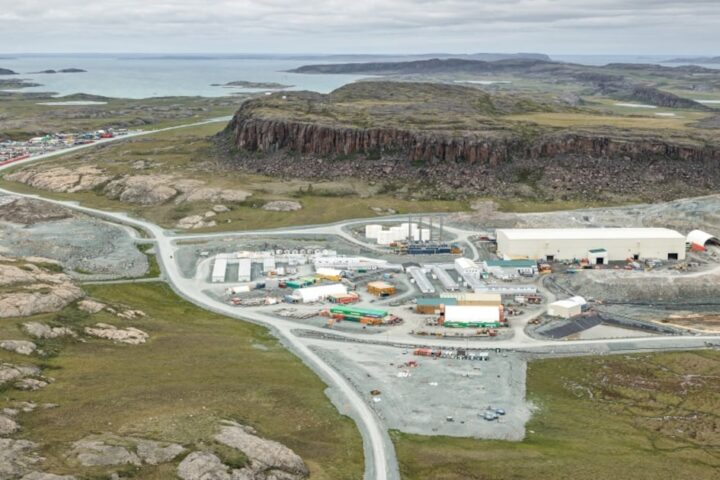
In Latin America there is always a certain degree of risk, but in Peru instability exceeds any foreseeable framework. Weak governments and communities that oppose projects make it impossible to build consensus, which holds back new investments.
Political instability negatively affects investment decisions in Peru, especially in mining.
All governments are very weak, there are companies that oppose activity in their territories and with weak governments it is difficult to build consensus.
BNamericas: Outside of Peru there is a perception that, despite the political crises, there is sufficient institutional framework so that sectors such as mining are not affected. Do you share that perception or do you think that the institutional framework is being affected?
Carrión: The institutional framework is clearly affected. Annual growth figures can be misleading, because they mainly reflect the rise in international prices over the last three or four years, also due to instability in other parts of the planet.
Peru is missing an important opportunity because of instability: governments that last less than three years, weak presidents, and a Congress that operates like an informal resource-extraction business. There is no national project, and all of that has a direct impact.
BNamericas: Since this is an election year, could we see a slowed economy?
Carrión: We will have to wait, but phenomena such as El Niño are already having an impact. Blocked roads and floods are slowing growth, and the government lacks technical teams and institutional strength to respond. Added to this is informal and illegal mining, which harms the environment and creates territories where the law does not exist and force prevails. Social conflict is high.
BNamericas: Social conflicts around mining seem less frequent than 15 years ago. Has conflict decreased?
Carrión: In the last 12 months there have been no significant protests against mining operations, which reflects that investment has slowed and in some cases there are no new investments. Without new projects, there is no reason for conflict. Fifteen years ago, with more significant investments, communities sought better economic conditions and that generated tensions.
Today what predominates is news about illegal mining and the associated criminal activity, which has created practically lawless territories.
BNamericas: What do you mean by “liberated territories”?
Carrión: Areas where the State neither reaches nor regulates. There is no labor or environmental oversight, and illegal mining hires armed gangs to impose its own order. The State simply does not enter.
BNamericas: Is there a defined strategy to tackle illegal mining?
Carrión: It does not exist and, unfortunately, in the next five years that will not change. In Peru, illegal mining is an important financier of several members of Parliament and some political parties, and it has real political influence; they have it in the current Parliament and are likely to have it in the next one as well.
I am not very optimistic about a state effort to recover areas controlled by illegal mining; it would require strengthening the rule of law, something unlikely in the short term.
BNamericas: So, is it even more unlikely that joint actions will be undertaken in the region, where illegal activity mainly affects Peru, Ecuador, Brazil and Colombia?
Carrión: Yes. Much more unlikely. Also due to each president’s visions.
The current president of Peru was elected as part of a Marxist-Leninist party, but when analyzing his behavior and the way he has voted in Congress, it becomes clear that he does not answer to an ideology, but to interests.
In Peru, illegal mining has political power and considerable influence at this time.
Some leaders, such as Daniel Noboa in Ecuador, align themselves with projects close to President Donald Trump, while others, such as Colombia’s Gustavo Petro, oppose them.
In this context, it is difficult to reach specific agreements to control illegal mining.
BNamericas: Could the rise in metal prices benefit Latin America in the face of President Trump’s tariff policies, which seek to curb China’s presence?
Carrión: It is a challenge for most of the countries in the region to navigate this new scenario in which President Trump is determined to combat China’s economic and commercial influence.
In practice it is very difficult. Even a president who openly supports him, such as Javier Milei in Argentina, maintains solid relations with China because it is one of his main trading partners. Although some leaders may move closer to Trump, that does not translate into a significant change in trade with China, at least at this time.
In addition, with the increase in tariff rates, the United States does not offer clear incentives. Many Latin American countries conclude that China is currently a more stable trading partner than the U.S.
BNamericas: How can the conflict in the Persian Gulf influence Latin America, either positively or negatively?
Carrión: The only advantage for the region is that Trump is busy on another front and has relegated Latin America in his priorities.
Some countries will benefit from the temporary rise in the price of oil, but those that import it will be affected. Everything will depend on how long the crisis in the Middle East lasts: whether it lasts weeks or months will determine the real impact.
BNamericas: In the specific case of Peru, what impact can the conflict have?
Carrión: In Peru there will be no major impact. The conflict in the Middle East is not among the main risks for the next six or twelve months. The most relevant factor is the elections and what kind of Congress will result: whether there will be a functional majority committed to the rule of law, or whether a predatory majority like in recent years will be repeated.
BNamericas: It gives the impression that in Peru the one who really makes the decisions is congress, beyond who the president is and what their government plan is.
Carrión: That’s right, due to the great fragmentation. We do not know how the next Parliament will be distributed or which parties will have control. That uncertainty is part of the political instability. There are still almost five weeks to go before the elections and it is still not clear who will occupy the top positions. Perhaps by the end of the month or the beginning of April we will have a more defined outlook.
BNamericas: If in mining investment has slowed down, what is happening with other industries such as infrastructure?
Carrión: Infrastructure is the mechanism through which corruption gains access to significant revenue. Members of parliament, mayors, and governors use road, school, or hospital projects to get their cut. That is why the parties that have controlled power over the past three years focus on ministries with larger budgets, such as transport or health. Investment decisions do not respond to a strategic national plan, but rather to the influence of legislators who pressure the Ministry of Economy and Finance to approve financing.
In general, there are announcements of large investment projects, but few are actually carried out. The resources are directed toward smaller projects
(The original version of this content was written in Spanish)