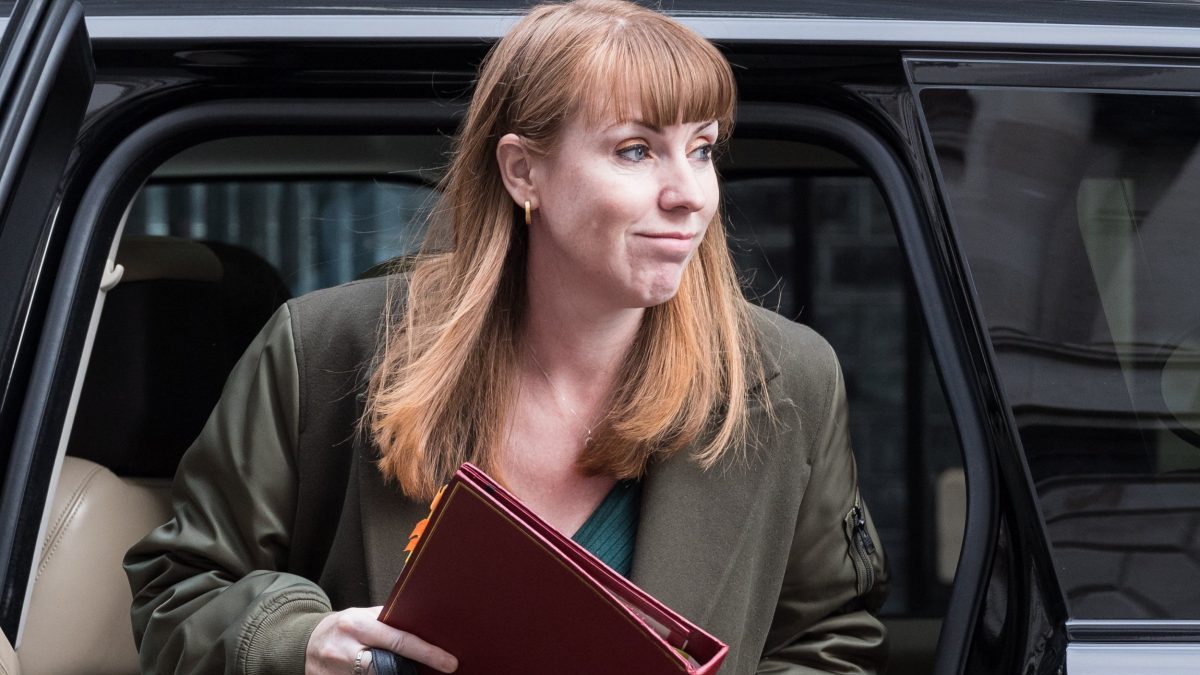

Deputy Prime Minister hits back at criticism from business groups over Employment Rights Bill
Beefing up workers’ rights will boost the economy, Angela Rayner has insisted in a riposte to businesses and the official budget watchdog.
Writing for The i Paper, the Deputy Prime Minister hailed a boost to the national living wage which comes into force on Tuesday, and said her drive to push up pay for those on lower incomes was personal.
She also defended the Employment Rights Bill going through Parliament, which will make it harder to fire workers from the moment they start a job and give those on zero-hours contracts the right to a more regular routine, as well as expanding rights to sick pay.
Business groups claim that the legislation will push up unemployment and squeeze wages, while the Office for Budget Responsibility (OBR) predicted last week that it would have a “net negative” impact on the UK economy.
The National Living Wage – the minimum amount which can be paid per hour to anyone aged 21 or over, today rises to £12.21 an hour from £11.44.
The National Minimum Wage for younger adults is going up from £8.60 to £10, and the minimum rate for apprentices and under-18s is increasing from £6.40 to £7.55.
Rayner said her early working life “on low pay” meant she was “never sure if I would be able to make ends meet”. The wage rise would, she claimed, stop others from feeling the same way.
“I remember how disheartening and demoralising an experience it was trying to get by and get on. I got into politics to change that, and this Labour Government is doing just that,” the Deputy Prime Minister wrote, saying that the wage change would mean “the lowest paid will see their pay rise over twice the rate of inflation”.
She added: “But Labour won’t stop there. Because for years the good, secure jobs our parents and grandparents could depend on were replaced by low-paid, insecure work.”
Rayner said the Government’s changes to employments will benefit “more than 10 million people”, adding: “These new laws will deliver sick pay from the first day you are ill, protect you from being sacked without good reason or dismissed because you refused to agree to lower terms and conditions.
“And we will offer guaranteed hours so those currently stuck on zero-hours contracts have the security and dignity they deserve.”
The bill is being debated by the House of Lords, with its supporters braced for a drawn-out fight with peers to stop the legislation being watered down.
Business groups have pushed for major changes – the Federation of Small Businesses argued this week that it would end up “clobbering business, wages and jobs” in its current form.
At last week’s Spring Statement, the OBR warned that it had not done any modelling on the impact the bill will have on the economy once it takes effect.
It added, however: “Employment regulation policies that affect the flexibility of businesses and labour markets or the quantity and quality of work will likely have material, and probably net negative, economic impacts on employment, prices, and productivity.”

Boosting the economy is a key plank of Labour’s promise to voters for this Parliament – with Sir Keir Starmer and Chancellor Rachel Reeves arguing it is the best way to improve living standards and fund spending increases such as those for the NHS.
Since the election, however, Reeves has been dogged by flatlining growth, which some economists have blamed on measures such as increasing employers’ national insurance contributions, which come into effect in April.
Despite the row over the economic effect of the workers’ rights laws, a source close to Reeves insisted the Chancellor was fully supportive of the package. The source said: “Rachel has made the case for the importance of security at work. It makes people more productive, and if they are more productive that is good for the economy.”
As well as Tuesday’s increase in the minimum wage, a number of household costs, such as the price of energy and water, are due to rise significantly owing to the start of the new financial year.
I remember how demoralising low pay was – I entered politics to change that
By Angela Rayner
Labour promised to Make Work Pay and improve living standards in every part of the country, and we meant it.
For too long, hard work hasn’t been rewarded, and on Tuesday we are turning the page with millions of people on the National Living Wage seeing the huge pay boost they deserve.
Like many of you, I started my working life on low pay, never sure if I would be able to make ends meet by the end of the month. I remember how disheartening and demoralising an experience it was trying to get by and get on.
I got into politics to change that, and this Labour Government is doing just that.
That’s why one of the first things Labour did when we came to power was change the rules around how the National Living Wage is set, so, for the first time, it took the soaring cost of living into account.
From today, our changes will mean that the lowest-paid will see their pay rise by more than twice the rate of inflation. It is a record rise too for 18 to 20-year-olds and apprentices, representing a giant leap in bringing all adults onto the same pay rate.
It will mean more security for lower-paid workers, and it will mean people have more to spend on the local high street, boosting our economy.
This is the change people voted for: Making Work Pay and putting more money in millions of people’s pockets.
This uplift will mean more money that can be spent on the high street to boost the local economy and help kickstart economic growth – the Government’s central mission in its Plan for Change.
But Labour won’t stop there. Because for years, the good, secure jobs our parents and grandparents could depend on were replaced by low-paid, insecure work.
That was bad for workers, and it was bad for the economy.
Labour was elected to change that, and our landmark Employment Rights Bill will do just that. These new laws will deliver sick pay from the first day you are ill, protect you from being sacked without good reason or dismissed because you refused to agree to lower terms and conditions. And we will offer guaranteed hours so those currently stuck on zero-hours contracts have the security and dignity they deserve.
The Tories lined up alongside Reform to oppose every single one of these steps, just as they opposed the minimum wage two decades ago.
They are not on the side of working people – but this Labour Government is.
In total, more than 10 million people will benefit from Labour’s plan in every corner of this country, so if you are in casual work, unable to rely on guaranteed hours, this Labour Government is delivering for you. If you are working hard on low pay and struggling to make ends meet, this Government is delivering for you.
This plan is personal to me, and to our Prime Minister. Now we are around the Cabinet table, working people are getting the pay rise and rights they deserve and a Government determined to deliver for them.
Angela Rayner is the Deputy Prime Minister