
New York, United States – The concept of the home is undergoing a fundamental transformation. It is no longer just a physical shelter. It is becoming a comprehensive digital ecosystem. The global Smart Home Market is rapidly evolving from a niche luxury into a mainstream necessity. Homeowners, builders, and technology providers are converging to create living spaces that are intelligent, responsive, and sustainable. For industry stakeholders, understanding this shift is not just about tracking gadget sales. It is about recognizing a massive shift in consumer behavior and infrastructure.
Vantage Market Research has released a pivotal study that maps this trajectory. The report offers a granular analysis of the market. It is currently valued at USD 121.52 billion in 2025. The data projects a steady climb to USD 195.73 billion by 2030. This represents a Compound Annual Growth Rate (CAGR) of 10%. This growth is not accidental. It is driven by a convergence of internet ubiquity, rising disposable incomes, and a critical demand for energy efficiency.
This article explores the core findings of this research. We will dissect the drivers, restraints, and opportunities that define the smart home landscape. If you are an investor, a manufacturer, or a strategic planner, this data serves as your roadmap.
The Financial Landscape: Steady and Sustainable Growth
Market stability is a key indicator for investors. The Smart Home Market shows a resilient upward trend. The jump from USD 121.52 billion to USD 195.73 billion within five years signals a maturing industry. We are moving past the hype cycle of early adoption. We are entering a phase of sustained integration.
The growth is fueled by tangible economic factors. Emerging economies are seeing a rise in disposable income. As purchasing power grows, the aspiration for a connected lifestyle follows. Consumers are willing to invest in systems that offer convenience and security. The report highlights that this is a global phenomenon rather than one restricted to Western markets.
Download PDF Brochure @ [Click Here to Request a Sample]
Key Drivers Propelling the Market
Several engines are powering this market forward. The Vantage Market Research report identifies the primary catalysts described below.
- Ubiquity of the Internet: High-speed internet is the backbone of the smart home. As 5G rolls out and broadband penetration deepens, the barrier to entry lowers. Devices can communicate seamlessly. This makes the connected home a reality rather than a frustration.
- Adoption of Smart Devices: The proliferation of smartphones acts as a gateway. Users are already comfortable with app-based controls. Extending this control to lights, locks, and thermostats is a natural progression.
- Energy Efficiency Mandates: This is a critical driver. Governments and consumers are aligned on the need for Green Buildings. Smart thermostats and lighting systems are not just cool gadgets. They are tools for carbon reduction. The report details how favorable government regulations regarding green buildings are opening massive doors for market players.
Technological Integration: AI and IoT
The intelligence in the smart home comes from Artificial Intelligence (AI) and the Internet of Things (IoT). The report delves into how these technologies are reshaping the user experience.
IoT connects the physical devices. It allows your refrigerator to talk to your phone. However, AI is what makes that conversation useful. AI algorithms learn user behavior. They adjust the heating before you arrive home. They turn off lights in empty rooms. This shift from remote control to proactive automation is a major selling point.
The integration of Generative AI (Gen AI) is the next frontier. Devices will soon understand complex natural language commands. They will anticipate needs based on historical data. This level of personalization drives consumer stickiness and brand loyalty.
Market Segmentation: A Detailed Breakdown
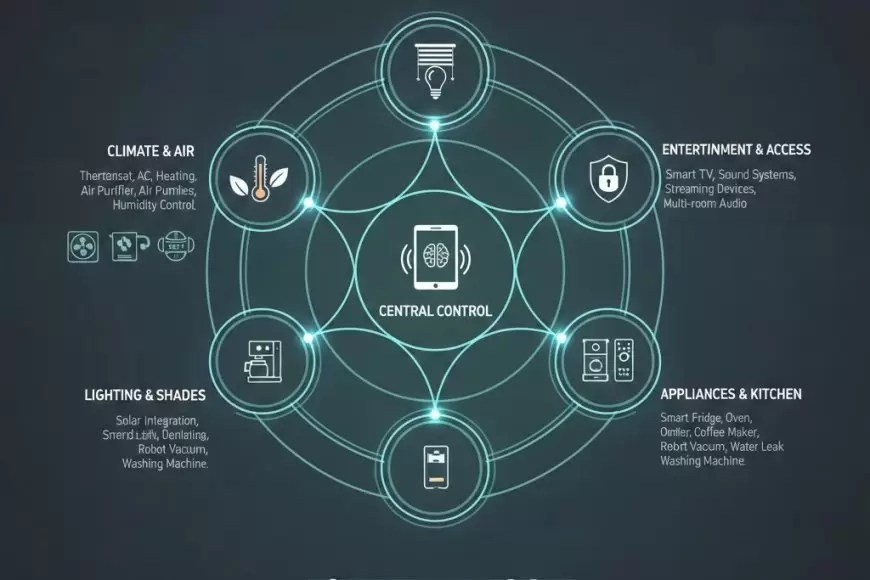
Understanding where the money flows is essential. The smart home market is not a monolith. It is a collection of vibrant sub-sectors. The report segments the market to provide actionable intelligence.
Table 1: Smart Home Market Segmentation Snapshot
|
Segment Category |
Key Components |
Market Trend |
|
Product Type |
Lighting Controls |
High demand for energy saving |
|
Security & Access |
Top priority for homeowners |
|
|
HVAC Controls |
Driven by green regulations |
|
|
Smart Kitchen |
Fastest growing segment |
|
|
Smart Speakers |
The central command hub |
|
|
Entertainment |
High volume with steady growth |
|
|
Offering |
Behavioral |
AI-driven customization |
|
Proactive |
Predictive maintenance and safety |
|
|
Sales Channel |
Online |
Dominant for DIY consumers |
|
Offline/Professional |
Key for complex installs |
|
|
End User |
Residential |
Primary revenue source |
|
Commercial |
Increasing adoption |
Data Source: Vantage Market Research
Spotlight on Security and Access Control
Security remains the primary entry point for many consumers. Smart cameras, video doorbells, and automated locks provide peace of mind. The report indicates that this segment holds a significant market share. The fear factor is a powerful motivator. Homeowners want to monitor their property remotely. They want to know who is at the door without opening it. This segment is characterized by high innovation and fierce competition.
The Smart Kitchen: The New Frontier
The kitchen is the heart of the home, and it is getting an upgrade. The report identifies the Smart Kitchen segment as a high-growth area. Connected refrigerators that track expiration dates are just the start. We are seeing smart ovens that can be preheated remotely and dishwashers that optimize water usage. As appliances need replacement, consumers are increasingly opting for smart versions. This behavior drives the high CAGR for this segment.
Regional Analysis: The Rise of Asia Pacific
Geography plays a massive role in market dynamics. While North America currently holds a significant share due to early adoption, the future lies in the East.
The Vantage report forecasts that the Asia Pacific region will grow at the fastest rate of 8.4%. Rapid urbanization in China, India, and Southeast Asia is creating a massive new customer base. New construction projects in these regions are increasingly incorporating smart technology from the ground up. This built-in approach differs from the retrofit culture often seen in older European or American housing stocks.
North America remains a powerhouse. The high disposable income and tech-savvy population keep it relevant. The focus here is on upgrading existing systems and integrating disparate devices into a cohesive ecosystem.
Competitive Landscape: Titans and Innovators
The smart home market is a battleground for tech giants and specialized manufacturers. The report profiles the key players who are shaping the industry.
- Tech Giants: Amazon, Apple, and Google are fighting for the ecosystem. Their smart speakers (Echo, HomePod, Nest) act as the central hubs. They want to own the interface through which you control your home.
- Industrial Heavyweights: Companies like Honeywell, Johnson Controls, Schneider Electric, and Siemens bring industrial-grade reliability to the consumer market. They dominate in HVAC, safety, and energy management.
- Specialized Leaders: Brands like ASSA ABLOY focus on specific niches like access control. This ensures they remain the best-in-class option.
The report analyzes the strategies of these players. We see a trend of inorganic growth. Companies are acquiring smaller startups to fill gaps in their portfolio. Strategic partnerships are also common. A lighting company might partner with a voice assistant provider to ensure compatibility.
Challenges and Restraints: The Roadblocks
No market is without challenges. The report provides a candid look at the hurdles.
- Interoperability: This is the biggest headache. A consumer buys a smart bulb that works with one system but not another. The lack of a universal standard frustrates users. The report discusses how open protocols are attempting to solve this. However, fragmentation remains a restraint.
- Perceived Complexity: For the average user, setting up a smart home can feel like a technical exam. The Do It Yourself (DIY) market is growing. Yet professional installation is still required for complex systems. This adds to the cost and friction.
- Cost vs. Necessity: Smart home tech is often seen as a luxury. A standard light switch works perfectly fine for most people. Convincing mass-market consumers that the smart version is worth the premium is an ongoing marketing challenge.
Get Your Strategic Advantage – Purchase the Report Now
Why This Research Matters
In a market moving this fast, data is your most valuable asset. The Vantage Market Research report is not just a collection of charts. It is a strategic tool.
- For Manufacturers: It helps you identify which product lines are heating up. Should you pivot to smart kitchens? Or should you double down on security?
- For Investors: It highlights regional hotspots. The growth in Asia Pacific offers a clear signal on where to allocate capital.
- For Retailers: It clarifies the sales channels. Understanding the balance between online and offline sales helps in inventory planning.
Strategic Recommendations
Based on the insights from the report, businesses should consider the following strategies:
- Focus on Interoperability: Ensure your products play well with others. “Works with Alexa/Google/Apple” is a mandatory feature rather than a bonus.
- Highlight Energy Savings: Marketing campaigns should move beyond cool features. Focus on the ROI for the consumer. Show them how the device lowers their electricity bill.
- Simplify the User Experience: The setup process must be frictionless. If it takes more than five minutes to install, you will lose the mass market.
Industry Scope
The Smart Home Market is at a pivotal juncture. It is transitioning from a gadget-focused niche to an infrastructure-focused industry. The projected growth to USD 116.4 billion by 2029 is a testament to this shift. The opportunities are vast. However, the risks are also real.
Navigating this landscape requires precision. It requires understanding the nuance between a behavioral offering and a proactive one. It requires knowing why the Asian market is outpacing the West. The Vantage Market Research report provides this clarity. It is an essential resource for anyone serious about capturing value in the smart home revolution.
Access the Full Report
To gain a complete understanding of the Smart Home Market, including detailed competitive analysis and granular segment forecasts, access the full report from Vantage Market Research. Equip yourself with the knowledge to make data-driven decisions in this dynamic industry.
Read the full research report here: Smart Home Market: Global Industry Assessment & Forecast 2026-2035
Contact:
Priya M
Head of Growth & Strategic Partnerships
224 W 35th St Ste 500, New York, NY 10001,
United States Tel: +1 (212) 951-1369
Visit Our Website: https://www.vantagemarketresearch.com
Email: [email protected] | [email protected]