Statistically speaking, the world only ends once.
Welcome to a special edition of Taking Stock. This has been a heavy week. The war in the Middle East is unfolding in real time, and markets have been reacting, especially around energy. Marta Norton is Empower’s chief investment strategist. And, Marta, I’d love for you to walk through how investors should be thinking about this war right now.
Well, let’s start with some context. Geopolitics generally don’t take center stage in US markets for good reason. They typically don’t alter the underlying cash flows of US stocks or US bonds. In fact, one of my greater concerns for investors in an environment like this one is the behavior. Big headlines can make people feel like they need to take action even when they shouldn’t. Now all that said, there is one through line from this particular conflict to markets, and that’s energy prices.
Yeah. Let’s go there and talk a little bit deeper about energy because I think that’s where this starts to feel tangible, and it brings us to a stretch of water that most people have never even heard of. The conflict effectively closed the Strait of Hormuz, and oil prices are climbing right now. Amarta, what does this kind of disruption mean for consumers? What should people realistically expect?
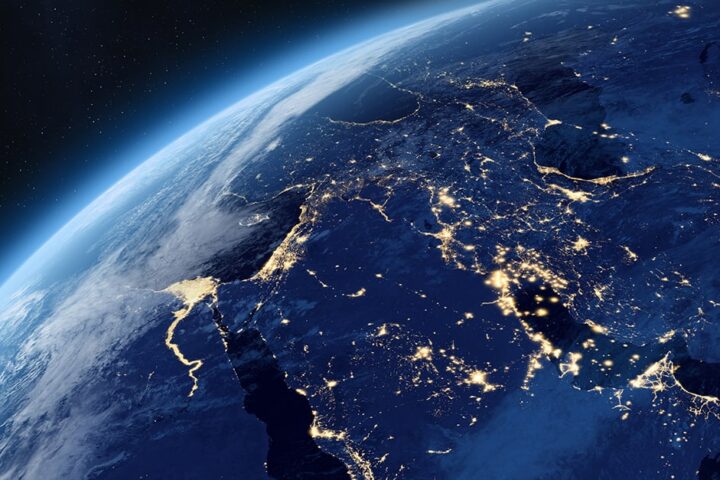
Right. So the Strait of Hormuz is directly south of Iran. Estimates suggest that about twenty percent of the world’s oil supply and at least that much of its liquefied natural gas supply flow through this waterway. The conflict has made it a dangerous pass. Of course, an activity there has effectively disappeared. As a result of this and the conflict in general, we’ve seen higher oil and natural gas prices around the world.
Yeah. And it’s not just that prices are up, it’s how long they stay up. The US is now the world’s top oil producer. So does that change how exposed we are here at home? Does it give us real protection, do you think, or or maybe just a little more cushion?
So you’re right. The US is the world’s largest oil producer and actually the world’s largest producer of natural gas, and that’s relatively new. The shale revolution in the early two thousands really changed the US’s dependence on oil and natural gas resources outside the US. So while we have seen higher prices in US oil and gas, it’s not to the same extent that we’re seeing higher prices in Europe or in Asia. And you can see that in the market performance earlier this week. US stocks have fallen, but not as much as some of the markets overseas.
Yeah. And we’ll have to keep an eye on any intervention by the treasury to reduce the price impact. Still, at least for now, as you said, Marta, we are seeing higher prices in the US as well. That does affect what people are paying at the pump, but it doesn’t stop there. There’s also a bigger picture. In other words, an oil shock doesn’t just stay at the pump. It has a way of really creeping into the price of nearly everything, and that puts the Fed in a tough spot right when it felt like inflation was finally starting to wind down a bit.
Yes. Absolutely. The Fed is in a tough spot. The jobs report today reinforced the twin perils that the Fed has. We saw payrolls actually drop for February, which was unexpected. And really that labor data is reinforcing the idea that while we aren’t seeing massive amounts of layoffs, hiring has really ground to a halt.
And to your point, inflation does creep into the economy. It can impact consumer spending, and, of course, it’s an input for a lot of US businesses. So we could see higher headline inflation numbers due to the higher energy prices, and we could see an impact more broadly as well. But I do wanna caution investors from assuming that we are now looking at an inflation surge across the economy. A lot of research, particularly from various banks from the Federal Reserve, has looked at how a spike in energy prices has historically impacted core inflation. And while there is an effect, it’s more modest than many might suspect. So as we put these two dynamics together on the labor side and on the inflation side, my expectation is that the Fed will side with labor should we see a string of weak labor reports.
Alright. And you you could see a little bit of Fed uncertainty showing up, Marta, I think in the bond market because it’s not the reaction that people expect in a crisis.
Yields have fallen in the wake of that jobs report this morning.
But really over the course of this crisis, they haven’t been a flight to safety trade like they normally are. So what does that tell you? So my view is that the treasury action prior to this morning related to the inflation concerns I described. We see inflation expectations in the market tick a bit higher, particularly for shorter periods, and higher inflation expectations typically correlate with higher treasury yields. I do wanna point out that the US dollar has actually acted like a safe haven this week, and that may surprise some of the dollar bearers out there, and it suggests that it retains some of its flight to safety status. But it’s also worth knowing that oil is generally priced in dollars, so investors moving into oil are also moving into the US dollar.
Interesting. So if someone’s really looking for stability right now, what else belongs in that conversation?
This is where I think it’s very important to return to a point I made earlier. Geopolitics shouldn’t generally play center stage in a US investor’s portfolio. It may create volatility, but it typically isn’t changing the underlying dynamics of the stocks and bonds that drive long term performance. So for investors with diversified portfolios oriented around financial goals, I’d argue many may already be well positioned for an environment like this one.
Last thing, Marta. You’ve been an investor through a lot. The financial crisis, debt scares, COVID, all the moments that I think felt really overwhelming for us in real time. So when the headlines are as loud as they are, what guidance do you have for investors?
An investor I admire once said, statistically speaking, the world only ends once. So with that in mind, sitting tight isn’t a bad approach. But I also have to add, as an investor who looks for opportunities, I found some of the best times to put money to work comes in these periods of dislocation.
So looking for asset classes that get punished by fear is a great place to start.
Yeah. And you mentioned that international markets were getting hit a bit harder this week, so I imagine you have your eye there. Bottom line today, energy markets are under stress. Volatility is real, and the Fed is is navigating some tricky terrain.
But for long term investors, staying focused, staying diversified matters more than ever. Marta, you are always the calm voice when markets are anything but. Thanks so much. My pleasure.