
INTRODUCTION
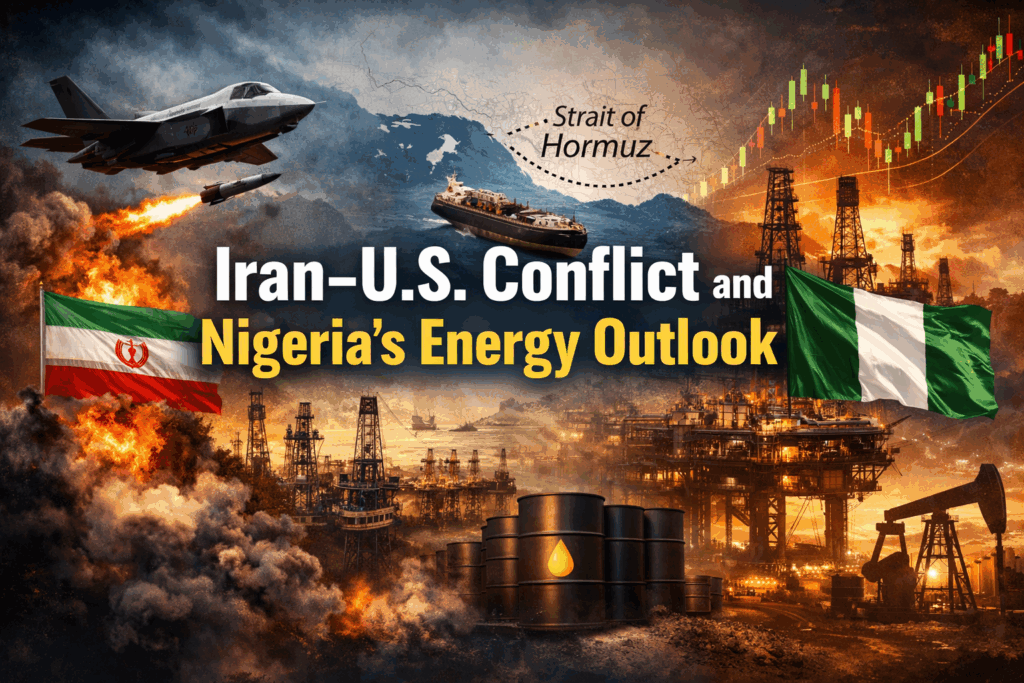
The escalating conflict between Iran and the United States reached a critical point on 28th February 2026, when a coordinated military operation by the US and Israel, codenamed Operation Epic Fury, targeted strategic Iranian facilities. In retaliation, Iran’s Islamic Revolutionary Guard Corps (IRGC) enforced measures that effectively blocked commercial transit through the Strait of Hormuz, disrupting the passage of approximately 13 to 15 million barrels per day (bpd) of crude oil and nearly 20% of global liquefied natural gas (LNG) exports. As the world’s most critical maritime chokepoint, the strait’s closure sent shockwaves through global energy markets, triggering urgent reassessments of supply chains, pricing benchmarks, and strategic planning for energy-dependent economies.
For Nigeria, the crisis presents both opportunities and structural challenges. Elevated oil and gas prices create fiscal opportunities while exposing constraints in upstream production, refining capacity, and domestic gas infrastructure. At the same time, the disruption positions Nigeria to emerge as a strategic alternative supplier for Atlantic Basin markets, reinforcing the importance of the Dangote Refinery, Nigeria Liquefied Natural Gas (NLNG) Limited, and ongoing upstream licensing initiatives in shaping regional energy security.
This analysis evaluates the impact of the 2026 Iran–U.S. conflict on Nigeria’s energy sector, providing stakeholders with a rigorous assessment of market volatility, structural vulnerabilities, and actionable strategies across upstream, downstream, and LNG segments. By combining geopolitical insight with sector-specific analysis, it highlights how Nigeria can leverage global disruption to secure sustainable energy, enhance fiscal stability, and strengthen its strategic investment position.
IMPACT ON THE GLOBAL ENERGY MARKET AND WORKABLE MITIGATIONS
The escalating tensions arising from the Iran–U.S. conflict have introduced renewed uncertainty into global energy markets, raising concerns about supply disruptions, geopolitical risk, and price volatility across the oil and gas sector. As the conflict unfolds in a region central to global hydrocarbon production and transportation, market participants closely monitor developments that could affect key energy infrastructure and trade routes.
One of the most immediate areas of concern is the disruption of maritime transit through the Strait of Hormuz. As one of the world’s most critical energy transit corridors, instability in the strait produces ripple effects across global oil and liquefied natural gas (LNG) markets. For the Atlantic Basin, and particularly Nigeria, these developments present both strategic opportunities to capture displaced supply and operational, contractual, and fiscal challenges arising from heightened market volatility.
Key channels of impact include:
- Maritime Transit Delays and Supply Reconfiguration
Security risks and potential restrictions on navigation in the Gulf can result in extended voyage times and rerouted shipments. These delays increase freight costs and create logistical bottlenecks for global crude and LNG supplies. Import-dependent regions in Europe and Asia may respond by sourcing crude from alternative suppliers, which could increase demand for Nigerian crude grades such as Bonny Light and Qua Iboe, provided domestic production and export infrastructure remain stable. Nigeria can capitalize on this by optimizing export infrastructure, streamlining pipeline and terminal operations, and engaging with regional buyers to capture displaced demand for crude grades such as Bonny Light and Qua Iboe.
- Insurance Constraints and Risk Premiums
Geopolitical tensions often lead to higher war-risk premiums for vessels operating in high-risk zones. In some cases, insurers may withdraw coverage altogether. The absence or escalation of such coverage raises operating costs for shipping companies and may influence the interpretation of contractual provisions such as force majeure and hardship clauses in long-term energy supply agreements. Operators and exporters should diversify insurance coverage, include risk mitigation clauses in contracts, and explore alternative shipping routes to reduce exposure.
- Price Volatility in Global Energy Benchmarks
Uncertainty in energy supply routes drives rapid movements in global benchmarks, including Brent crude and international LNG indices. This volatility affects fiscal planning for energy-exporting states and introduces uncertainty into global energy markets.
- Market Rebalancing and Strategic Supply Opportunities
Disruptions to Persian Gulf exports prompt import-dependent regions to diversify their sources of crude supply. European refiners and other major consumers may increase procurement from the Atlantic Basin, creating opportunities for Nigeria to capture additional market share during periods of supply displacement.
- Currency and Foreign Exchange Pressures
Volatility in global oil and LNG prices can directly influence the foreign exchange rates of energy-exporting countries. For Nigeria, higher dollar inflows from crude exports could temporarily strengthen the naira, but sudden swings in global markets may exacerbate domestic inflation and put pressure on fiscal balances. Mitigation measures include leveraging hedging instruments, adjusting fiscal and subsidy frameworks, and enhancing export planning to manage exchange rate and revenue volatility.
- Strategic Stockpiling and Policy Responses
In response to supply disruptions, countries may increase strategic petroleum reserves, revise import quotas or incentivise domestic production to maintain energy security. For Nigeria, this presents an opportunity to strengthen energy resilience while securing additional market share for crude and refined products. Recommended actions include optimizing storage and distribution infrastructure, incentivizing domestic refining through the Dangote Refinery, and aligning stockpiling strategies with regional supply chain opportunities.
IMPACT ON NIGERIA’S ENERGY SECTOR: FISCAL AND OPERATIONAL IMPLICATIONS
The escalating Iran–U.S. conflict presents Nigeria with both risks and opportunities. Rising global energy prices create potential fiscal gains and new revenue streams, while structural vulnerabilities and operational constraints in the domestic energy sector expose the country to economic and market risks:
- Downstream Market Dynamics and Refining Challenges
Although Nigeria’s domestic refining capacity has expanded, most notably with the operation of the Dangote Petroleum Refinery, structural challenges persist. The refinery has contributed meaningfully to reducing petrol import dependence and decreasing foreign exchange outflows for fuel purchases, but it has not entirely eliminated import reliance. A significant portion of petrol continues to be imported, leaving domestic markets exposed to global price movements, inflation of petrol prices and overall skyrocketing of prices of petroleum related products. Deepening or expanding refining capacity could improve energy security, reduce vulnerability to external shocks and lower exposure to international price swings, but ongoing production constraints and logistical bottlenecks limit the pace of this transition.
- Fiscal Windfalls from Higher Crude Prices
Elevated global crude oil prices driven by geopolitical tensions in the Middle East can temporarily boost Nigeria’s oil export revenues. Since crude oil accounts for over 85 per cent of Nigeria’s export earnings and roughly half of government revenue, increases in benchmark prices directly improve export receipts and strengthen foreign exchange inflows. This can lead to higher external reserves and greater allocations to federal, state and local governments through the Federation Account Allocation Committee (FAAC), improving fiscal space for public expenditure.
- Exchange Rate and Foreign Exchange Market Effects
Higher crude export earnings can support Nigeria’s current account balance and provide much-needed foreign currency inflows, which may help ease pressure on the naira exchange rate and strengthen external liquidity. Increased dollar receipts from oil exports improve forex market conditions, particularly in a shallow market sensitive to foreign portfolio flows. However, global financial volatility linked to geopolitical shocks can also drive capital toward safe-haven assets such as US Treasury securities and gold, which could reduce some of the naira support derived from oil revenue inflows.
- Inflationary Pressures and Domestic Cost Pass Through
Nigeria remains dependent on imported refined petroleum products despite progress in domestic refining capacity. When global crude prices rise due to external disruptions, the cost of refined products and transportation fuels tends to increase. These higher costs are often passed on to consumers and businesses, contributing to domestic inflationary pressures. If imports remain dominant and local refinement is not fully optimised, pump prices can escalate significantly, reflecting global price swings and currency depreciation.
- Increased Logistics and Insurance Costs
Heightened geopolitical risk often leads to higher freight rates and higher insurance premiums, particularly war risk coverage for vessels operating near high risk zones such as the Gulf. These elevated costs affect not just the export of crude but also the import of refined products and input materials. For Nigeria, higher shipping and insurance costs increase the landed cost of goods at ports and create additional burdens on downstream logistics, ultimately contributing to broader cost-push inflation across sectors reliant on fuel and transport.
- Operational and Contractual Risks
Nigeria’s energy sector participants may face increased exposure to operational and contractual risk due to global market disruptions. Shipping delays and elevated risk premiums can trigger force majeure or hardship provisions in long term supply, logistics and export contracts, creating legal and commercial uncertainty. Energy firms must adjust risk management frameworks and contractual safeguards to mitigate these exposures, especially where delivery timelines and cost structures are affected by broader geopolitical tensions.
- Gas Sector Exposure and NLNG Market Dynamics
Global liquefied natural gas (LNG) flows from Qatar, which account for approximately 20% of worldwide supply, are heavily curtailed by the strait’s closure. This has intensified competition for Atlantic Basin cargoes, positioning NLNG as a critical swing supplier for European markets. This has positioned Nigeria LNG (NLNG) as a critical “swing supplier” for European markets, where storage levels are currently 35% below their five-year average. As of early 2026, the NLNG Train 7 project has reached 88% completion, with contractors intensifying efforts to meet the projected timeline for delivery. Expediting final commissioning is essential to capitalize on current global price premiums and secure long-term market share.
INVESTMENT INSIGHTS AND STRATEGIC OPPORTUNITIES FOR NIGERIA
Amid sustained market volatility and shifts in global supply dynamics, stakeholders in Nigeria’s energy sector must pursue disciplined strategies that preserve value and position the country for advantage. The following priority actions reflect practical steps across upstream, LNG, downstream, and investment landscapes:
- Dangote Refinery and Emerging Refining Opportunities
Amid the geopolitical tensions arising from the Iran–U.S. conflict and the resulting uncertainty in global refining and fuel supply chains, Nigeria has a unique opportunity to strengthen its position in the regional energy market through the Dangote Refinery. Disruptions affecting refining capacity in parts of the Middle East, combined with concerns around the security of critical energy transit routes such as the Strait of Hormuz, have tightened global supplies of refined petroleum products. In this environment, the Dangote Refinery, currently operating at a capacity of approximately 650,000 barrels per day, positions Nigeria to reduce its long-standing reliance on imported petroleum products while enhancing stability in domestic fuel supply. Beyond strengthening domestic energy security, the refinery also presents a strategic opportunity for Nigeria to emerge as a regional hub for refined petroleum products, with planned expansion to approximately 1.4 million barrels per day, significantly increasing Nigeria’s ability to supply refined products to markets across West and Central Africa. In the context of the Iran–U.S. conflict and broader volatility in global energy markets, this development enhances Nigeria’s capacity to capture new export opportunities and reinforces its role within the evolving global energy landscape.
- Enhancing Upstream Production and Attracting Capital
Nigeria’s upstream sector must prioritise remediation of production bottlenecks and enhancement of security to capture the geopolitical premium reflected in current oil prices. The Nigerian Upstream Petroleum Regulatory Commission’s 2025 licensing round, offering 50 oil and gas blocks across onshore, shallow‑water, frontier and deepwater terrains, is designed to attract approximately $10 billion in new upstream investment under a more transparent, predictable regulatory framework.¹ Investors such as Chevron have signalled participation in the licensing round, reflecting renewed confidence in the upstream sector.² These investments can support production increases, generate employment and broaden Nigeria’s reserve base.
- LNG Capacity Expansion and Gas Value Chain Development
Nigeria Liquefied Natural Gas Limited (NLNG) must accelerate capacity expansion, including completion of Train 7, to strengthen its position in global LNG markets. Nigeria’s gas sector is also being supported by the NNPC Gas Master Plan, which targets national gas production growth to 10 billion cubic feet per day (bcf/d) by 2027 and 12 bcf/d by 2030 and aims to unlock more than $60 billion in investments across the gas value chain.³ Growing LNG capacity can help Nigeria mitigate volatility risks in oil markets, diversify export revenue sources, and increase relevance in European energy supply amid shifts from Qatar’s dominant market position.
- Maximizing Downstream Refining Benefits
The Dangote Refinery has started to reshape Nigeria’s downstream petroleum market and reduce reliance on fuel imports. With current monthly tenders for gasoil and jet fuel, the facility is expanding its role in regional product supply.⁴ Ongoing plans to expand capacity from 650,000 bpd to 1.4 million bpd will enhance Nigeria’s ability to supply refined products domestically and regionally, reducing exposure to disruptions in Gulf product supply. This capacity expansion also opens opportunities for forward sale agreements and strategic partnerships that lock in premium prices for refined products, bolster foreign exchange earnings, and stabilise domestic supplies.
- Strengthening Financial Resilience and Contractual Protections
The energy sector must adopt financial risk mitigation measures to protect revenue streams against future disruptions. This includes reviewing off-take agreements to ensure that contractual clauses on force majeure and hardship are robust enough to cover maritime disruptions or supply delays. Financial institutions and energy firms should also adopt structured hedging strategies to stabilise income amid price volatility and rising shipping and insurance costs. Institutional investors are increasingly considering structured risk products and insurance to manage exposure in volatile markets.
- Leveraging Licensing Rounds for Strategic Investment Engagement
Nigeria’s licensing rounds represent a strategic opportunity to attract capital, technology and expertise. With the industry expected to capture a larger share of global capital expenditure and Africa’s energy outlook improving, upstream auctions offer a platform for investors seeking alternatives to Middle Eastern exposure.¹ Licensing round participation should be complemented by strong domestic policies to ensure local content, community engagement, and environmental safeguards, thereby enhancing Nigeria’s attractiveness as a long-term energy investment destination.
CONCLUSION AND OUTLOOK
The escalation of tensions between the United States and Iran has introduced significant uncertainty into global energy markets. The conflict has disrupted key energy trade routes, including heightened risks to navigation through the Strait of Hormuz, a critical corridor for global oil and LNG shipments. These developments have contributed to sharp increases in international oil and gas prices, creating potential revenue gains for major exporters such as Nigeria while also underscoring persistent structural constraints within the country’s energy sector.
For Nigeria, the ability to take advantage of these favourable price conditions will depend on the sector’s capacity to respond effectively. Strengthening upstream production, ensuring the timely completion of major projects such as NLNG Train 7, and supporting the continued ramp-up of domestic refining capacity, particularly at the Dangote Refinery, will be central to improving supply capacity and expanding export opportunities.
With coordinated action across upstream, midstream, and LNG operations, Nigeria can not only cushion the domestic economy against the effects of global geopolitical volatility but also position its energy sector to convert this period of disruption into an opportunity for sustained growth, stronger energy security, and improved fiscal outcomes.
Ozioma Agu is a Partner at Stren & Blan Partners and supervises the Firm’s Energy, Finance and Infrastructure Sector. Anjoreoluwa Boluwajoko, David Olajide and Eniola Alayo are Associates in the Firm’s Energy, Finance and Infrastructure Sector.
Stren & Blan Partners is a full-service commercial Law Firm that provides legal services to diverse local and international Clientele. The Business Counsel is a weekly column by Stren & Blan Partners that provides thought leadership insight on business and legal matters.
Connect with Stren & Blan Partners:
Website: www.strenandblan.com
LinkedIn: linkedin.com/company/strenandblan
Twitter: twitter.com/Strenandblan
Instagram: instagram.com/strenandblan