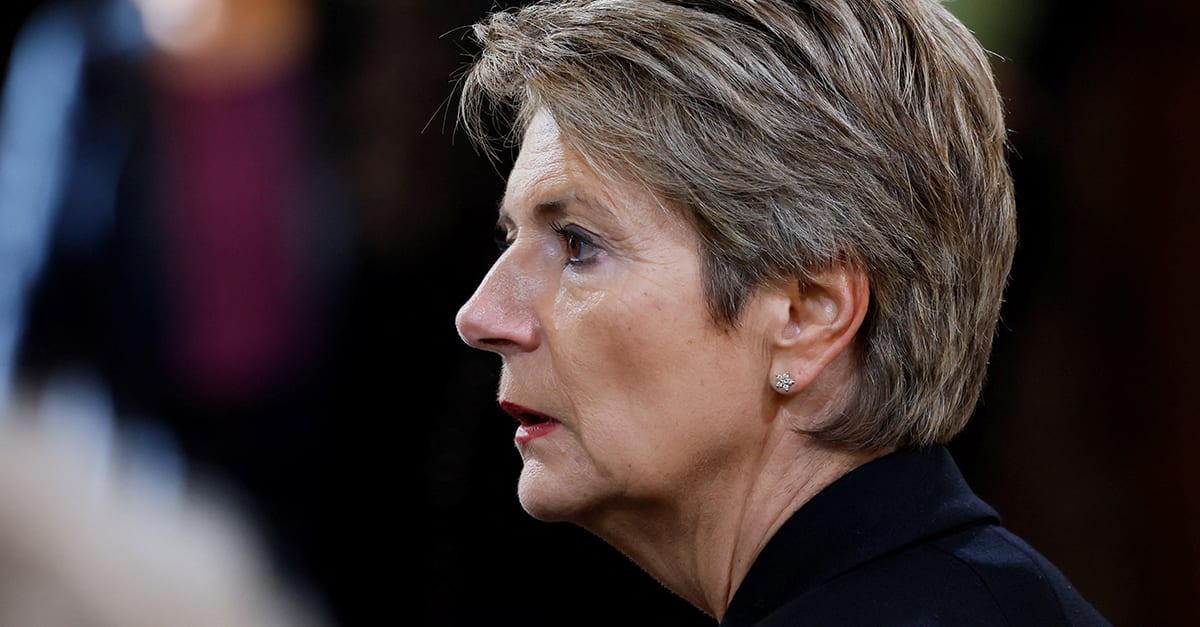

Swiss president Karin Keller-Sutter and her delegation returned from Washington empty-handed on 7 August, after last-minute efforts to secure a US trade deal failed. The US did not approve Switzerland’s revised trade offer and the negotiation deadline was not extended. Effective today, a 39% tariff applies on Swiss goods imported into the US, with exemptions for pharmaceuticals, semiconductors, consumer electronics, and minerals – currently under review by the US – precious metals, and re-exports of unaltered US goods.
We expect slightly less than two-thirds of Swiss exports to the US to be affected by the tariff rate increase to 39%. The US is Switzerland’s second-largest market for goods exports after the European Union, accounting for 13% of the country’s total in 2024.
Switzerland is expected to pursue direct engagement with President Trump, potentially offering non-tariff concessions. Options include purchases of liquified natural gas (LNG), an investment vehicle modelled on recent US precedents with the EU, Japan, and South Korea, defence procurement (such as F-35 fighter jets), or agricultural market access, which is the only area of Swiss goods protected by tariffs and quota systems. However, Switzerland’s low reliance on gas and politically sensitive agricultural sector make such concessions complex and potentially subject to a referendum.
We reaffirm our downgrade of Switzerland’s real GDP growth outlook
Legal challenges to the constitutionality of the US import tariffs are progressing through US courts, with a potential Supreme Court ruling not expected before mid-2026. Meanwhile, the next key milestone for is the pharmaceutical sector. The Trump administration has signalled a phased tariff approach to pharmaceutical products to be announced this month, in other words a low starting rate followed by a steep rise in 2027. Switzerland may still negotiate a cap similar to the EU’s trade deal.
We reaffirm our downgrade of Switzerland’s real GDP growth outlook from 1.1% to 0.9% for 2025. This reflects the uncertainties over the duration and scope of tariffs on its exports, and the business community’s response in terms of potential partial relocations to the EU to take advantage of its lower 15% US tariff rate. Downside risks remain: further tariff escalation or prolonged enforcement could push growth lower, particularly in 2026.
Stock sector differentiation may intensify
We expect Swiss stocks to react more sharply today than earlier in the week. Sector differentiation may intensify, with unaffected sectors – banks, insurance, telecoms – and more domestically-oriented industries like utilities proving resilient while affected goods exports focused sectors face more pressure. Valuations of pharmaceutical stocks are already pricing-in significant risk, suggesting only a moderate fall. Swiss government bond yields will likely fall further. While we still expect the Swiss National Bank to hold interest rates at 0%, markets may push the short-to-medium term Swiss sovereign yield curve deeper into negative territory. Our 12-month forecast for 10-year government yields is 0.15%. We also see the Swiss franc further weakening against the euro, towards 0.95 in the short term. For now, our 12-month forecast stands at 0.93 and we will continue to monitor the situation closely.
CIO Office Viewpoint
US tariffs on Switzerland take effect