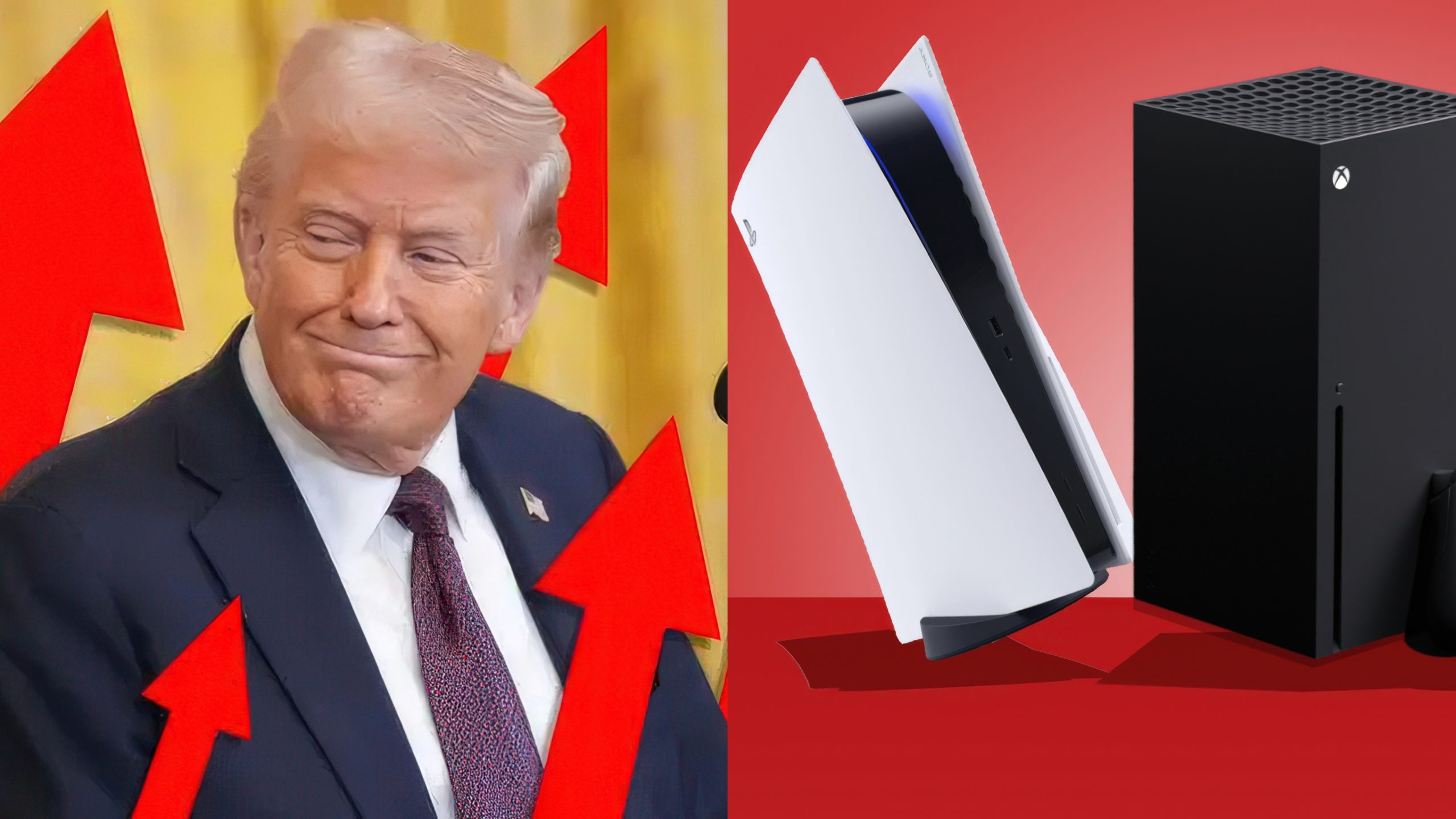

The whole wide world is talking about this topic: US tariffs. President Donald Trump certainly made some controversial decisions in his first few weeks back in the Oval Office, to say the least. Here, we’ll focus on the impact of these tariffs on the gaming world. Historically, hardware manufacturers have tried to shield customers from such state-imposed taxes, although that might not be possible in the same way this time around.
Moreover, as pointed out by analysts like Circana’s Mat Piscatella, this round of tariffs could spell the death of the already ailing retail market for videogames. To help us navigate through this complex topic, we requested a comment from our friend Rhys Elliott, analyst at MIDiA Research, who shared a long and thorough response with Wccftech, outlining how customers will be the ones to suffer.
The US tariffs will impact the games market in various ways. Hardware will, of course, be affected, as many components are made in China, one of the key targets of the tariffs. Already, GPU manufacturers like Newegg have announced price hikes for the 50 series NVIDIA GPUs as a direct result of increased tariffs on components made in China. That said, most of those GPUs sold out nonetheless (and scalpers are charging even more than even the marked-up original prices). So the immediate impact in this case has been low. However, further into the future, as inventory of GPUs, smartphones, and other consumer electronics in the US run out, the impact will be felt more widely.
According to Trump, the US tariffs will result in “a much stronger, much richer nation”. However, this is just populist politics in action, as tariffs will actually result in a weaker, poorer nation. Counter to the US administration’s public reasoning for the tariffs, it is ultimately average consumers who will face the brunt of these populist policies.
Some manufacturers will likely shift their manufacturing to non-tariff-impacted markets as a result, which is already happening, but this is only really possible for the biggest companies that have scale enough to eat the lower profit margins. In most cases, smaller companies – and even some bigger ones relying solely on hardware – cannot afford to do this. However, hardware is sometimes simply a trojan horse for companies to generate software. Manufacturers of some hardware, like the Steam Deck, sell their hardware at a loss, while others barely break even. For that reason, companies like Sony (for its PS5s) and Valve (for its Steam Decks) might simply eat the increased costs caused by the tariffs, as they don’t want to limit their total addressable markets for selling more software.
As many game discs sold in the US are made in Mexico, another target of the tariffs, physical media will also be impacted. As mentioned by Mat Piscatella on BlueSky, some publishers will ultimately forgo physical versions of their games. But this is just speeding up the inevitable. And most publishers and platform holders on console want physical to die anyway.
The console market is already moving increasingly towards digital, driven further by strategies like multi-game subscriptions, free-to-play’s rise, and platform holders pushing consumers to digital versions via perks (like extra cosmetics and the ability to pre-load a game so it’s instantly ready to play at launch). Of course, one unique value proposition of physical games is the preowned and rental markets, giving players more choice. But platform holders and publishers do not gain revenues from physical renting and resales. After all, a game could be sold on the reseller market 100 times or rented 100 times, but the publisher and platform holder only capture revenues from that first sale. A digital-only market means publishers and platform holders have more control over prices, too. Price in the physical games market is more elastic vs. digital and is, therefore, more beholden to supply and demand, which is why (pre-owned) physical games are often cheaper than titles found on the PlayStation’s and Xbox’s digital stores.
The death of physical games would ultimately be bad for consumers, giving them less choice, but positive for publishers. And the introduction of these extreme tariffs will also be bad for consumers, but will be positive for the US administration’s populist façade. Policies that lead to higher prices for everyday people amid a cost-of-living crisis are deplorable. What’s more, time and time again, data has shown that tariffs harm the economy.
Simply put, tariffs are bad for gamers and the games business. While I won’t comment on the real reason for the US tariffs, it is certainly not for “a much stronger, much richer nation” – in terms of everyday people and fair business, anyway.
It’s not really the best time for such an economic upheaval, either, as the gaming industry is struggling to grow like it used to until just a few years ago. Between that and the ballooning game development budgets, studio closures and layoffs are a regular occurrence in news coverage. We can only hope cooler heads might prevail and those tariffs won’t be as severe as some fear.