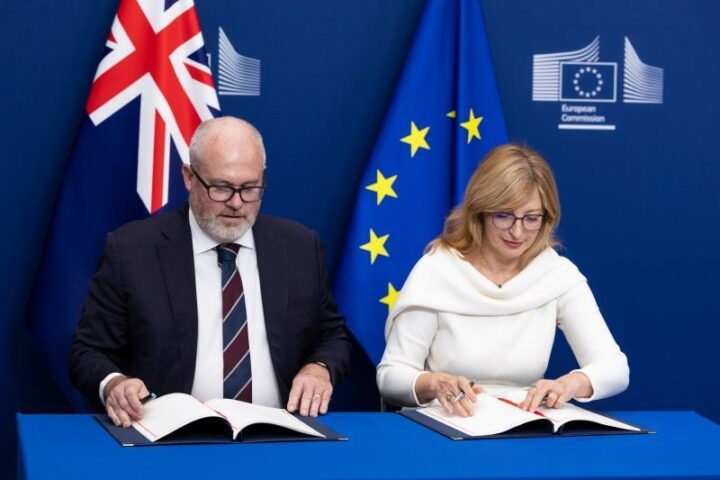

Prime Minister Andy Burnham has opened the door to a much closer relationship with the EU after the next election, from a customs union to full membership. I think he is right, and I think the argument rests on evidence, not slogans. Here are seven reasons.
- Burnham has not proposed ending Brexit; he has said options up to rejoining are on the table after the next general election, with current red lines kept for this Parliament
- The best estimates say Brexit cut trade, investment and productivity, and added to food bills
- Closer ties are already delivering small wins, such as Erasmus+ from 2027, and polls show more support for returning than against
- The evidence is contested, and a customs union or single market means accepting EU rules without a vote
- The case is for testing the options openly and moving faster, not for pretending the costs are zero
First, what Burnham has actually said. He has raised the prospect of Britain going further than its current position after the next election, with options ranging from the present arrangement to a customs union, single-market participation or full membership. He has committed to the manifesto red lines for this Parliament, and said he has not proposed a return to freedom of movement. That is a cautious opening, not an announcement that Brexit is over, and I want to argue for it on that basis.
1. The trade hit is real
The Office for Budget Responsibility estimates that trade intensity, meaning how much the UK trades relative to the size of its economy, will end up about 15% lower than if it had stayed in the EU. A 2026 explainer citing ONS data puts UK goods exports to the EU 14% to 16% below pre-referendum projections in volume terms. Critics, including the Institute of Economic Affairs, dispute the size of the OBR figure and argue that services trade shows no Brexit effect. The debate is genuine, but the weight of the evidence points one way.
2. Productivity and growth took a hit
The OBR also assumes a long-run loss of about 4% of productivity, and so of output, compared with staying in. Pro-Brexit analysts such as Briefings for Britain argue that the UK’s productivity slowdown began after the financial crisis, years before the referendum. They are right that the slowdown predates Brexit. The question is whether Brexit added to it, and most official modelling says it did.
3. Businesses invested less
A working paper from the Productivity Institute estimates that Brexit-related trade frictions alone may have reduced UK business investment by about 1.2%. Uncertainty is part of the cost. Companies delay building factories and hiring when they do not know the rules they will face. A clear direction of travel, even a slow one, helps them plan.
4. Shoppers paid for it
Researchers at the LSE’s Centre for Economic Performance found that Brexit added about £210 to the average household’s food bills in the two years to the end of 2021, and a later update put the figure at about £250 for the period to March 2023. They attribute it mainly to non-tariff barriers such as checks and paperwork, not tariffs. The trade deal kept tariffs at zero, but the paperwork still costs money.
5. Small steps are already working
The UK will rejoin Erasmus+ from 2027, with a contribution of £570 million for the first academic year and more than 100,000 people expected to benefit. Talks on a food and farming standards agreement and on carbon markets were reported close to conclusion over the summer. Each step like this reduces friction without a referendum. If small steps help, bigger ones deserve a serious look.
6. Public opinion has moved
A June 2026 YouGov poll found 55% of voters would back returning to the EU, against 34% opposed, and a later figure from September put it at 59% to 32%. Other pollsters find lower numbers, and support falls if rejoining means losing the UK’s former opt-outs, so this is not a mandate. But the old assumption that the question is closed no longer holds.
7. Certainty beats drift
This is why I would move faster. The worst option for business is not rejoining or staying out. It is not knowing. A customs union would constrain independent trade policy and might require renegotiating deals signed since Brexit. Single-market participation would mean accepting EU rules without a vote in making them. Those are real costs, and voters should hear them plainly. Setting out the options, the price of each and a timetable would let everyone argue from facts.
What about the questions people ask?
It is tempting to ask whether Brexit fixed the economy, cut inflation, cut rents or solved the housing crisis. Fairness matters here. Housing and rents have causes unrelated to Brexit, and inflation since 2022 was global. The honest answer is narrower: the promised economic dividend has not been shown, while the measurable costs in trade, investment and food prices have. That is enough to justify a hard look.
Those who oppose closer ties should engage with the data, as should those who favour them. If the numbers above are wrong, show why. If they are right, every side of the argument has a reason to want a faster and more open process. Rejoining may be the wrong answer, but refusing to test the question is the wrong approach.
This article is posted in Opinion News, check it out for more related stories.
Almost there. Sign in and your reply posts straight away.