
China has been a major contributor to global growth, and its economic activity tends to have significant repercussions for the global economy. To understand where the Chinese economy is in its growth cycle, we highlight several key charts below, which may also provide context for the impact of the coronavirus. China remains an important economic bellwether for countries that have started to reopen following the COVID-19 epidemic.
China’s activity gauges undershot expectations in February. The official manufacturing Purchasing Managers Index1 eased to the lowest level since June 2020, and the services PMI posted the worst print since February 2020. The downturn may indeed look a bit alarming, but in our view, there are good reasons to believe that the weakness is temporary.
Chinese Economy Health Check: PMIs
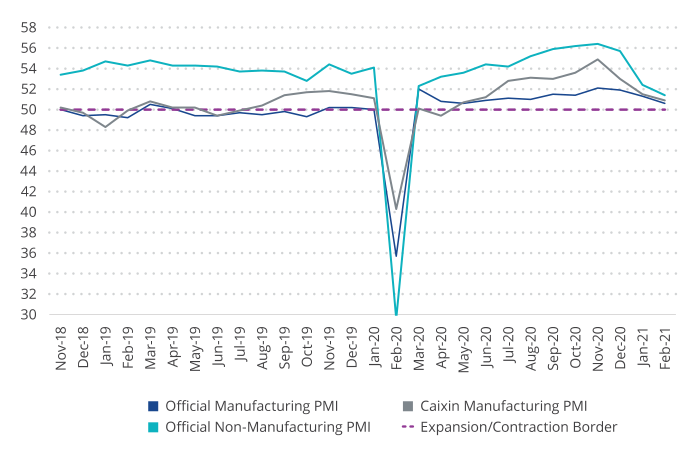
Source: Bloomberg. Data as of 28 February 2021. Past performance is no guarantee of future results. Chart is for illustrative purposes only.
First, the non-manufacturing PMI’s moderation appears to be narrow-based—with construction affected more than services in February. Even though the Chinese were encouraged to travel less due to COVID-19’s winter resurgence, they ended up spending more on local goods and services as well as online shopping.
Second, China’s manufacturing typically moderates during the Lunar New Year due to factory closures. This year’s celebrations coincided with the new COVID-19 restrictions, exacerbating the seasonal pattern.
Third, many high-frequency indicators already show improvements compared to January. The updated charts from last month’s comment indicate that the spread of new infections slowed considerably, while energy production by China’s six major power generators is back to November’s levels. Many observers also pointed to shorter than usual factory reopening time after the Lunar New Year. This strongly suggests that China’s weak “staycation” PMIs might soon be a thing of the past, in our view.
Confirmed Cases in Mainland China Shows Slowdown
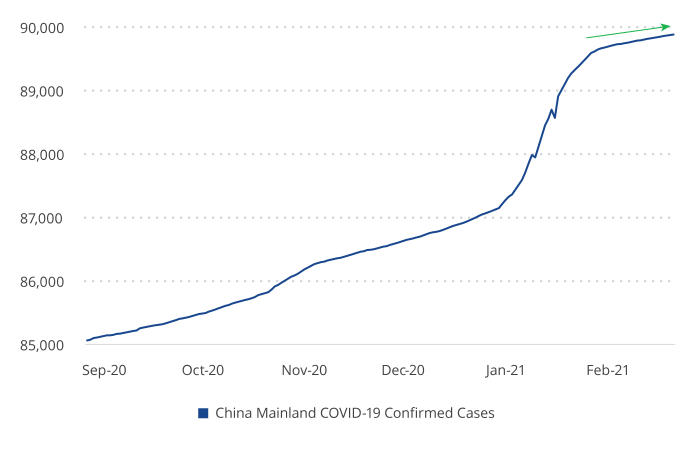
Source: Bloomberg LP. Data as of 26/2/2021.
China’s Energy Production Returns to November Levels
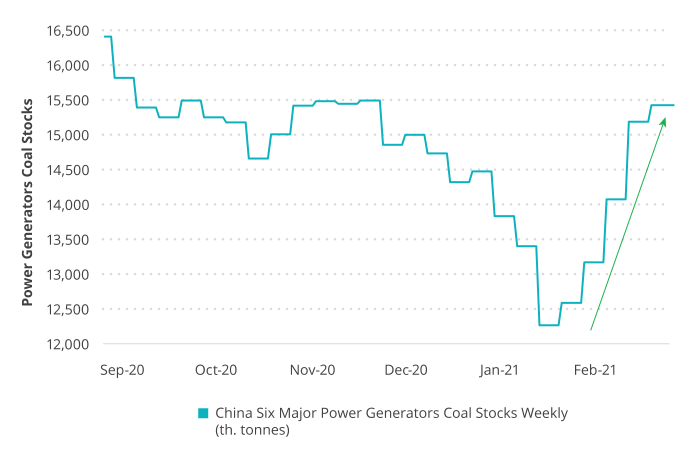
Source: Bloomberg LP. Data as of 26/2/2021.
Fourth, production and business expectations held on extremely well in February, despite the second wave of the movement restrictions—both in manufacturing and services. Finally, the global trade is rebounding—as witnessed, for example, by increasing container supply from China—which is a welcome tailwind for China’s export PMIs.
China Business Expectations Holding Well
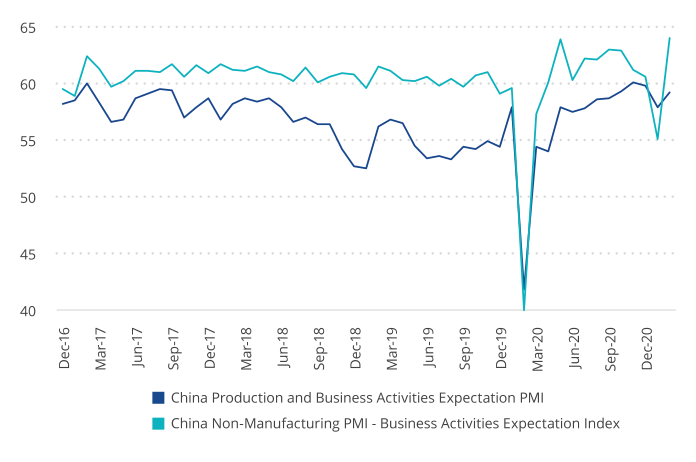
Source: Bloomberg LP. Data as of 28/2/2021.
1Purchasing managers index (PMI) is an economic indicator derived from monthly surveys of private sector companies. A reading above 50 indicates expansion, and a reading below 50 indicates contraction. We believe PMIs are a better indicator of the health of the Chinese economy than the gross domestic product (GDP) number, which is politicized and is a composite in any case. The manufacturing and non-manufacturing, or service, PMIs have been separated in order to understand the different sectors of the economy. These days, we believe the manufacturing PMI is the number to watch for cyclicality.