South Korea’s export growth is increasing the importance of intellectual property protection in Europe. Yet EUIPO’s engagement with Korean companies suggests that misconceptions about EU trademark and design registration remain an obstacle for some businesses preparing to expand.
Guest Contribution from the European Union Intellectual Property Office (EUIPO), featuring expert commentary by Iñaki De Medrano Caballero, Head of Service, Business Development Department.
A Korean consumer brand or technology startup can achieve substantial domestic traction, obtain intellectual property rights at home and outline ambitious global expansion goals, only to pause when approaching the European market.
The challenge facing Korean founders is not always product quality or international demand. Another consideration is how they approach intellectual property protection across the 27 Member States of the European Union.
Korean Export Growth Accelerates Global Expansion Ambitions
South Korea’s drive for internationalization is gaining momentum, backed by historic trade performance and ambitious government objectives.
According to the Ministry of Trade, Industry and Resources (MOTIR), national exports reached an all-time high of $709.7 billion in 2025, surpassing the $700 billion mark for the first time, with daily average exports reaching $2.64 billion.
To sustain this growth, MOTIR aims to increase annual consumer goods exports to $70 billion by 2030.
Korean SMEs and startups will play a major role in this expansion. The Ministry of SMEs and Startups (MSS) aims to cultivate 50 global unicorns through initiatives including its Unicorn Bridge program and develop 500 K-export strategic products across consumer sectors by 2030.
While South Korea has long been a global powerhouse in patent-intensive industries such as semiconductors, automobiles and advanced technologies, parallel expansion is taking place in consumer-facing and creative sectors.
Korean EU Trademark and Design Filings Show Growing Activity
Data from the European Union Intellectual Property Office (EUIPO) highlights growth in EU trademark and design filings associated with Korean applicants.
- Cosmetics, Nice Class 3. EU trademark filings increased by more than 120%, from 302 in 2022 to 667 in 2025.
- Education, Entertainment and Culture, Nice Class 41. EU trademark filings nearly doubled, rising from an annual average of 97 between 2017 and 2020 to 186 in 2025.
- Furnishing, Locarno Class 6. EU design filings increased from five in 2024 to 41 in 2025.
- Pharmaceutical and Cosmetic Products, Locarno Class 28. EU design filings increased from 23 in 2024 to 45 in 2025.
These double- and triple-digit percentage gains reflect positive momentum for Korean companies seeking European protection. However, the underlying filing volumes remain relatively small in some categories, making it important to interpret percentage increases in context.
A comparison with Korea’s domestic IP activity illustrates the different scales of filing activity.
In 2024, the Korean Intellectual Property Office (KIPO), now the Ministry of Intellectual Property (MOIP), received 242,545 trademark application cases and 54,333 design application cases, according to its 2024 Annual Report. Domestic applicants accounted for 93.7% of trademark applications and 92.6% of design applications filed in South Korea.
During the same year, EUIPO country statistics recorded 2,115 EU trademark applications and 370 EU design applications associated with Korea.
These EUIPO applications represent one of several routes to protecting intellectual property in Europe. Korean businesses can also use national and international registration systems, making an understanding of the available options important when planning their European market entry.
Now, recognizing the importance of international awareness, EUIPO’s Business Development Department works with organizations in non-EU markets to help businesses better understand European trademark and design registration.
Iñaki De Medrano Caballero, Head of Service at EUIPO’s Business Development Department, identifies perception as an important factor influencing how Korean startups and SMEs approach European IP protection.
“The primary barrier preventing Korean SMEs and startups from securing their brand and design footprint in Europe is rarely administrative capacity, it is perception,”
De Medrano identifies three recurring misconceptions encountered through EUIPO’s engagement with Korean companies and IP professionals.

1. The EU Trademark and Design System Is Unified, Not a 27-Nation Maze
For a Korean founder or SME with a limited budget, expanding into Europe can appear daunting.
A common assumption is that entering the EU requires navigating 27 separate national registries, different legal traditions and multiple languages.
During a customer panel hosted by EUIPO with European IP attorneys representing Korean clients, practitioners noted that Europe is still frequently perceived as a fragmented and difficult market to enter.
Similar concerns emerged during EUIPO’s exploratory mission to Seoul in April 2026.
De Medrano explains that although regulatory differences exist across European countries, EU trademark and registered design protection can be obtained through centralized EUIPO procedures.
A single application can lead to protection across all 27 EU Member States, subject to the applicable registration requirements.
Applicants benefit from a central filing procedure and fee structure, although language requirements and additional fees may apply depending on the application.
Companies seeking protection in only one or a few European markets can also consider national registration systems. EU-level, national and international routes remain available depending on their commercial strategies.
EUIPO outlines these options in its guidance on where to register a trademark.
EUIPO’s Seoul Survey Reveals an Awareness Gap
This awareness challenge was illustrated during EUIPO’s April 2026 mission to Seoul.
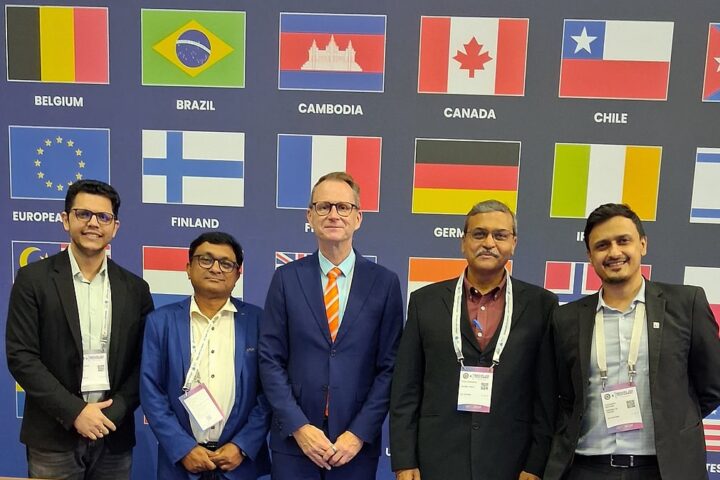
On April 7, the Korea Cosmetics Association, Alibaba and EUIPO jointly organized a seminar focused on protecting intellectual property in the European market. A survey conducted before the event received 97 responses from participants connected to the cosmetics-sector seminar.
Respondents were asked, “How familiar are you with EUIPO?”
- 40.2% responded “not familiar at all.”
- 46.4% responded “somewhat familiar,” meaning they knew EUIPO by name but lacked a clear understanding of its role.
- 13.4% responded “very familiar,” indicating a clear understanding of what EUIPO does.
The survey highlights limited familiarity with EUIPO among the cosmetics-sector respondents, pointing to an opportunity to strengthen awareness of European IP protection.
After all, for Korean companies preparing to enter the EU market, understanding the available registration systems can support more informed decisions about protecting their brands, designs, and commercial interests.

The Conversion Mechanism Can Preserve Filing Options
The EU trademark system also includes a conversion mechanism that can help applicants when a filing encounters a conflict affecting only part of the EU.
If an application faces a localized obstacle, the applicant may be able to pursue national applications in territories where that obstacle does not apply.
“Through the EU’s conversion mechanism, a European filing can be converted into individual national applications while preserving the original filing and priority date across the remaining territories,”
De Medrano explains.
Conversion is subject to legal requirements and may involve additional national procedures and costs. However, it can help preserve registration opportunities in eligible EU Member States when a conflict in one territory prevents an EU-wide application from proceeding as intended.
2. EU Trademark Opposition Does Not Automatically Mean Litigation
During EUIPO’s customer panel with European IP attorneys representing Korean clients and its April 2026 mission to Seoul, stakeholders raised concerns about European trademark opposition procedures. Companies accustomed to domestic examination practices may view opposition as the beginning of a costly legal dispute, leading some to delay filing.
According to EUIPO’s official guidance, approximately 20% of European Union trademark applications face opposition.
An opposition allows holders of earlier rights to challenge applications they believe conflict with their existing rights. However, opposition is an administrative procedure and does not automatically lead to court litigation.
When conflicts arise, companies may contest the opposition, negotiate settlements or adjust their applications. EUIPO also provides mediation and alternative dispute resolution services that can help parties reach commercial agreements, including trademark coexistence arrangements.
The EUIPO Mediation Centre offers online mediation and sessions at its Alicante headquarters without additional EUIPO mediation charges beyond existing proceeding fees. Sessions in Brussels carry a €1,200 administrative charge, while legal representation may involve separate costs.
Opposition remains a legal risk that businesses should assess before filing. Early clearance searches and qualified IP advice can help identify potential conflicts and reduce avoidable complications during European market entry.
3. Fast EU Design Registration Provides Speed, but Novelty Still Matters
EUIPO generally registers European Union designs without conducting an extensive examination of novelty or individual character beforehand. This streamlined approach may raise questions among Korean product teams accustomed to more comprehensive pre-registration assessments.
In fast-moving sectors such as cosmetics, fashion, mobile accessories and lifestyle electronics, registration speed can be commercially important, particularly when product development cycles and launch schedules are short.
Under EUIPO’s Fast Track procedure, eligible applications using static design representations can be registered within two working days.
However, fast registration does not guarantee legal validity. Registered designs must still meet the requirements of novelty and individual character, and their validity can be challenged after registration.
Reviewing earlier designs and public disclosures before filing remains an important part of securing effective EU design protection.
Deferred Publication Supports Confidential Product Launches
The EU design system also offers deferred publication, giving companies greater control over when their registered designs become publicly visible.
De Medrano notes,
“Applicants can register a design immediately to secure their priority date, but request to withhold public visual disclosure for up to 30 months. This can be used to keep competitors in the dark until the official product launch.”
Under EUIPO’s design registration rules, the request must be made when filing the application. The design’s visual representation remains confidential during the deferment period, although basic registration information is publicly accessible.
This flexibility can help Korean companies coordinate manufacturing, distribution and market launches before revealing a new product design.
July 2026 EU Design Reform Expands Protection for Digital Design Appearances
The modernized EU design framework became fully applicable on July 1, 2026, introducing significant changes relevant to technology, gaming, consumer-product and digital businesses.
According to EUIPO, the updated framework expressly recognizes non-physical products and animated design features, while introducing new formats to represent designs in registration applications.
Several developments are particularly relevant to Korean companies developing digital products and interactive media.
- Graphical User Interfaces (GUIs) and digital layouts. Eligible non-physical designs, including graphical user interfaces, can receive EU design protection.
- Dynamic visual effects and animations. Protection can extend to qualifying visual features involving movement, transitions and other forms of animation.
- Video and 3D representations. Applicants can use supported video and digital 3D formats to present animated designs and show product appearances from different angles.
These changes offer Korean software developers, gaming studios and digital-product companies greater flexibility to protect the visual appearance of their products across all 27 EU Member States.
The distinction remains important. EU design rights protect eligible visual appearances, not the underlying computer programs or software functionality. Designs must also meet the applicable legal requirements to qualify for protection.
Additional details on the changes and registration requirements are available through the EUIPO Design Reform Hub.

The European IP Playbook for Korean Exporters
To reduce avoidable complications and protect commercial value across the EU single market, De Medrano recommends four practical steps that Korean exporters can incorporate into their market-entry strategies.
1. Run Pre-Filing Clearance Searches
Before finalizing European brand names or product designs, use free databases such as TMview and DesignView to identify existing rights and potential conflicts.
Early clearance searches can help businesses avoid costly branding and registration problems, although they cannot identify every possible legal conflict.
2. Work With Qualified European IP Counsel
Seek advice from legal professionals familiar with European trademark and design procedures. Korean IP firms can also connect with European specialists through professional associations such as MARQUES and ECTA.
Applicants based outside the European Economic Area should understand when qualified representation before EUIPO becomes mandatory.
3. Maintain Procedural Discipline
Meeting filing and response deadlines is essential to avoiding unnecessary delays, additional costs and potential loss of rights.
Businesses should maintain clear communication with their legal representatives and ensure that applications, supporting documents and responses are submitted accurately and on time.
4. Consider Registration Before European Trade Shows
Introducing brands or displaying product designs at European exhibitions can create IP risks when appropriate protection is not yet in place.
Public disclosure may also affect a design’s novelty, although EU rules provide a 12-month grace period in qualifying circumstances.
Korean exporters should review their filing strategy before major exhibitions and product launches, consulting an IP specialist about existing disclosures, applicable priority rules and the markets where protection is needed.
Understanding European IP Protection Before Market Entry
Europe’s centralized trademark and design systems can simplify intellectual property protection across the EU, although successful market entry still requires careful planning and informed legal decisions.
Early IP planning, professional guidance and a clear understanding of available registration options can help Korean companies protect their commercial interests as they expand into European markets.
De Medrano believes that overcoming misconceptions about European IP procedures is an important step toward making better use of these protections.
“Europe’s EU trademark and design systems under a single market approach is designed to offer scale, predictability, and speed. By moving past assumptions and using the tools built into the European framework, Korean founders can protect their consumer products, physical designs, and digital innovations just as effectively as they have always protected their technical inventions.”

About the Expert

Iñaki (Ignacio) De Medrano Caballero is Head of Service for Promotion of the IP System in the Business Development Department at the European Union Intellectual Property Office.
A lawyer specializing in intellectual property, he began his professional career in 1993 and joined EUIPO in 1997. He has held positions involving trademark opposition, litigation, institutional affairs and international cooperation.
His previous assignments include leading European intellectual property cooperation programs across Southeast Asia and managing EUIPO’s international cooperation activities with non-EU countries, regional organizations and international partners.
Since July 2024, he has been responsible for EUIPO’s activities promoting awareness and understanding of European intellectual property systems, including initiatives concerning IP valuation and finance.
Key Takeaways
- A single EU trademark or registered EU design can provide protection across all 27 EU Member States, reducing the need for separate national filings when EU-wide coverage is appropriate.
- Only 13.4% of 97 respondents to an EUIPO survey connected to an April 2026 K-beauty seminar reported a clear understanding of EUIPO. The findings reflect this specific group rather than Korean exporters nationally.
- Approximately 20% of EU trademark applications face opposition, but opposition is an administrative procedure that does not automatically lead to court litigation.
- The July 2026 EU design reform supports protection for eligible digital and animated design appearances, including graphical user interfaces, movement and visual transitions.
- Early IP planning can reduce avoidable market-entry risks. Clearance searches, professional advice and timely filing decisions are particularly important before European launches and trade exhibitions.
– Stay Ahead in Korea’s Startup Scene –
Get real-time insights, funding updates, and policy shifts shaping Korea’s innovation ecosystem.
➡️ Follow KoreaTechDesk on LinkedIn, X (Twitter), Threads, Bluesky, Telegram, Facebook, and WhatsApp Channel.
🤝 Looking to connect with verified Korean companies building globally?
Explore curated company profiles and request direct introductions through beSUCCESS Connect.