
Key takeaways:
- Infrastructure remains the biggest barrier to growth: Poor logistics, limited energy supply, labor shortages and underdeveloped transport networks continue to constrain lithium project development across South America.
- Investment depends on collaboration and policy stability: Stronger public-private partnerships, clearer regulations and supportive investment frameworks will be critical to attracting long-term capital, particularly in Argentina.
- South America is well positioned for the next phase of lithium demand: Despite market volatility, the region’s resource base, growing production capacity, DLE adoption and strategic importance to EVs and energy storage underpin a positive long-term outlook.
South America’s lithium industry faces a defining decade
In the inaugural one-day conference Fastmarkets Lithium South America: Market & Investment Outlook, attendees had the chance to explore themes defining the lithium industry, such as the dynamics of global markets and price trends, investment landscape, regulatory developments, technological innovation, and the evolving competitiveness of South America’s lithium producers.
One message has become clear: although the market continues to navigate uncertainty and volatility, the long-term importance of lithium to the global energy transition remains undeniable, and South America will continue to play a central role in this story.
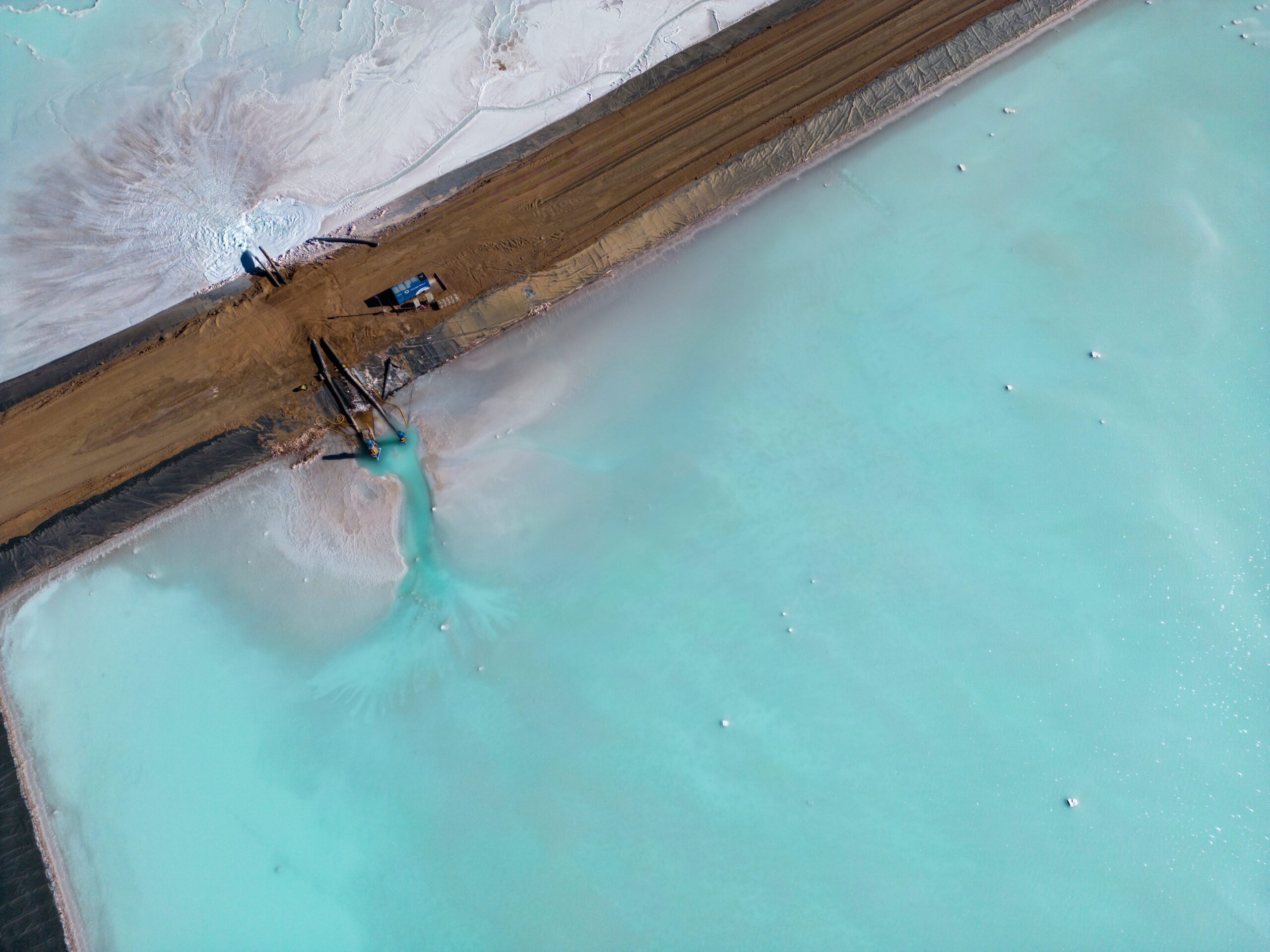
The region holds more than 50% of global lithium resources. In Brazil, hard-rock production is found mainly in the Vale do Jequitinhonha, in the state of Minas Gerais. Also, there is the Lithium Triangle, a region of South America comprising Argentina, Chile and Bolivia – where lithium is found in the salt flats regions where there are lithium brine deposits.
However, geology potential is not everything, and it is important for the region to overcome many challenges in order to unlock its full production potential and to align private and public interests to attract investments.
Here are the main takeaways from the event:
Infrastructure challenges
Infrastructure is often limited in areas where lithium is produced in South America, as the commodity is typically found in remote regions. Energy supply and logistics are common challenges, market participants said during the conference.
“The region needs to develop better infrastructure from mine to logistics till the material is delivered,” said Jose Severin, business development manager at Access World, during the event.
For Ignacio Celorrio, executive vice president at Lithium Argentina, the problem of infrastructure is the lack of funding and there should be greater collaboration in the lithium industry.
“In less than a few years, we went from two producers to nine [in Argentina]. Each company tends to focus heavily on its own operations, project stages are different and financing has been challenging, so you cannot automatically expect everyone to understand at the same time why shortcomings exist. There are projects, especially electrical infrastructure projects, that seek to leverage the region.
There are also increasing efforts related to roads and transportation. However, there is a challenge in Argentina: on one hand, the macroeconomic situation has essentially been shaped by a lack of public funds for the development of shared infrastructure, and on the other hand, the industry is still in its early stages when it comes to these collaborative frameworks,” he said.
Alejandro Moro, chief executive officer at Eramine Sudamérica, mentioned during the conference a “vicious cycle.” “There are mining companies that have funding because they are already operating, and there are others that are projects depending on infrastructure in order to develop their projects, and also can’t find funding because they can’t develop it without infrastructure, creating a vicious cycle that is difficult for them to break out of it,” he said.
A government source told Fastmarkets that there is broad awareness that Argentina still faces significant infrastructure challenges. “One key issue for the lithium industry is the shortage of qualified labor, particularly for roles such as truck drivers in remote salar regions.
More jobs and training opportunities are needed in the provinces, although the pool of people available for training is also limited,” they said, adding that port logistics also remain a challenge in the country. Although exports are mainly shipped through Argentine ports such as Buenos Aires and Rosario, this is more expensive and slower than using Chilean ports, according to them.
Intersection between public and private sector
During the event, market participants highlighted the importance of collaboration between the public and private sectors to support the development of the lithium industry.
“There is this criticism in Argentina that President Milei is heavily focused on private investment, leaving too much responsibility to the private sector and limiting public-private collaboration,” said one producer source on the sidelines of the event.
On stage during a panel, Gaston Massari, senior vice president and head of Latin American affairs at RXN, said that some provinces in Argentina used to think that geology is everything, delegating efforts to the private sector. “Governors used to say: ‘we already have the resource potential, they [foreign investment] should come to us’. But it’s not like that…the private and public sector have to work together to promote investment,” he said.
Want to learn more about what is happening at the cutting-edge of critical minerals and battery raw materials? Listen to our Fast Forward podcast series for insight, debate and news from the major players.
Development of the lithium value chain in South America
Fastmarkets’ research team noted that some miners are now looking into midstream processes to create an intermediary product of lithium salts, allowing companies to increase the value of their shipped goods by producing a more lithium-dense midstream product, in addition to being able to utilize more of their resources.
“Lithium intermediates are a major topic of discussion in Argentina due to their lower CAPEX requirements and easier financing. Several smaller projects are emerging in this space. We are interested in understanding why some producers are looking into stopping at intermediate products rather than moving further downstream: lack of technical expertise, difficulties producing carbonate, infrastructure constraints, or genuine market demand?” a producer source told Fastmarkets.
During the conference, Daniel Jimenez, founding partner at iLiMarkets, said that South American lithium companies should not aim to advance in the value chain. “For developing countries, producing value-added products requires significant effort, supportive public policy, and investment. Stopping earlier in the value chain can be a way to generate revenue more quickly while reducing risk,” he said.
“So when we process our production, we first produce concentrates and then refine them into chemicals. Imagine what that refining process costs in the brine highlands. At 4,000 meters above sea level, you have to bring in energy, you have to bring in reagents, you have to bring in timber. And all of that has to be built. All of that comes at an enormous cost.
When we compare that with the alternative of exporting concentrates to China, the Chinese can carry out that refining at a significantly lower cost. Therefore, the willingness to pay for the concentrate is much higher than the return South American producers receive from refining the concentrate themselves,” Jimenez added.
Stefan Debruyne, vice president of sustainability and global affairs at Novandino, said that, in Chile, the company always tried to keep an integrated approach amid the uncertainty challenges of the market. “I think we only need to go back maybe 7-8 years ago when some or many analysts were forecasting that hydroxide demand would overtake carbonate demand. So, that type of uncertainty is lethal in the market. The way that we handle this at Novandino is by always being particularly integrated, but also having diversification. But then you need business flexibility.
And so, for us, that has always been to produce both carbonate and hydroxide. So, when everybody was forecasting hydroxide demand growing, we of course also wanted to be ready for the market, so we also invested in hydroxide capacity. But we never left behind the carbonate. And today, we are also producing lithium sulfate. That’s a third product, which is, from a sustainability and innovation perspective, really fantastic because we are getting lithium from previously non-lithium-productive brines,” he said.
For Celorrio, whatever product is ultimately produced, however one chooses to define it, there must be a clear understanding of where its competitive advantage lies. “There may be different types of financing that come with conditions aimed at avoiding certain markets and, therefore, could support a framework involving greater subsidies that justify a particular type of supply chain that would not necessarily emerge on its own,” he said.
Investment scenario: the case of Argentina
According to Fastmarkets’ research team, all three of the major producing countries in South America are forecast to see strong growth over the coming five years – but Argentina stands out. Over 50% of the additional tonnes of mined supply are expected to come from the country, with high levels of investment from local, Western and Asian lithium and mining companies. The industry is developing rapidly with the deployment of direct lithium extraction techniques to increase the flexibility and speed of response of the region’s brine producers.
South America’s primary lithium product, lithium carbonate, also positions the region well for anticipated shifts in battery chemistry in the coming years. Globally, lithium iron phosphate (LFP) continues to grow in its deployment in electric vehicles (EVs), driven by Chinese original equipment manufacturers (OEMs). The rapid growth in energy storage system (ESS) demand, tied to the deployment of renewable power and AI data centers, positions lithium carbonate, and Latin America, at the center of the energy transition.
Saul Feilbogen, partner at the Vitale, Manoff & Feilbogen International Law Firm and head of the corporate and finance department, said that Argentina is open for any investment.
“Argentina is open for any investment. There’s no prejudice and no Foreign Entity of Concern here,” Feilbogen said.
One interesting development in Argentina now is the “Super Rigi”, which is being discussed in Congress and aims to expand the 2024 RIGI (Argentina’s large investment incentive regime) framework by encouraging investment in frontier industries that are not yet fully developed in Argentina, including AI, biotechnology, semiconductors, lithium batteries, hydrogen, and data centers. The minimum investment threshold is $1 billion per project, with at least 20% of the investment required within the first two years.
In a panel, Massari said there is a change in the supply chain, with the US and Europe more interested in critical minerals and starting a marathon with China. “I don’t believe we’re fighting the same battle as China; that battle has already been lost. It’s a race we cannot win against China. But anyway we need European and American companies to step in and compete and invest in South America,” he said.
Frédéric Maier, cooperation officer at the European Union Delegation in Argentina, said the European Union is aligned to develop work with projects and provinces in Argentina. “We have tools to fund the mining sector. The EU is reliable and honors its compromises, although some might say we are late in the critical minerals race compared to the US,” he said.
For Celorrio, the major challenge today is how, in a changing lithium market, financing is secured for expansions and more ambitious projects. “And this is the first time we are seeing it. The case with Rincón, with Rio Tinto, is a very clear example of financing from international public-sector banks for lithium projects, something that was previously impossible.
Therefore, if there is anything that can impose conditions on incoming capital, and perhaps within that framework influence the direction the product takes. The only goal Argentina should have, must have, and sometimes finds difficult to accept, is the amount of product it brings to the table,” he said.
“I believe Argentina is in a unique position, and here I am referring to the projects, to build on its strengths and on several years of demonstrating that projects can be built within reasonable price-cost ranges. That is what currently shows that, after a rather complicated period when prices fell, projects are once again beginning to discuss new developments or something even more important, which is expansions of those already in operation.
That brings much greater certainty, brings capacity closer to production, and positively influences Argentina’s image as an increasingly strong and reliable producer,” he added.
Political instability
When questioned about political instability in Argentina, Celorrio said that the current government, which is pro-mining, has strong prospects of being re-elected.
“Regardless of that, there is a very clear trend at the provincial level toward mining development. Today, every province is looking for ways to develop its mineral resources. And that is what we saw with lithium: when there was an attempt to introduce Chile-style regulation at the national level, it was the provinces themselves that pushed back and maintained the investment conditions that helped the development of these projects.
Therefore, while the political context obviously needs to be monitored closely, I believe that the stronger the industry becomes and the more sophisticated its engagement at the national level, the lower that [political] risk will be,” he said.
“There is strong coordination among Argentina’s lithium-producing provinces (Catamarca, Jujuy, and Salta) to capture royalties,” said one government source, adding that resource quantification in Argentina remains challenging due to the lack of high-quality geological services.
On the other hand, a producer source told Fastmarkets that there are still many questions around lithium production in Argentina. “I would describe the outlook on Argentina as ‘prudentially optimistic’ as conditions can change quickly in the country,” they said.
Celorrio said that Argentina currently has more than 80 lithium projects and that when prices were very high, that greatly helped create an exception to the macroeconomic risk that Argentina posed for investment.
“The reality is that, at that time, I also believe the industry was not mature enough to understand that we were only just beginning something, that there was a lot still to test, and that many things still needed to be proven. Argentina has developed many projects and has also gradually taken on a more prominent position. However, that position comes with challenges,” he said.
He added that the definition of where the market is heading and the establishment of more stable long-term financing standards will mean that only the best projects will attract investment at the beginning.
Opportunities and challenges in South America
According to Fastmarkets’ research team, South America remains one of the bedrocks of the global lithium supply chain.
Chile, Argentina and Brazil are major producers supplying battery markets globally – characterized by the major brine operations in Chile and Argentina, operating at some of the most competitive costs globally, and the hard rock operations in Brazil. In 2025, of the 1.6 million tonnes of mined lithium supply, South America accounted for 30% of the market. Chile accounted for the majority of this production at 300,000 tonnes of lithium carbonate equivalent (LCE), with Argentina and Brazil currently smaller in scale at 130,000 and 32,000 tonnes LCE respectively.
The region is expected to see significant growth out to the end of the decade in tonnage of lithium supply. An additional 450,000 tonnes LCE of mined production is expected to be added by these three countries, with South American output topping above 915,000 tonnes LCE and holding its share of the global supply base flat.
South America is known for low-cost lithium production, but each country, and even each participating company, has specific characteristics that shape the opportunities and challenges it faces.
Market participants highlighted during the conference the challenges that the region faces, such as poor infrastructure, production in remote areas, government intervention, unclear rules for licensing, regulatory fragmentation and difficulty in gaining access to funding. These must all be overcome for projects to succeed in the near future.
Debruyne said that the deposits in Chile and Argentina are some of the best salares in the world. “So, the potential is there but it’s also important the work of coordination – stakeholders vs. the state,” he said.
Moro shared his view regarding building a plant in the salar. “There are many challenges, logistics and infrastructure mainly. It is a remote location where there are no people. Many people expect that when a lithium plant is handed over to them, which is essentially a chemical plant operating at 4,000 meters above sea level, they can simply turn the key, start it up, and begin producing as if they had been given a brand-new car. Nothing could be further from the truth.
It is a process that we have spent a year bringing online, fixing intrinsic issues related to construction, equipment design, or material selection, because we work with brine, which is highly corrosive. So there have been countless challenges that we have gradually overcome,” Moro said.
According to Daniel Dreizzen, managing director at Aleph Energy, it is necessary to share knowledge among the different projects and countries. “Chile, Brazil, and Argentina are very different countries. There is no competition, but rather an opportunity for cooperation. Chile is a strong player in lithium. Brazil’s lithium comes from hard rock deposits, with much lower resource potential, but a strong capacity to add value through lithium processing. Argentina has impressive potential. We need to coordinate infrastructure for the value chain, both upstream and downstream, in all three countries,” he said.
“Brazil is old in mining, for example, and could be an example to Argentina, which still has considerable room for improvement in areas such as RIGI implementation, energy, water usage, project costs, community relations, and international agreements,” a government source told Fastmarkets.
Maria Fernanda Ávila, congresswoman for Catamarca province and president of the mining committee in the Argentine Chamber of Deputies, said that Argentina has many infrastructure challenges and needs predictability to attract investment. “But when I was in Chile, they mentioned they wanted to be faster in developing projects like Argentina. So there’s always this constructive comparison between countries,” she said.
Direct Lithium Extraction (DLE) developments
During the event, there was a positive view among participants regarding direct lithium extraction (DLE). In his presentation, Felipe de Mussy, president, South America at Lilac, said that people did not believe DLE would be successful as recently as five years ago, but with time they saw that it is possible.
For Bárbara Cozzi, country manager and director of legal and regulatory affairs at Lake Resources, there is a dual challenge to having a DLE project because, as a company, they have to explain to the market and create trust. “We had to develop a constant conversation with authorities and the community to say that the pilot project could go commercial.”
Alejandro Moro from Eramine Sudamérica, the Argentine unit of Eramet, also shared his experience developing a DLE project. “Today, we are operating at about 90%. In other words, despite having worked on this for a year, we are still at around 90% of the plant’s nominal capacity.
We should be producing 2,000 tonnes per month, and we are producing 1,800 tonnes. But despite all that, we sometimes compare ourselves with other projects and see that we have achieved a faster ramp-up curve than many of them. And we believe that may be because the direct lithium extraction component has performed very well.”
Fastmarkets’ experts are embedded in this market, providing price data and market intelligence to help you make sense of today and tomorrow. Stay informed through our news, forecasting and analysis. Find out more about our lithium market insights today.