In Norway, investment transactions have normalised since Norges Bank increased interest rates, squeezing the sovereign bond yield spread against real estate. Inflation remains above target however, with expectations for interest rates to remain at elevated levels through 2027. Investors are increasingly diversifying across sectors, with offices’ share of transactions falling from the long-term average of 40% to 26% in Q1-Q3 2026. Unleveraged funds remain active in the office sector, with debt-backed buyers seeking income growth across hotels and retail. However, Norwegian equity remains active, with sovereign wealth, private pension funds and private high-net-worth investors among the key players. Norwegian outbound investment remains active, driven by wealth taxes and diversification strategies, with over €5 billion of cross-border acquisitions across the rest of Europe over the last 12 months according to MSCI, with capital targeting Sweden, the UK, Ireland, Finland and Denmark.
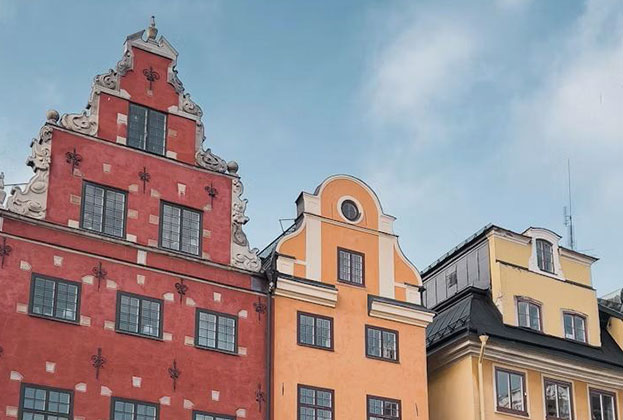
Sweden is the most active real estate investment market in Europe on a per capita basis, supported by the deep pool of investors in listed real estate, boosting liquidity. According to EPRA, 22% of Sweden’s commercial real estate is listed, well above the UK (5%), Germany (4%) and France (5%). Whilst the listed funds were previously a net seller due to refinancings, the listed sector is now a net buyer and competing for prime assets.
Q1–Q3 2026 investment volumes rose by 52% above the five-year average, supported by a return of larger lot size transactions and portfolio deals from institutional investors amid a favourable debt market. Logistics and multifamily remain high on investor wish lists, whilst the maturity of the public sector, including education, healthcare, judicial buildings and police stations, has also captured investor interest. Although prime CBD office yields remain among the sharpest in Europe, we expect mild yield compression over the next 12 months, given the underlying level of investor demand. A weaker Krona will continue to support inward investment over the next 12 months, although the continued dominance of domestic investors presents a challenge to cross-border players. Overall, Savills expects Sweden to become the third most active European investment market in 2026, behind the UK and Germany.
In Finland, open-ended real estate funds have been net sellers in recent years in order to meet redemption requests, and there remains a general shortage of core domestic capital. However, the wider yield spread between Helsinki and other European markets has attracted cross-border buyers, particularly those euro-denominated, including several SCPIs. Swedish private equity firms and listed companies have been active buyers, particularly for retail, and light industrial. US capital remains active, whilst German institutional buyers are also gradually returning. Amid a strengthening investment market which reached €4.3 billion during Q1–Q3 2026, almost double that of the same period in 2025, there is limited evidence of any distress, given a competitive lending environment.
In Denmark, an undersupply of private rental accommodation is creating residential development opportunities for investors, with over €5 billion of multifamily transacted in Q1–Q3 2026, two-thirds of the total transaction volume. Urbanisation and population growth remain major drivers of rental growth in Copenhagen, against a backdrop of underdevelopment in recent years, which has compressed multifamily yields by 25 bps since the peak in 2024. Relatively cheap debt costs are supported by the realkredit finance system, where the lender issues mortgage bonds to investors and the proceeds fund the loan. Domestic investors, particularly family offices, are also gradually returning to prime offices, given low vacancy rates.
Looking forward, we anticipate Nordics investment volumes to increase by 20% YoY in 2026, above the European average of +7%. By end 2027, we expect investment volumes to reach €50 billion, 10% above the pre-pandemic average. Leaving aside 2021 – a year in which Nordics investment transaction volumes were boosted by M&A activity within the listed real estate market – this would mark the strongest year of investment in recent history.