2
 By Michiel Scheffer, Ph.D., President of the Board, European Innovation Council, European Commission
One of Europe’s many challenges is scaling up innovation. Unlike the United States, Europe has only a few unicorns—new companies with valuations over $1 billion. But a large share of the US unicorn pool has European founders. By 2024, many European Union (EU) founders had started companies in the US or moved there. This is especially true in medtech (medical technology) and in software in general. It is much less the case in manufacturing, in which Europe still has an edge over the US. It is also important to assess the vast differences between EU countries. The migration of French and Scandinavian deep-tech (deep technology) startups to the US is below 5 percent. But for Ireland, Portugal and Poland, it is above 10 percent.
The barriers to scaling in the EU are numerous: a fragmented market, language and cultural barriers, regulatory complexity and a lack of capital, exacerbated by small stock exchanges and difficult markets for initial public offerings (IPOs). Some disadvantages stem from advantages, such as a demanding market and a multicultural context. Some of these advantages have not been fully grasped. The EU has a large public procurement market, but it is fragmented and often tied to outdated specifications. So, the lack of innovation demand also limits the capital raised by startups.
When focusing on capital barriers, the combination of regulatory hurdles, a fragmented capital market and a missing asset class stands out. What Europe is not missing is savings. Europe has massive savings that have sustained a real-estate boom but have not benefitted the real economy. As with pension funds, a substantial share is invested in the US—often even in US venture capital (VC) that invests in European startups. Although the gap is closing, the US capital market is still six times as large as Europe’s. For early startups, the capital raised is one-third lower in the EU than in the US. For scaleups, the difference is a factor of five. Exits (e.g., through Nasdaq) also generate much larger sums than in Europe.
The difference is growing smaller but still persists. Venture capital will raise four times as much capital in 2026 as it did in 2016. VCs have discovered deep tech, and 2026 is becoming a record year in capital raised and invested. The number of unicorns is increasing, and so is the number of successful exits. But the first IPO relies on US capital providers and Nasdaq.
The EU’s reform agenda is embodied in the start- and scale-up strategy. A cornerstone currently under debate is the establishment of EU-Inc.—that is, a pan-European harmonised company structure that can become an alternative to EU Inc. It should increase transparency on corporate status and is a first step towards harmonised corporate laws. The current proposal is a compromise and a necessary first step in creating a real single market for startups. It is part of a more ambitious plan to complete the single market as recommended by Mario Draghi, the former president of the European Central Bank (ECB), in his 2024 report.
The EU Member States have also responded to their need for capital-market reform with the so-called Capital and Savings Union (Savings and Investments Union, or SIU). Essential to that reform is the establishment of a European Nasdaq, either virtual or real, in one of the 27 Member States. However, reform alone does not create an asset class. That demands legwork, the formation of instruments and a coalition.
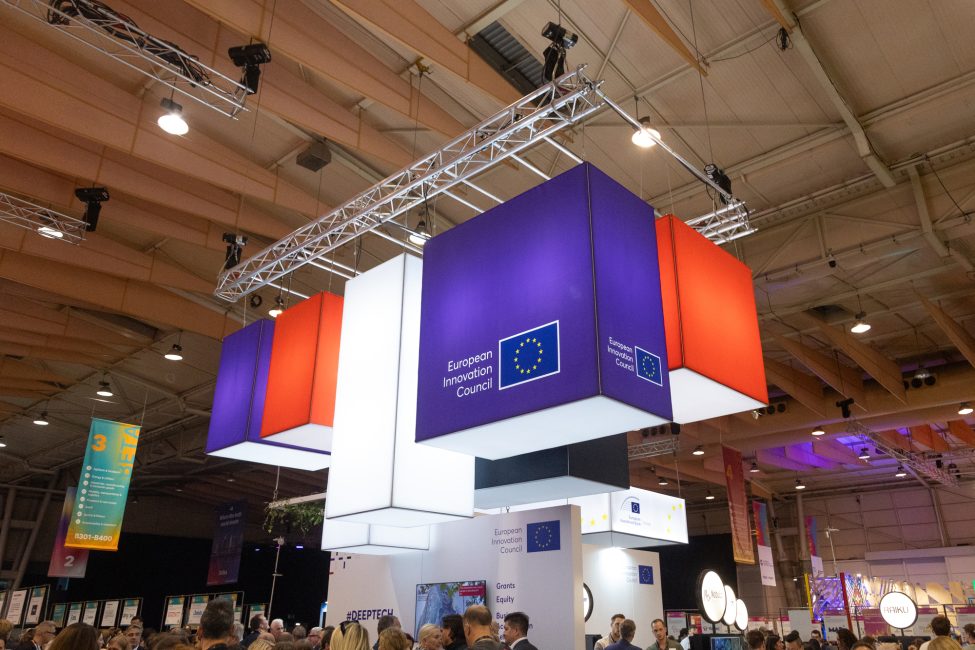
The European Innovation Council (EIC) has created a European capital market for deep-tech startups with its accelerator and ScaleUp Europe Fund instruments.
The European Innovation Council (EIC) has created a European capital market for deep-tech startups with its accelerator and STEP (Strategic Technologies for Europe Platform) instruments. The EIC Accelerator provides up to 10 million euros in equity (Series A) and has achieved a leverage effect close to a factor of four and growing. EIC STEP—Strategic Technologies for Europe Platform (Series B)—demands a leverage effect of at least five. Hence, the EIC has mobilised more than 10 billion euros in venture capital since 2023.
However, an important step has been missed: the capital to scale up innovators, enabling them to industrialise and provide the working capital for a global rollout. That requires financial rounds (Series C and higher) of 100-500 million euros. Since the summer of 2024, the European Commission (EC) has been working to establish a scaleup fund. From its inception, the Scaleup Europe Fund (SEF) rested on three concepts: investing in deep-tech startups with proven technologies and commercial traction, an influx of public and private capital and an experienced private fund manager. The overall objective is to move companies to positive EBITDA (earnings before interest, taxes, depreciation and amortisation), to a bankable proposition and finally to an IPO.
In 20 months, the European Commission mobilised a critical mass of private investors, set the legal basis for a new instrument, defined the mandate and terms of reference, and selected a service provider. The Novo Nordisk Foundation was the first to become involved, then APG (All Pension Group, the Dutch pension fund for civil servants and education), EIFO (Export and Investment Fund of Denmark, the Danish public fund), Spanish and Italian bank foundations, the Wallenberg family fund and Allianz (the German insurance company). All underwrote a fund with a European mandate and no sectoral limitations, but with a strong focus on scaling up and on high leverage. A six-month tendering process resulted in EQT AB of Sweden being chosen to manage the fund.
EQT has been assigned three missions: first, to have a fast (and rigorous) due-diligence process; second, to be an active investor preparing for exits within five years (to provide profits for co-investors); and third, to attract more investors to the fund and keep them in the fund. Seven first investments were obtained in its first operational month. The president of the European Commission, Ursula von der Leyen, highlighted that result in her State of the European Union speech on September 16, 2026. ICEYE, a company founded by Erasmus (the European educational-exchange programme) alumni and EIC laureates, was present at her speech in Strasbourg, France.
It would be wonderful, and should be feasible, to secure co-investments totalling nine billion euros in the Scaleup Europe Fund by the end of 2027. That can be achieved through more strategic investors committing 250 million euros or more, follow-on investors committing 50-100 million euros and the participation of potential bondholders. Ultimately, it would be ideal if private savings could also be accommodated in the system. The objective of the SEF is to create an asset class. Hence, the SEF’s high leverage is a positive trend as it mobilises five to ten times its own capital. Moreover, other capital providers have announced plans to increase their capital or to merge their funds so that more funds of 3-10 billion euros emerge in Europe.
Hence, as Jean-Christophe Laloux, the future chief executive officer (CEO) of the European Investment Fund, recently highlighted, the deep-tech investment landscape is evolving rapidly in a positive direction. However, the gap between what has been done and what needs to be done is substantial. Europe needs to invest 750-800 billion euros annually to restore competitiveness and achieve strategic autonomy in energy, materials and artificial intelligence (AI). That is why a thorough reform of the capital market is needed.
That implies that EU-Inc., which enables startups to deploy at a European scale (akin to Delaware Inc.), will make the asset class more attractive by increasing its transparency. Pension funds must gain the freedom to invest more in startups, venture capital and private-equity funds. In general, that would also imply that lower reserves should be locked in as a counterpart to equity investments. For individuals, the fiscal regime for equity, particularly startup stock-option schemes, should be made more attractive. Finally, the barriers between national regimes should be removed to strengthen European capital markets.
For more than 75 years, Europe has been a peace project, underpinned by a single market, a common technology policy, a common currency and now also an investment area.
ABOUT THE AUTHOR
Michiel Scheffer, Ph.D., is the President of the European Innovation Council (EIC) Board. A Dutch national, he has three decades of experience in business, academia and public policy. Previously, he served as the Regional Minister for Economy, Education and Europe in the Province of Gelderland and was a Member of the European Committee of the Regions (CoR).