
A recent industry analysis highlights the strong investment potential within the global Sports Events Market, driven by rising per capita income, a burgeoning middle-class population, growing popularity of marquee sporting events, rapid digitization across emerging economies, and the expansion of league-based competitions worldwide – reshaping how fans, sponsors, broadcasters, and event organizers engage with live and digital sporting experiences across ticket sales, sponsorships, and other revenue streams. Allied Market Research
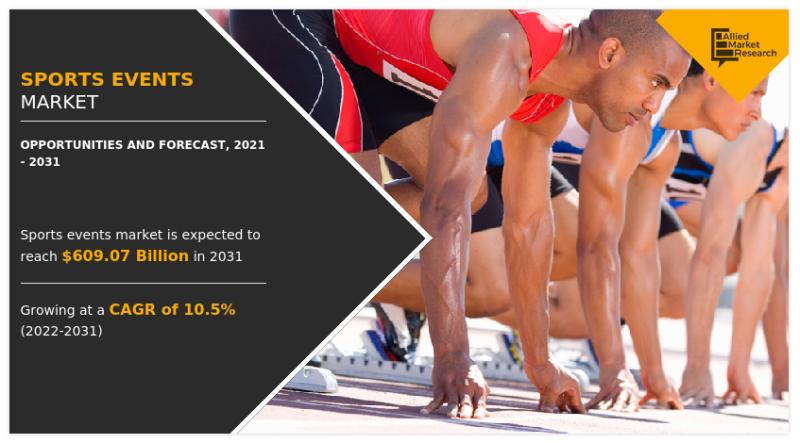
The global sports events market was valued at $184.61 billion in 2021, and is projected to reach $609.07 billion by 2031, growing at a CAGR of 10.5% from 2022 to 2031. This growth trajectory reflects an accelerating transformation in entertainment consumption – from passive viewership to deeply immersive, commercially driven, multi-platform live sporting experiences across both developed and emerging markets globally.
Request Sample Report (Get Full Insights in PDF) at: https://www.alliedmarketresearch.com/request-sample/A16874
Key Investment Drivers
The market’s expansion is underpinned by several long-term structural growth catalysts:
Rising per capita income and middle-class expansion as a primary demand driver: Some of the factors driving market expansion include the expanding sporting events business, rising per capita income, the burgeoning middle-class population, and rising disposable income. Consumers across income segments are increasingly allocating discretionary spending toward live sporting experiences, driving sustained ticket demand and viewership growth.
Growing popularity of marquee global sporting events as a structural market enabler: Growing interest in major sporting events like the FIFA World Cup, Olympic Games, UEFA Champions League, Cricket World Cup, Super Bowl, and Wimbledon Tennis, as well as the ease with which tickets can be purchased for both online and offline sporting events, fuels market growth. These high-profile events act as powerful commercial engines, attracting record-breaking sponsorship deals, broadcasting rights negotiations, and international tourism spending.
Sponsorship as a powerful and high-value commercial engine: Sponsorship is a crucial source of funding for all types of sporting events. Sports event sponsorships involve businesses, non-profit organizations, and other organizations contributing money or other benefits in exchange for visibility and exposure for their brands. The ability for sponsors to reach niche, highly engaged, and brand-loyal audiences makes sports events one of the most efficient marketing channels available globally.
League-based competitions and emerging sports as a strategic growth lever: The introduction of league-based competitions for other sports, such as kabaddi in India, as well as increased viewing, sponsorship, and involvement in sports other than cricket and football, are anticipated to present enormous opportunities. Continuous diversification of the global sports calendar – including the rapid monetization of previously niche sports – is deepening fan engagement and attracting new investor and sponsor cohorts.
If you have any questions, please feel free to contact our analyst at: https://www.alliedmarketresearch.com/connect-to-analyst/A16874
Emerging Opportunities
From an investment standpoint, the market presents compelling opportunities across multiple segments:
Sponsorship as the dominant and highest-revenue source: On the basis of revenue source, the sponsorship segment was the highest contributor to the market, with $79,572.4 million in 2021, and is estimated to reach $282,962.2 million by 2031, at a CAGR of 11.3% during the forecast period. The outsized growth of sponsorship relative to the overall market reflects deepening brand investment in sports as a premium marketing platform.
Ticket sales as a significant and fast-growing revenue stream: The tickets segment was the significant contributor to the market, with $63,865.1 million in 2021, and is estimated to reach $202,205.6 million by 2031, at a CAGR of 10.0% during the forecast period. Digital ticketing innovation – including mobile-first platforms, NFT-based tickets, and dynamic pricing models – continues to expand both accessibility and average transaction values.
21-40 years age group as the primary demand generator: The 21-40 years segment was the highest contributor to the sports events market size and is estimated to reach $314,883.3 million by 2031, at a CAGR of 11.1% during the forecast period. This group of people are more inclined towards sports and music concerts events.
North America as the dominant regional market: North America garnered the major sports events market share in 2021, and is expected to maintain its market share throughout the forecast period. In 2020, North America had the highest revenue share of more than 50%. The main driver of regional growth is the rise in viewership for sports other than football in the United States.
Asia-Pacific as the fastest-growing region: The growing popularity of major sporting events such as the Tokyo Olympics and the Cricket World Cup, along with rising digitization in China and India, further fuel market expansion. China was the most prominent market in Asia-Pacific in 2021, and is projected to reach $77,522.0 million by 2031, growing at a CAGR of 12.2% during the forecast period.
Enquiry Before Buying: https://www.alliedmarketresearch.com/purchase-enquiry/A16874
Segment Insights
By Revenue Source: In 2021, on the basis of revenue source, the sponsorship segment acquired $79,572.4 million, exhibiting 43.1% of the global market share. Ticket sales form the second major revenue pillar, with digital transformation accelerating sales velocity and reducing friction in event access. Together, these two revenue streams account for the dominant share of the overall market, while broadcasting, merchandise, and food & beverage continue to present incremental upside.
By Age Group: In 2021, by age group, the 21-40 years segment was valued at $90,508.4 million, accounting for 49.0% of the market share. The below 20 years segment includes children who are open to new learning and enthusiastic about taking up challenges and thrilling activities. Numerous school and college students attend various sporting events through schools and individually. The above-40 segment, while smaller in share, is growing steadily as disposable income and leisure time increase among older demographics in developed markets.
By Region: North America had the highest revenue share of more than 50% in 2020. Football is extremely popular in North America and Europe, much as cricket is in India. Asia-Pacific is emerging as the most dynamic growth frontier, with China and India combining expanding middle-class populations, rising digital connectivity, and surging interest in both domestic leagues and international sporting events.
Market Context & Growth Narrative
An athletic activity involving skill or physical prowess is referred to as a sporting event. These activities are typically competitive in nature and are supervised by a set of regulations established by a nationally recognized sanctioning body. Sports events are a beneficial, gratifying way to boost local economic activity, increase tax revenue, and highlight a host city on a regional or national scale. Hosting a sporting event can enhance the local economy and can attract sponsors to advertise their products, which adds revenue to the sport events.
Eight significant league-based sports competitions began in the 2013-15 season, including the ISL, PKL, Premier Badminton League (PBL), and Hockey India League (HIL). While some of these events experienced immediate success, others failed to amass enough support from viewers, advertisers, and broadcasters. This evolution highlights the market’s maturation – with only commercially viable, fan-supported leagues surviving to attract the scale of sponsorship and broadcasting deals that drive long-term revenue.
The development of digital ticketing infrastructure, streaming rights monetization, and data-driven fan engagement platforms has fundamentally changed how sports events generate and capture value. Rising digitization across China, India, and Southeast Asia is unlocking a vast previously underpenetrated consumer base, while regulatory and infrastructure investment in sport across the Middle East and Africa is creating entirely new event markets.
Buy Now & Get Exclusive Discount on this Report at: https://www.alliedmarketresearch.com/checkout-final/e664d10a5c1040f7101520f4622c452d
Competitive Landscape
The key players profiled in this report are Ace Ticket Worldwide, Inc., GooTickets.Com, Razorgator LLC, SeatGeek, StubHub, Ticket City, Inc., Tickets.com, LLC, Ticketek Pty Ltd, Ticketmaster, and TickPick LLC.
The players operating in the global sports events industry have adopted various developmental strategies to expand their market share, increase profitability, and remain competitive in the market. These strategies include platform consolidation, international market expansion, dynamic pricing algorithm development, mobile-first ticketing innovations, and strategic partnerships with leagues, governing bodies, and broadcasters. Platforms that can offer seamless end-to-end fan experiences – from ticket discovery and purchase to in-venue engagement and post-event digital interaction – are best positioned for long-term competitive advantage.
Investment Outlook
Overall, the global sports events market is expected to register strong and above-average growth during the forecast period, driven by rising global sports viewership, expanding middle-class consumer bases in Asia and Latin America, the growing commercial value of sponsorship, increasing diversification of league-based sports competitions, and the rapid penetration of digital ticketing and streaming platforms.
Investors should particularly monitor:
Sponsorship Segment as the dominant revenue contributor at 43.1% market share, backed by deepening brand investment in sports as a high-ROI marketing channel
Ticket Sales Segment as the second-largest revenue stream, accelerated by digital ticketing innovation, dynamic pricing, and mobile-first platforms
21-40 Years Age Group as the primary demand generator and highest-growth demographic, representing the most commercially engaged and digitally active sports consumer cohort
North America as the largest regional market, underpinned by a robust multi-sport ecosystem, premium broadcasting rights, and high per-event consumer spending
Asia-Pacific as the fastest-growing region at a CAGR of 12.2% for China alone, fueled by rising disposable incomes, digital infrastructure investment, and surging interest in domestic and international sporting events
Emerging Sports Leagues as a strategic opportunity, with new league-based competitions across kabaddi, badminton, hockey, and other sports offering high-upside investment potential in underpenetrated markets
Contact:
David Correa
1209 Orange Street,
Corporation Trust Center,
Wilmington, New Castle,
Delaware 19801 USA.
Int’l: +1-503-894-6022
Toll Free: +1-800-792-5285
Fax: +1-800-792-5285
help@alliedmarketresearch.com
Web: www.alliedmarketresearch.com
Allied Market Research Blog: https://blog.alliedmarketresearch.com
Follow Us on | Facebook | LinkedIn | YouTube |
About Us
Allied Market Research (AMR) is a full-service market research and business consulting wing of Allied Analytics LLP based in Wilmington, Delaware. Allied Market Research provides end-to-end solutions along with information, education, advocacy, and networking resources to SMEs and early-stage start-ups to bring excellence to their processes. In addition, we offer a nurturing environment required to develop and grow businesses, including business planning; virtual support; market intelligence; acquiring resources; and getting direct access to finance, suppliers, and other experts to boost the growth of businesses and entrepreneurs.
Our bundled and hassle-free business support systems are customized to meet the needs of SME consultants and industry leaders. Moreover, our large network of skilled consultants and experts help start-ups get the business on a roll.
This release was published on openPR.