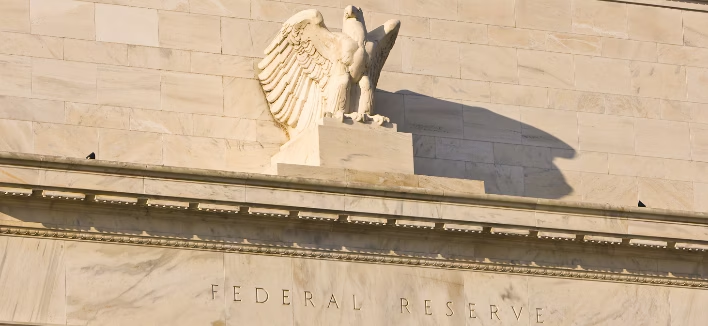

The Fed is likely to hold rates steady in the near term.
- The Fed held rates steady in April at 3.50-3.75%, matching expectations. However, one official dissented for a cut, while three opposed language suggesting the next move would likely be lower.
- Outgoing Chair Powell said the bar for easing was now higher, and that the center of the committee is shifting to a more neutral stance. He also revealed he will remain as governor “for a period of time to be determined.”
But we think the Fed’s policy easing bias remains intact.
-
Sequential core goods inflation is likely to keep softening in 2Q and 3Q, since tariff rates have mostly remained stable or declined recently.
-
We forecast oil prices below current levels by late 2026, while oil-related growth headwinds are likely to return GDP growth to trend, reinforcing disinflation in the second half.
-
The balance of risks around timing has become more skewed toward a later start, and we now expect one rate cut this year and another in 2027.
Lower interest rates strengthen the case for investors to lock in yields.
- We think market hawkishness on global rates right now is a chance to lock in high yields, especially in quality bonds with short to medium maturities.
- An allocation to emerging market bonds can enhance yields and offer an alternative to developed market fiscal challenges. Investors can also consider equity income and yield-generating strategies for a diversified income portfolio.
- We believe Fed policy overall will remain supportive for US equities, and we favor a balanced and diversified approach to the asset class.
New this week
Money markets on 18 May priced a near 45% chance the Fed will hike rates by at least 25 basis points by year-end, according to the CME FedWatch tool, up from around a 15% probability one week prior.
Did you know?
- Analysis by the Dallas Fed shows that the incremental price pressure due to rises in energy prices tends to fade quickly after a few months, with core inflation little changed.
- We think bond markets are currently too focused on the short-term inflationary impact of higher energy prices, and not enough on the potential medium-term negative growth impact, which could drive interest rate cuts, nor on the potential for de-escalation.
- Cash tends to underperform other assets over time: Stocks have outperformed cash in 86% of all 10-year periods and 100% of all 20-year periods since 1926.
Investment view
We believe markets continue to overprice the risk of a tighter Fed policy, presenting an opportunity for investors to “lock in rates.” We like short- and medium-maturity quality bonds, and see value in select exposure to higher-beta segments such as emerging markets, high yield, or subordinated debt. We also expect Fed policy to remain supportive for equities.