
Four structural shifts reshaping the landscape
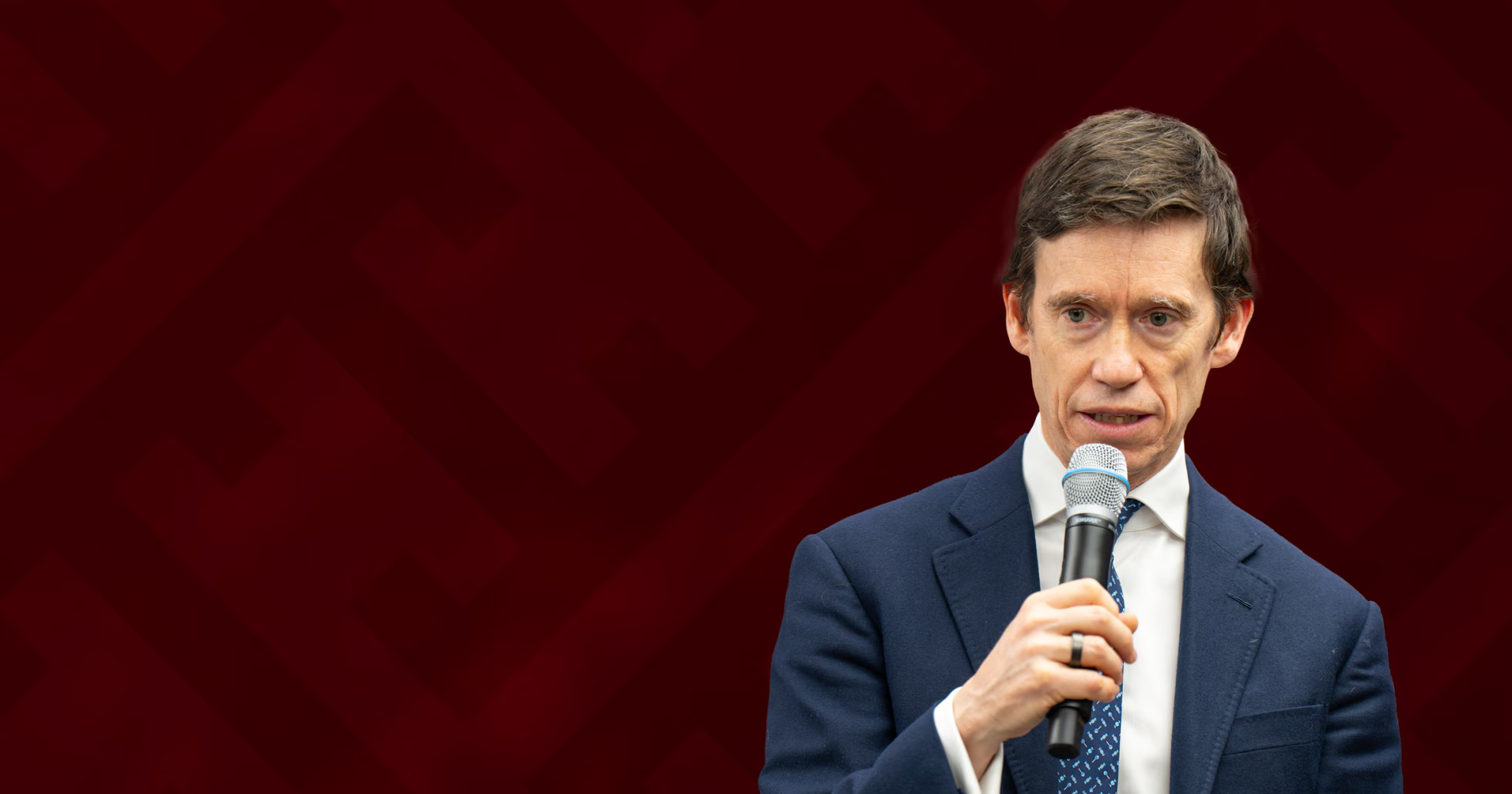
Stewart highlighted four major shifts he thinks investors – and societies more broadly – need to grapple with.
First, the global dominance of liberal democracy is receding. Between the late 1980s and the early 2000s, the number of democracies worldwide doubled, creating a sense that democratic governance would become universal. That assumption has proved fragile. Populism and authoritarianism are on the rise; systems that behave very differently from liberal democracies in their approach to free trade, domestic markets, neighboring states and even their own populations.
Second, the Reagan-Thatcher consensus around globalization and free trade is giving way to protectionism and tariffs. This is not a cyclical adjustment, but a re-orientation of economic policy that reshapes supply chains, pricing power and geopolitical alignment.
Third, the post-war vision of a rules-based international order, anchored in multilateral institutions such as the United Nations, is being replaced by a far more ad-hoc and transactional world. This increasingly resembles a system where power determines outcomes: the strong do what they want, and the weak must adapt.
Fourth, the political center ground itself is eroding. A once-shared consensus about how economies should be managed is fragmenting under the combined pressure of social media and artificial intelligence. The result is greater polarization, faster opinion cycles and more volatile policymaking.