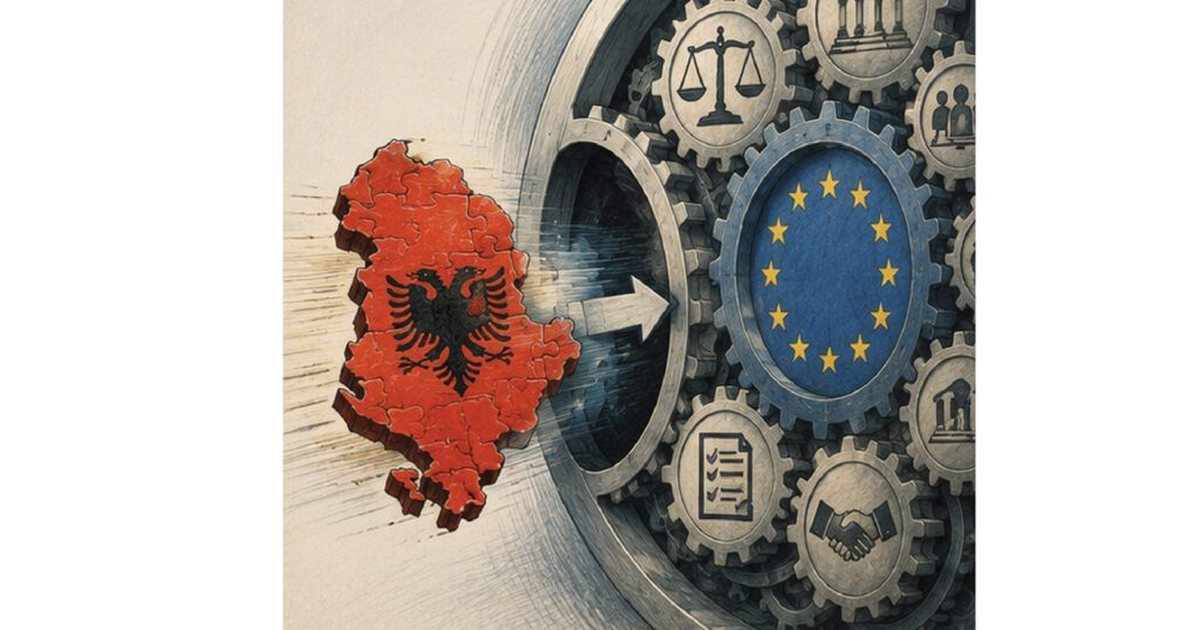

Albania enters the final phase of the EU accession process from a position of strong macroeconomic stability. Economic growth is among the highest in Europe, inflation remains controlled, public debt has decreased and external balances have improved.
Although these conditions support membership, long-term convergence with the EU will depend more on strengthening institutions than on further macroeconomic stabilization.
The analysis finds little evidence that EU membership causes sustained inflation. The experiences of Slovenia, Croatia and Bulgaria show that inflation after accession has been driven mainly by global shocks, domestic demand and energy prices.
Albania’s current inflation targeting framework, monetary policy, and high degree of economic integration with the EU suggest that membership is unlikely to create sustained inflationary pressures.
The main benefits of EU membership stem from institutional reforms. The accession process requires a more independent and transparent judiciary, a more professional public administration, and stronger anti-corruption measures.
The experience of previous enlargements shows that these reforms increase investor confidence, reduce costs, strengthen property rights and support long-term productivity growth. Although Albania has made progress, challenges remain in controlling corruption, the rule of law and public accountability.
The transition brings risks, including labor migration, pressure on small businesses, regional disparities, rising property costs, and reduced flexibility of political independence.
However, international experience suggests that these challenges are usually outweighed by the long-term benefits that come from strengthening institutions, better governance, and deeper integration into the European single market.
Macroeconomic stability
Albania maintains one of the strongest macroeconomic positions in Europe. Supported by these favorable conditions, the government is pursuing ambitious reforms with the aim of joining the European Union by 2030. Economic growth is expected to remain strong, around 3.5–3.6% during 2025–2026, although risks stemming from the external environment have increased.
Albania has opened all 33 negotiation chapters and three of them have already been closed. Reforms are focused on improving the business climate, strengthening human capital, advancing digitalization and consolidating the rule of law.
These efforts are supported by €922 million under the EU Growth Plan for the Western Balkans. The International Monetary Fund (IMF) has published economic projections for Albania until 2030, which show positive trends and suggest macroeconomic stability.
Despite this progress, significant structural challenges remain. Productivity growth remains limited, per capita income remains well below the EU average, and gaps in human capital, governance, and business regulation still exist.
inflation
Membership in the European Union itself is not expected to cause a large or permanent increase in inflation in Albania.
Albania would not automatically adopt the Euro upon joining the EU, as this is a separate process that requires meeting the criteria of inflation, fiscal discipline, exchange rate stability, and interest rates.
In addition to these criteria, other factors related to economic integration and convergence are also taken into account. The table below shows the time between EU membership and the adoption of the Euro by countries that have recently joined the European Union. ( Monitor )