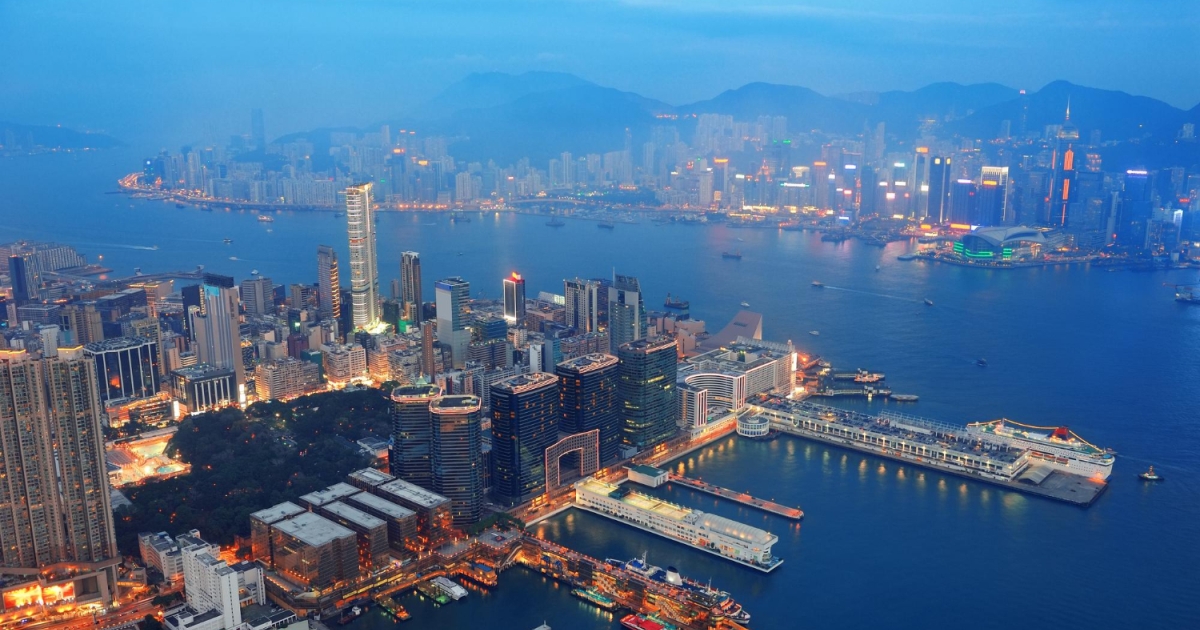

All of these position Hong Kong’s hotel sector well towards the year-end.
Hong Kong’s hospitality sector entered the second half of 2026 off the back of a strong first half (H1 2026). Rising visitor arrivals, improving hotel performance, active investment, and a packed events calendar have reinforced the city’s position as one of Asia’s leading tourism and hospitality destinations.
Investment market: Capital returns with conviction
Hotel investment accelerated to $4.88b in H1, rising to $5.91b by the end of July with almost 2,000 keys transacted.
The dominant theme remains the rapid expansion of the student accommodation sector. Private equity funds, state-owned enterprises, and local and regional investors continue targeting well-priced midscale and full-service hotels for conversion. Pricing ranged from $1.6m to $7m per key, averaging approximately $2.9m per key. On a per square foot (psf) basis, pricing generally sat between $6,500 and $8,500 (although the lower and upper bands were from HKD 3,250 to $11,600 psf).
Notable transactions included: Regal Oriental Hotel (494 keys) acquired by Centaline Investments for $1.518b; converted to One Hub Kai Tak under CampusOne Communities; Hotel COZi Oasis (583 keys) acquired by CR Longdation for $953m; repositioned under its Brim Youth student living brand; Ovolo Southside (162 keys) acquired for $500m; relaunched as Stride.
BeYouth Living Hub (98 keys) acquired by Rava Partners/Dash Living for $400m; converted to Dash Living on Morrison; Silka Seaview (268 keys) and 218 Apartment Wan Chai (59 keys) acquired by JD.com for student living (July 2026).
As competition intensifies, easily convertible assets are becoming harder to come by, potentially pushing investors to increase their entry thresholds.
Whilst financing remains tight for pure hotel acquisitions, investors are exploring distressed or rarely traded hotels. The ongoing conversion into student accommodation is reducing traditional hotel inventory, particularly in the midscale segment, potentially creating an opportunity for hotel investors and operators.
Buyers will increasingly need to balance acquisition pricing, operational margins, and asset enhancement initiatives to generate attractive risk-adjusted returns amidst an uncertain interest rate outlook.
Tourism recovery continues to gather pace
Hong Kong welcomed 26.71 million visitors in the first half, representing a 13% year-on-year increase. Mainland China dominated with almost 20.56 million arrivals, whilst non-mainland visitors reached 6.16 million. Total visitor numbers further expanded in July to 31.22 million.
A key driver has been Hong Kong’s growing events calendar. Over 130 major exhibitions and conventions were hosted during the first half, generating strong overnight demand and contributing approximately $5.8b in visitor spending.
The combination of sporting events, concerts, exhibitions, and conventions is starting to attract higher-yield visitors whilst strengthening the city’s international profile. Hoteliers would like these initiatives extended to drive demand-consistency at a higher level throughout the year.
Overnight visitors reached 11.51 million, including 7.51 million mainland visitors, and 4 million international and regional travellers. Overnight mainland visitors declined as a proportion of total mainland arrivals, with international markets playing an increasingly important role in supporting hotel demand.
Long-haul markets performed particularly well, with visitor arrivals increasing 18% year-on-year. Russia emerged as a standout growth market, generating 87,000 overnight visitors, up 50%. In contrast, short-haul visitation softened by 7%, with geopolitical events impacting currency weakness, airline capacity, fuel prices, and travel patterns.
Hotel operating performance strengthens
Improving demand translated into stronger hotel trading performance in H1. Occupancy was 86% (up1%), with average daily rate (ADR) increasing 7.6% to $1,313, resulting in revenue per available room (RevPAR) of $1,129, up 8.9%.
The luxury segment recorded the strongest gains with occupancy up 4% to 81% and ADR up almost 10% to $2,320 supported by growing long-haul arrivals, premium events, and recovering leisure and corporate demand. The midscale and upscale sectors faced flat occupancy at 90% and 86% but experienced ADR uplifts of almost 9% and 5%, reaching $596 and $1,022 respectively.
Despite stronger room revenues, operators face margin pressure from rising labour, utility, and operating costs, alongside a challenging food and beverage and non-room revenue environment. Many hotels are reconsidering the use of non-room spaces and introducing new concepts to improve profitability.
Asset enhancement, sustainability, and operational efficiency
Asset enhancement remains a priority, particularly in the luxury segment, as owners invest to elevate the guest experience, improve efficiency, and optimise space utilisation.
Mandarin Oriental The Landmark, Hong Kong reopened in June following a comprehensive transformation featuring redesigned guestrooms, new dining concepts, and upgraded wellness facilities. The Hongkong and Shanghai Hotels returned to profitability, announcing a $2.1b investment programme for The Peninsula Hong Kong and The Peninsula Tokyo.
On the development front, the Airport Authority launched its expression of interest process for Skytopia, a major mixed-use hospitality and marina development, whilst Andaz Hong Kong Central remains on track for a 2027 opening.
Sustainability is increasingly becoming a commercial imperative. Hotels are adopting artificial intelligence (AI)-enabled operational tools, energy efficiency initiatives, enhanced cybersecurity measures, and green building certifications to improve performance and asset value. A notable milestone was New World Millennium Hong Kong Hotel achieving LEED Gold Plus Operations & Maintenance certification, the first recognition of its kind amongst Hong Kong’s existing five-star hotels.
Outlook for H2 2026
Events over the Summer have driven inbound tourism. The Hong Kong Football Festival and Audi Summer Tour drew approximately 120,000 spectators to Kai Tak Stadium across three matches, whilst the LEAP Conference and Ani-Com & Games Hong Kong attracted huge numbers of local and international visitors.
Improving long-haul demand, continued government tourism promotion, and a strong events calendar should sustain visitor growth and hotel performance during the final third of the year.
Investment activity will remain active, with several transactions under negotiation. Capital continues to target accommodation-related sectors including hotels, student housing, co-living and multifamily assets, creating a diversified lodging landscape. Existing owners may sense an opportunity to exit to investors entering the market. Pure hotel investors may see an opportunity to fill the void left by student conversions.
Taken together, strengthening tourism demand, rising hotel performance, and sustained investment activity position Hong Kong’s hotel sector well for the final third of the year.