For many European founders, being acquired is a milestone: a reward for years of hard work and a route to capital, customers and scale. For regulators, it can look like a warning sign. When a large company buys a promising young firm, the fear is that a future competitor has quietly disappeared.
That fear of so-called “killer acquisitions” is one of the issues discussed in the debate around the European Commission’s revision of its merger guidelines. A policy breakfast in the European Parliament on 17 November set out to test it against the evidence.
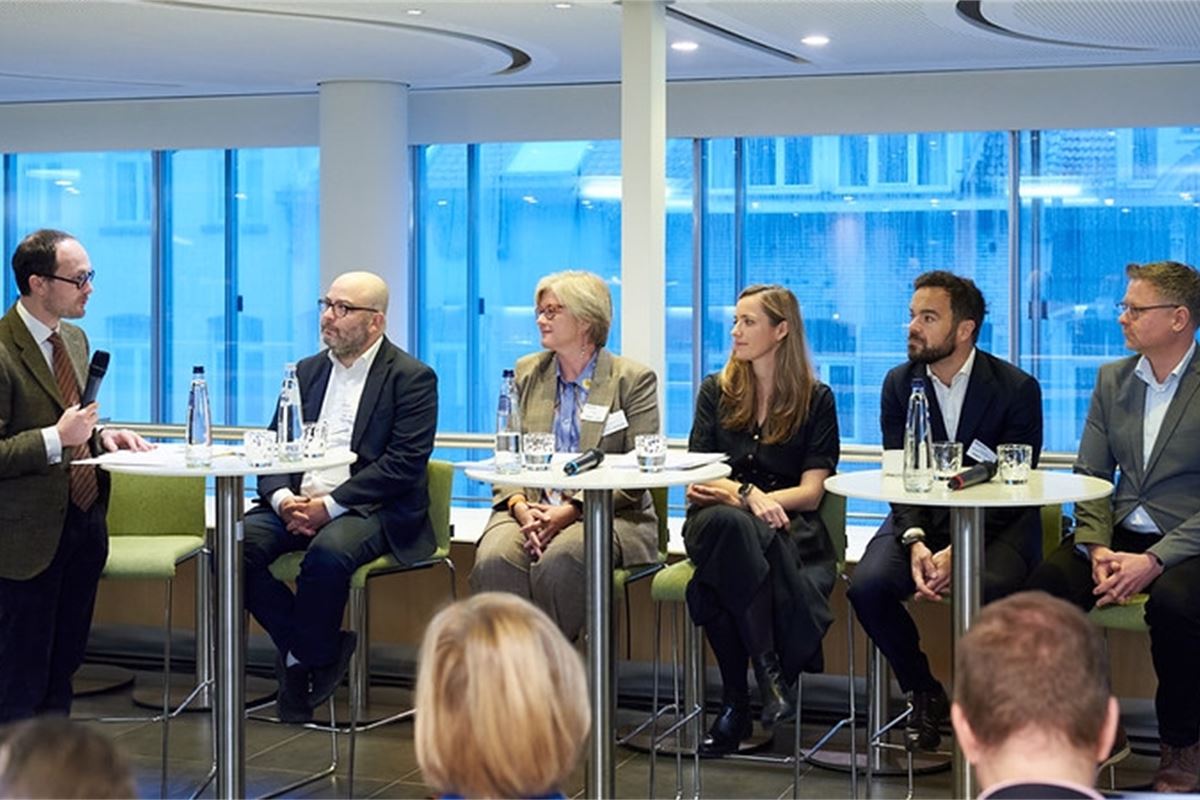
Hosted by Finnish MEP Anna-Maja Henriksson (Renew Europe) and organised by The Parliament in partnership with Amazon and BRG, the debate brought together founders, economists and a Commission merger specialist.
Henriksson, a former Finnish justice minister, framed the discussion in terms of growth. “We have many talented people in Europe with very strong ideas, but ideas alone are not enough,” she said. Acquisition, she noted, is one route to growth among several, and Europe needs “one single market, not 27 different rulebooks”.
BRG survey of acquired European startups
After the acquisition…
0%
reported a broader range of products
0%
increased R&D investment
0%
grew in their home country
0%
increased their headcount in Europe
Watch the debate
Watch: highlights of the debate in the European Parliament
Source: Ipsos survey of 105 founders and senior leaders of acquired European companies, for the BRG study “The impact of mergers: a focus on digital start-up acquisitions and policy implications in Europe” (November 2026), commissioned by Amazon.
What acquired startups report
The evidence came from a new independent report by Dr Xavier Boutin and Dr Aleksandra Boutin, Managing Directors at the economic consultancy BRG and both former officials in the Commission’s competition directorate. Commissioned by Amazon, it combines a review of the economic literature, interviews with founders and an Ipsos survey of 105 founders and senior leaders of acquired European companies.
The literature, Xavier Boutin explained, gives no basis for a general presumption either way. Killer acquisitions are “conceptually very valid” but appear to be rare. The survey was another matter. “To my great surprise, the results of the survey are even more one-sided than I would have actually imagined,” he told the room.
Of the respondents, 95% reported a broader range of products after the acquisition and 79% increased R&D investment. Some 91% reported growth in their home country and 79% higher headcount in Europe. Fewer than half (46%) believed their business would have remained independent, though growing more slowly, without the deal.
The study calls for case-by-case scrutiny of start-up acquisitions, weighing harms and benefits against a realistic counterfactual that accounts for Europe’s fragmented single market.
Boutin’s sharper point concerned the source of Europe’s innovation gap. The idea that Europe lacks global digital players because large incumbents buy its startups is, he said, “as far from reality as it can possibly be”. US startups are acquired too, he noted, without anyone speaking of an American innovation gap.
Instead, he pointed to a fragmented single market – citing paint made in Spain that cannot be sold in France because the recycling logo differs – and to the absence of a real European capital market. “That just doesn’t exist.”
Inside the survey
What happens to a startup after it is acquired?
Hover or tap a bar for the survey finding.
Hear it from the author
Watch: Dr Xavier Boutin on what the survey found
Source: Ipsos survey of 105 founders and senior leaders of acquired European companies, for the BRG study “The impact of mergers: a focus on digital start-up acquisitions and policy implications in Europe” (November 2026), commissioned by Amazon. “90%+” = more than 90% of respondents.
From a Finnish lab to millions of homes
Petteri Valve, co-founder of the Finnish camera-testing company Nomicam, gave the founder’s perspective. Nomicam spent five years growing slowly in Tampere. Then, on a business trip to San Francisco, its leaders spotted cameras in an electronics shop and sent a LinkedIn message to a Ring director. The reply came within five minutes.
A testing contract followed, and a couple of years later Amazon bought the company. Since then, Valve said, the team has grown “more than ten times”, invested in lab equipment not available to the business before teh acquisition, and hired the talent needed to design a full camera, from the optics to the finished module.
The most rewarding moment, he said, came when Ring’s first 4K product line shipped with the Tampere team fully involved, “and millions of happy Ring customers over the world are basically using the devices”.
Where should regulators draw the line?
Marion Bailly, Deputy Head of Unit for merger policy in the Commission’s Directorate-General for Competition, spoke in a personal capacity. “There is certainly no presumption of harm on startup acquisitions,” she said. “Obviously, we see the risk of killer acquisitions. They exist.” But the problem, she stressed, is targeted and concerns a limited number of cases.
Professor Nicolas Petit of the European University Institute argued that competition economics is too attached to precise prediction. “We need to recalibrate our obsession with prediction with an obsession for capabilities,” he said. Authorities, in his view, should ask whether a merger improves the merged firm’s ability to innovate, rather than trying to guess which product will emerge.
“We need to recalibrate our obsession with prediction with an obsession for capabilities”
Petit also warned that even rare interventions send outsized signals, as investors read a single blocked deal as a sign the door is closing. Bailly was clear on that point: “We’re going to continue intervening in some cases. That’s our role.” What the Commission can do, she added, is send more positive signals through the new guidelines.
“We don’t need your grants, we need customers”
For Peter Kofler, Chairman of Danish Entrepreneurs and coordinator of the S9+ coalition of startup associations, the debate risked missing the point. Founders must answer two questions, he said: how will you grow, and how will you exit?
On growth, Europe keeps failing them. Opening a new EU country is so hard that “you might as well open the door to a larger market”, which usually means the US. “We don’t need your grants, we need customers,” he told participants.
What really builds ecosystems, Kofler argued, is founders who sell, return with money and experience, and start again – the “founder’s flywheel”. He pointed to the sale of Skype, which he said helped spawn 21 European scale-ups that went on to raise $3.5bn.
Aleksandra Boutin made a similar case. Europe must protect competition, she said, but without blocking acquisitions that help innovative startups finance development and reach scale, with benefits and harms judged to the same standard of evidence. “The problem is not the startup acquisitions,” she said. “The problem is that we do not have scaleups in Europe.”
“The problem is that we do not have scaleups in Europe.”
On that, the Commission’s representative agreed. “Obviously, we fully agree that the single market is the main obstacle for startups,” Bailly said. “We couldn’t agree more.”
The message from the morning was that Europe’s startup challenge will not be solved by merger policy alone. Completing the single market and building deeper capital markets will matter at least as much – and the Commission’s final guidelines will show how it weights that evidence.
The full study
The impact of mergers: a focus on digital start-up acquisitions and policy implications in Europe
BRG’s November 2026 study combines a review of the economic evidence, founder interviews and an Ipsos survey of 105 founders and senior leaders of acquired European companies.
Click to read the full report →
Follow the developments shaping Europe
Subscribe to The Continental to receive The Parliament’s latest reporting, analysis and opinion to your inbox, delivered every weekday morning. Sign up for free here.