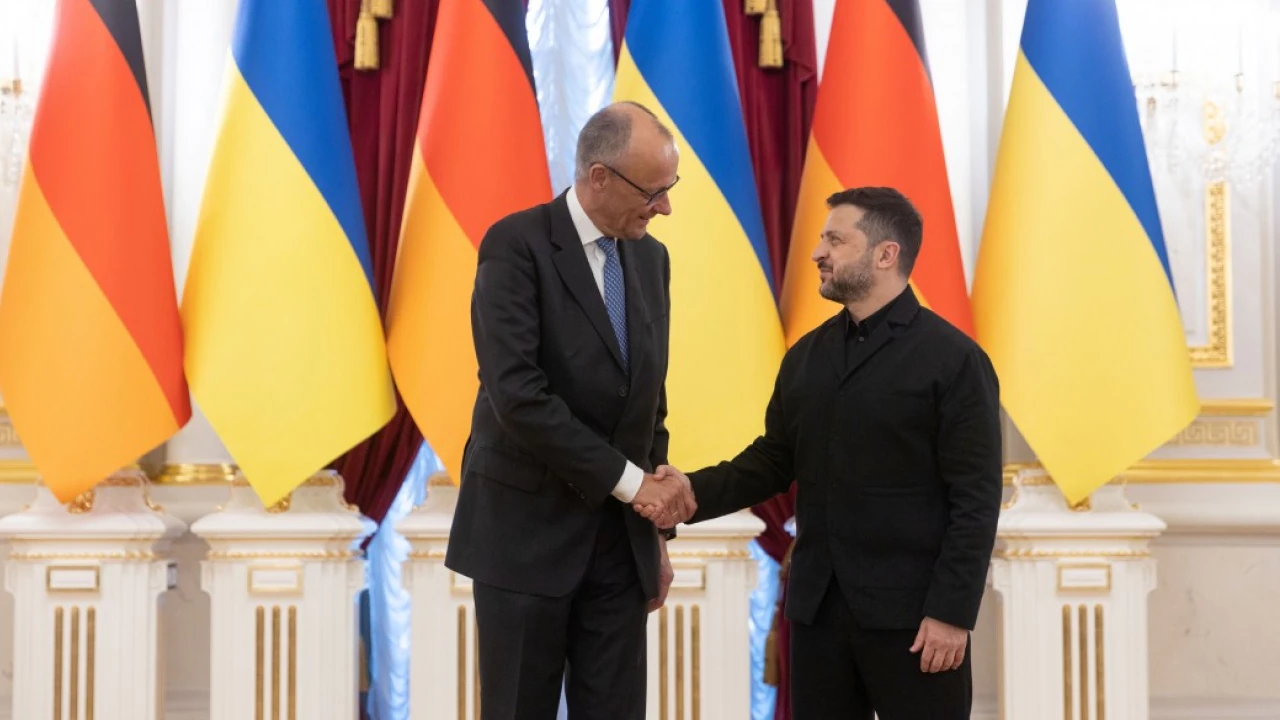
German Chancellor Friedrich Merz warned that he will not support the European Union’s seven-year budget for 2028–2034 until all member states agree to finance Ukraine in 2027 and beyond.
This was reported by Financial Times, citing Merz’s letter to European Council President António Costa.
The chancellor is demanding that the funding shortfall for Ukraine be discussed at the EU leaders’ meeting in Dublin on Thursday and Friday.
Ukraine will need an additional €70 billion next year. This need arose despite the €90 billion loan agreed by EU leaders last December. The European Union pledged to cover almost two-thirds of the new shortfall — about €47 billion.
The European Commission is working on financing options, including using new joint debt instruments. The aim is to agree on a decision by the end of the year.
However, Hungary, Slovakia, Bulgaria and the Czech Republic have already indicated that they do not intend to join further financial assistance to Kyiv. Hungary, Slovakia and the Czech Republic also secured last year an exemption from participating in interest payments on the €90 billion loan.
In the letter Merz insists that all EU countries without exception should fairly contribute to covering Ukraine’s financial needs. He also calls for ensuring multiannual funding from 2028, including payment of interest on debt already raised for Ukraine.
Germany is the largest net contributor to the EU budget — it pays into it more than it receives. By contrast, the four countries refusing further contributions to support Ukraine receive more from the budget than they pay in. Berlin seeks to use its role in budget negotiations to secure aid for Kyiv.
Germany is also pushing for future decisions on financing Ukraine to be taken by qualified majority in the EU. Currently unanimity is required, which allows individual countries to block decisions.
Merz’s threat has a concrete mechanism. To adopt the EU’s long-term budget requires unanimous approval in the Council of the EU and the consent of the European Parliament. Therefore Germany’s refusal could block its adoption. The previous loan to Ukraine was agreed under the enhanced cooperation procedure with the participation of 24 countries.